BIZCHINA> Top Biz News

|
BIZCHINA> Top Biz News
|
|
Dupont warms Tibet with solar power
By Bao Wanxian (China Daily)
Updated: 2009-01-19 07:47
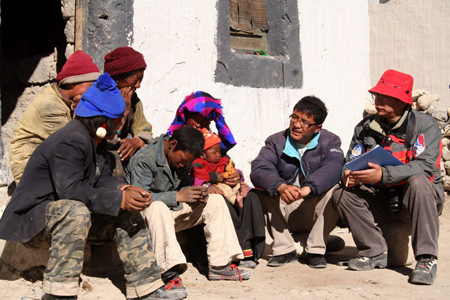
In his traditional Tibetan home 5,200 meters above sea level in Dingri county, about 40 km from the Mount Qomolangma base camp, Chagyab Sangri, who lives alone, used to cook and stay warm by burning about 2,000 kg of cow dung a year. But on January 9 this year, Sangri, 45, moved into a new house powered by solar energy that enabled him to stay warm longer in a cleaner environment. The change was driven by a project to improve the living condition for Tibetans sponsored by the Settlements Improvement Project for Tibetans and supported by US-based chemical giant Dupont, Tsinghua University, China National Engineering Research Center for Human Settlements and the Tibet autonomous region environmental protection bureau. More than 100 volunteers from Dupont China and 40 mountaineers from Beijing, Shanghai, Guangzhou of Guangdong province and Chengdu of Sichuan province also joined in the effort. They worked at the foot of Mount Qomolangma, researching local residents' living habits and conditions in three counties (including Dingri). In addition to Sangri's new dwelling, 20 other households have been selected for solar makeovers and are expected to be finished by May.
Tibetans traditionally use wood and cow dung for home heating and cooking fuel but the low-heat from cow dung didn't maintain steady warmth in Tibet's harsh cold temperatures, said an official with the Tibet autonomous region environmental protection bureau. Mount Qomolangma's region has about 3,000 hours of sunshine annually, potentially a large energy source, but it was going waste due to a lack of solar technology, Baqiong told China Business Weekly. "So one key task for the volunteers was to develop a wider range of solar energy options to help locals take advantage of the natural resources and improve their lives," Baqiong said. Zeng Yan, architect of Sangri's solar-powered house, explained that after six-months of research, they found that the special structure of the buildings could expand the utilization of solar energy and improve the indoor temperature. "We mainly employ technologies to collect the heat from solar energy in the home design. Especially in summer, the house can avoid extra heat collection by fending off direct sunlight," Zeng said. In addition, a large expanse of solar energy storage glass was installed on top of the house. "I am not only living in a warmer house, but I can also get electricity, which is made by solar energy," Sangri said. But to Sangri's surprise, the new house looks quite similar to his former home because the buildings' design also took the local living habits into account. The new house was built with clay bricks, which are traditionally used for Tibetan construction and also possess good heat retention quialties, Xu Jun from Dupont China said. "There will be more clean energy-based products and construction materials used in the area," said Xu. Xu added that in the second phase of the project, through 2009, the research team will be exploring the use of a wider range of natural resources, such as wind power and biogas energy. "What we have been doing is not building a 'museum'," said Xiao Wei, a volunteer from Tsinghua University. "We are engaged in truly improving local residents' living conditions and making better use of the natural resources." "There will more people like Sangri to enjoy warmer, brighter and cleaner lives," Xu said. (For more biz stories, please visit Industries)
|
||||||
主站蜘蛛池模板: 日韩一区二区三区日韩精品| 亚洲天堂视频网| 亚洲人成影网站~色| 亚洲精品日韩精品久久| 热久在线免费观看视频 | 亚洲激情视频一区二区三区| 熟女系列丰满熟妇AV| 婷婷六月综合缴情在线| 色欲狠狠躁天天躁无码中文字幕| 国产毛多水多高潮高清| 国内少妇偷人精品免费| 一区二区三区久久精品国产| 久青草国产在视频在线观看| 把腿张开ji巴cao死你h| 精品亚洲国产成人蜜臀av| 色偷偷人人澡人人爽人人模| 国产av熟女一区二区三区| 九九电影网午夜理论片| 亚洲AV高清一区二区三区尤物| 国产成人无码a区在线观看导航| a国产一区二区免费入口| 国产成人亚洲精品青草天美| 久久精品国产99国产精品澳门| 2020国产欧洲精品网站| 亚洲深深色噜噜狠狠网站| 亚洲超碰97无码中文字幕| 免费观看全黄做爰大片| 国产中文字幕精品免费| 999久久久免费精品播放| 欧洲熟妇色xxxxx| 国产在线中文字幕精品| 久久国产综合色免费观看| 精品国产亚洲一区二区三区| 91网址在线播放| 美日韩在线视频一区二区三区| 国产一级特黄高清大片一| 亚洲av无码久久精品色欲| 精品亚洲一区二区三区四区| 日韩蜜桃AV无码中文字幕不卡高清一区二区| 欲乱人妻少妇邻居毛片| 无码人妻专区免费视频|