BIZCHINA> Review & Analysis

|
BIZCHINA> Review & Analysis
|
|
Bridging the urban and rural gap
By Fu Jing (China Daily)
Updated: 2008-11-10 16:29
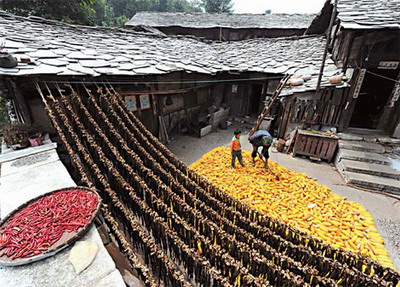 At a time when the global financial meltdown and looming recession are capturing the world's attention, some have wondered why China's highest leadership still places rural development high on its work agenda by convening a close-door plenary among top decision-makers in October.
It's simple, really. Before the financial tsunami, food shortages, grain price hikes and starvation were plaguing the world and continue to do so. And the World Bank recently estimated that an additional 100 million people outside China have fallen into poverty because of rising food and energy prices. Meanwhile, December sees China's 30th anniversary of reform and opening up and the central government believes it's time to design a roadmap for farmers to equally benefit from economic prosperity as their urban counterparts. The worsening world economy is also forcing China to change its export-dependent model and tap the potential of vast rural regions in an effort to sustain three decades of growth. Against the backdrop, the 3rd plenum of the 17th Central Committee of the Communist Party of China (CPC) on October 9-12 decided to respond swiftly to protect arable land, rekindle farmers' passion for planting crops, ensure self-sufficiency in grain supplies, bridge the rural-urban gap and push forward grassroots democracy. "This is a policy stone from the highest leadership that is expected to kill several birds at the same time," Vice-Premier Hui Liangyu told a recent meeting. As crises and uncertainties at home and abroad arrive in droves, Hui says, "We must bear in mind that agricultural harvests and rural stability are the base for us to cushion against external impacts." Hui and the leadership are wise to safeguard the bottom line. Last year, the total volume of global grain trade reached 250 million tons, nearly amounting for 40 percent of China's grain consumption. This means any increase of grain imports by China may cause global grain price fluctuations. However, China has implemented a self-sufficiency policy for years with its grain yield exceeding 500 million tons last year after five consecutive harvests, and now it only imports 5-percent of grains it consumes. To balance grain trade, China also exported about 20 million tons of grains in 2007. In face of its growing population, dwindling arable land and water supplies and climate change, the State Council has already approved a plan prior to the CPC's October plenary that the country would be 95 percent grain self-sufficient over the next 12 years. In order to do so, the country should maintain a grain yield of 500 million tons by 2010 and reach 540 million tons by 2020, when the population is likely to hit 1.36 billion and 1.45 billion respectively. The biggest challenge for the government is to find a solution to stop urban sprawl from seizing more arable land, says Lu Mai, secretary-general of China Development Research Foundation, a think-tank organization during a recent interview with China Business Weekly. He urges efforts to ensure a minimum of 120 million hectares of arable land by 2020 and says the agriculture infrastructure and water facilities should also be improved. (For more biz stories, please visit Industries)
|
||||
主站蜘蛛池模板: 国产精品久久久久7777| 性男女做视频观看网站| 黄色段片一区二区三区| 日本不卡一区二区三区| 亚洲中文字幕久久精品码| 7777精品伊久久久大香线蕉| 成人永久性免费在线视频| 亚洲精中文字幕二区三区| 狠狠躁日日躁夜夜躁欧美老妇| 亚洲男女一区二区三区| 57pao国产成视频免费播放| 99福利一区二区视频| 亚洲理论电影在线观看| 欧美熟妇xxxxx欧美老妇不卡 | 久久久欧美国产精品人妻噜噜| 特级xxxxx欧美孕妇| 丁香五月婷激情综合第九色| 欧美va亚洲va香蕉在线| 亚洲鸥美日韩精品久久| 久久国产乱子伦免费精品无码| 偷炮少妇宾馆半推半就激情| 国产精品乱子伦xxxx| 亚洲国产精品午夜福利| 亚洲三级香港三级久久| 成人福利国产午夜AV免费不卡在线 | 韩国无码AV片在线观看网站| 亚洲精品国产av天美传媒| 加勒比中文字幕无码一区| 精品国产亚洲av网站| 久久这里有精品国产电影网| 欧美日韩理论| 久久精品久久电影免费理论片| 在线中文字幕日韩| 国产不卡av一区二区| 在线观看特色大片免费视频| 国产亚洲精品第一综合另类| 毛片无遮挡高清免费| 亚洲精品国产综合久久久久紧| 亚洲国产超清无码专区| 久久无码高潮喷水| 噜噜综合亚洲av中文无码|



