BIZCHINA> Wen's Lens

|
BIZCHINA> Wen's Lens
|
|
Related
Stitches in time
By You Nuo (China Daily)
Updated: 2008-10-13 15:44
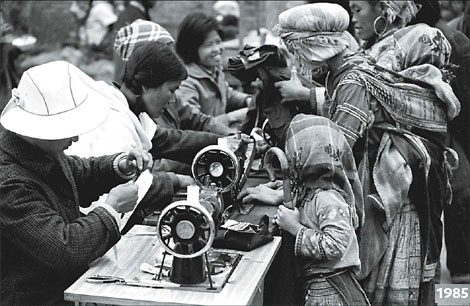 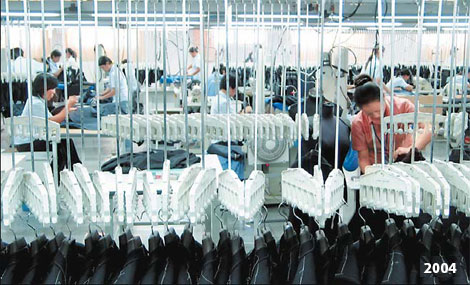 Buying new clothes was not easy in China through the 1960s and 70s. Clothes and fabrics to make them were generally unavailable, even if people had the money. In an economy bogged down by bureaucratic inefficiency many supplies were rationed, including clothes and basic. Understandably, a sewing machine was an important household asset - to help make and mend clothes. People who were fortunate to own a sewing machine (a manual one had to suffice, for China still couldn't make electrical ones) could practically make a business with it by running a community tailoring service. This was exactly the case in the black-and-white photo taken by China Daily photographer Wang Wenlan. A few women with a few sewing machines were enough to open a small marketplace. The photo was taken in 1985 in China's southwestern frontier province of Yunnan, a land on the upper reaches of the Mekong. Although the locale was far from Beijing and Shanghai, and the time was long before China grew into one of the world's leading textile and garment makers, the beginning of a change was beyond doubt. You already had some market economy and private initiatives there. Indeed, those women making or mending clothes for their customers (some of minority nationalities, as one can tell from their dress) should be regarded as pioneers of the nation's market-oriented reform. When they moved their iron sewing machines to the village fair most of China's industry was still under monolithic State ownership, and very few services were available - from large cities to small townships. Without personal efforts from millions of people, successful or otherwise, there could not have been enough driving force for China to experience the sweeping change which economists call development. By the same token, without those seamstresses and many others like them in other cities and towns, probably China would not have had as many modern garment-making factories as shown in our color photo. It was taken in a garment factory in coastal Zhejiang Province in 2004, during the golden time for China's textile merchants. When people come to talk about China's economic success, they tend to define it as a success of development. But as our photos tell, the true history is that China already began to change when development was still to come along. It's the market economy that leads all the change in China.
(For more biz stories, please visit Industries)
|
主站蜘蛛池模板: 欧美大屁股喷潮水xxxx| 精品国产精品中文字幕| 少妇人妻偷人偷人精品| 好吊视频在线一区二区三区| 久久精品道一区二区三区| 处破痛哭a√18成年片免费| 熟女国产精品一区二区三| 国内不卡不区二区三区| 国产精成人品日日拍夜夜免费| 午夜成人无码免费看网站| 国产欧美一区二区精品久久久| 日本视频精品一区二区| 日韩免费无码视频一区二区三区| 欧洲熟妇色自偷自拍另类| 最新偷拍一区二区三区| 波多野结衣一区二区免费视频| 99在线视频免费观看| 一本一本久久久久a久久综合激情| 亚洲精品久久久久久久久毛片直播| AV无码免费不卡在线观看| 夜夜春久久天堂亚洲精品| 丁香五月婷激情综合第九色| 欧美亚洲综合成人A∨在线| 开心婷婷五月激情综合社区| 黄a大片av永久免费| 99久久国产综合精品女同| 粉嫩一区二区三区精品视频| 亚洲最大成人在线播放| 亚洲精品日本久久一区二区三区| 欧美日韩在线亚洲综合国产人| 少妇被无套内谢免费看| 性欧美三级在线观看| 亚洲熟伦熟女新五十熟妇| 国产SUV精品一区二区四| 久久aaaa片一区二区| chinese乱国产伦video| 国产国产成人精品久久蜜| 亚洲av成人一区在线| 强伦姧人妻免费无码电影| 国内少妇偷人精品免费| 亚洲人成网站在线播放无码|
