The changing face of the retail market
Updated: 2011-12-09 08:40
By Lamine Lahouasnia (China Daily)
|
|||||||||


After joining the World Trade Organization on Dec 11, 2001, China's economy was set to undergo a significant change. Businesses were due to gain access to new export markets and foreign companies would be able to sell their products and services more freely to China's 1.3 billion people.
With such a large consumer base and rising income levels, the potential for China's underdeveloped and fragmented retail market was enormous.
Fast forward to 2011 and what has changed? In most major cities, China's retail market is almost unrecognizable, with the biggest impact seen in grocery retailing.
Foreign-owned companies have revolutionized the way Chinese consumers shop for food. The introduction of hypermarkets by Western retailers and Japanese-franchise convenience stores has sparked phenomenal growth in these channels and changed the face of China's grocery retailing market forever. Non-grocery retailing has also changed substantially, albeit less radically. For the Chinese consumer, there is now more choices, with several cities boasting international store brands such as Nike and Zara.
To put things in context, foreign retailers now account for 3 percent of the retail market, up from a negligible share in 2001. However, despite seemingly positive market conditions, many foreign retailers have failed to convert sales into profits.
Adapting a profitable retail concept to cater for Chinese preferences has been the biggest challenge faced by foreign retailers. In the West, consumers tend to buy groceries on a weekly basis. In China, however, fresh produce is crucial and consumers tend to shop every couple of days.
Similarly, live seafood is preferred by the Chinese and several foreign-owned retailers have had to adjust their stores to cater for the demand. Walmart was one of the first foreign retailer to enter the Chinese mainland market, in 1996, but it failed to turn a profit until 2008. This seems to be a common theme for grocery retailers, with Tesco rumored to be losing money in China and Carrefour barely breaking even.
These local preferences have also affected non-grocery retailing. DIY retailing in China has failed to progress, despite a construction boom, largely due to the fact Chinese consumers who can afford to decorate their homes are often wealthy enough to hire laborers to carry out the work, rendering the DIY concept redundant.
Lower levels of car ownership have also meant out-of-town "big box" stores are unlikely to work. This has proved an expensive lesson for B&Q and Home Depot, and both retailers have been forced to shut stores.
However, despite the difficulties faced by some, many foreign retailers have managed to successfully navigate the Chinese market.
Dell has been one of the most successful in China, and until 2009, was the largest Internet retailer in the country. Much of its success has been due to its ability to keep prices low.
Chinese consumers are typically price sensitive, and, for many, bargain hunting is part of the shopping experience. At the same time, they are also extremely brand oriented and retailers with exclusive products do not have to depend on price to attract consumers.
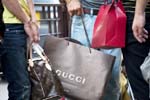
Foreign brands are generally deemed higher in quality in China, and it is why single-brand retailers have been more successful. From handbags sold by Burberry to electronics sold by Apple, the exclusive nature of foreign single-brand retailers has meant they have been able to charge a premium for their products.
Internet retailing is the fastest-growing channel in China as consumers switch from C2C to B2C sites. Just as foreign-owned stores have been adapted to suit Chinese preferences, foreign-owned Internet retailers have to incorporate Chinese online shopping habits.
One example of this is tuangou, or group buying, which has become immensely popular in recent years.
Looking ahead, the next 10 years is likely to see China's retail market continue to evolve. Signs of saturation in first-tier cities will push foreign retailers to focus on expansion into second- and third-tier cities.
Lamine Lahouasnia is a retail research analyst with Euromonitor International. The opinions do not necessarily reflect those of China Daily.
Related Stories
Why are foreign brands still so expensive in China? 2011-01-04 09:56
Behind the brands 2011-12-08 16:38
Chinese prefer to buy luxury itmes overseas 2011-11-22 17:12
- Studios focus on fund raising
- Power shortfalls 'to persist'
- Risk high on agenda of financial meeting
- Project paves way for offshore wind power boom
- CPI to ease, inflationary pressure remains
- New orders of Chinese shipbuilders sink
- Land sales in Chinese cities fall 13%
- Rail e-ticket sales get off-track