



Multilateralism indispensable to prosperity in fragmented, yet interconnected, world







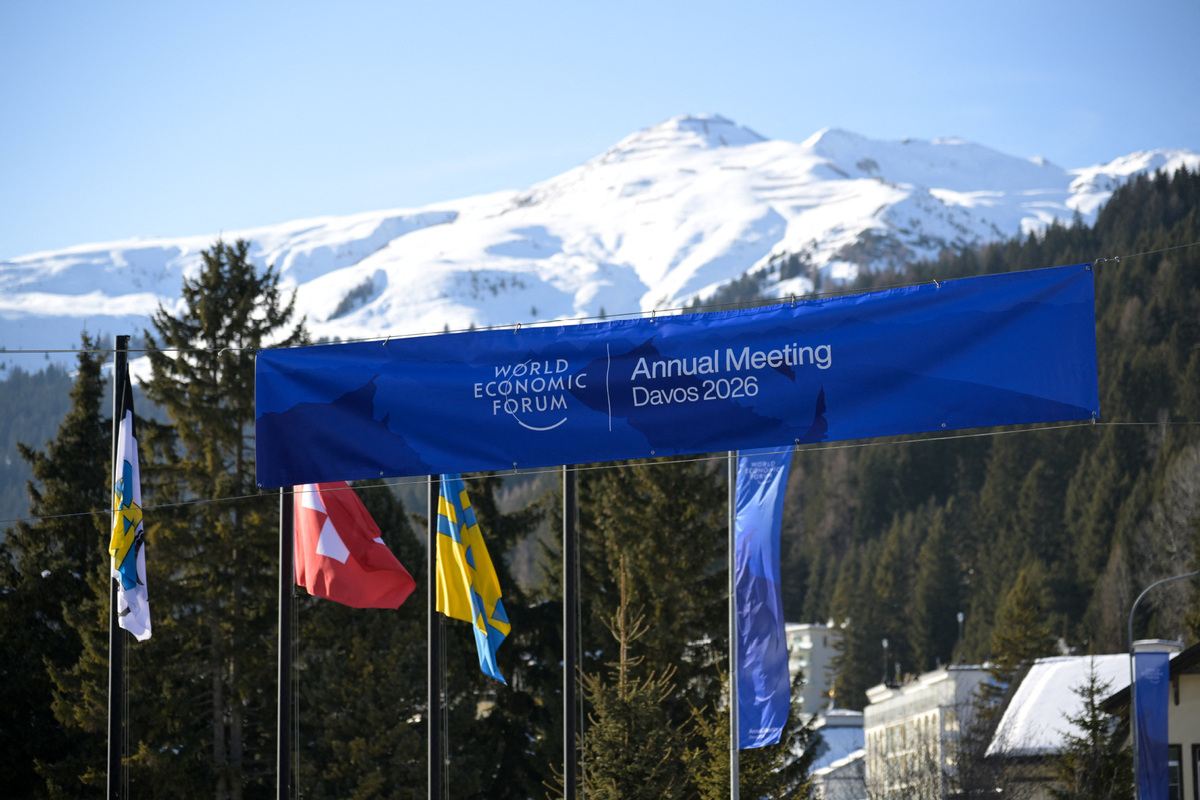
The theme of the 2026 World Economic Forum Annual Meeting in Davos, "A Spirit of Dialogue", captures just what today's fragmented and rapidly changing world needs. Countries, businesses, societies, ethnic groups, or any kind of group must genuinely link their needs and perspectives to one another. Through honest communication and negotiation, they can reduce the likelihood of conflict and build a shared understanding.
This idea aligns closely with China's long-standing approach to international affairs. On global issues, China consistently emphasizes dialogue and consultation to maintain peace and stability among all parties, a stance that is visible to all.
China's commitment to multilateralism extends well beyond its participation in Davos, Switzerland. The 2026 Annual Meeting of the New Champions, also referred to as Summer Davos, is scheduled to take place from June 23-25 in Dalian, Liaoning province, under a rotating arrangement with the Tianjin municipality. So, apart from sending a large delegation to Europe every year, China also hosts its own Summer Davos in two of its northern coastal cities, renowned for openness and economic engagement.
Davos and Summer Davos are just two of the platforms China uses to advance multilateral cooperation. At the regional level, as 2026 has been designated the APEC China Year, multiple Chinese cities will host approximately 300 related activities, culminating in the 33rd APEC Economic Leaders' Meeting in Shenzhen on Nov 18-19. Chinese authorities have made clear that China is committed to working with all parties to build an Asia-Pacific community, strengthen regional economic cooperation, unlock growth potential, and create a new era of shared development across the region.
From APEC in the Asia-Pacific to the global stage at Davos, and through initiatives such as the Belt and Road Initiative, China consistently seeks to advance global governance by linking regional cooperation with international frameworks. Multilateralism, after all, is not just a principle; it is a practical approach for connecting diverse players and arriving at coordinated solutions to common challenges.
We do not intend to engage in a simple comparison. Yet, it is worth noting that the United States of America— which assumed G20 presidency for 2026 in last December — has outlined three key themes for its presidency: unleashing economic prosperity by limiting regulatory burdens, unlocking affordable and secure energy supply chains, and pioneering new technologies and innovations. Conspicuous by its absence is the language of cooperation. Coupled with the US' recent decision to withdraw from 66 international organizations, followed by plans to establish a so-called "Board of Peace", it appears that collaboration has not been a central focus of US national strategy.
This contrast highlights a deeper philosophical difference. While China emphasizes the shared interests of all partners, the US often prioritizes its own narrow interests. As a result, unilateral actions on the part of the US are not surprising. Yet the global challenges of 2026 — from economic uncertainty to climate risks and technological disruption — demand a spirit of dialogue rather than monologue, and cooperation rather than isolation.
In a world that is increasingly interconnected yet increasingly fragmented, platforms such as Davos, Summer Davos, APEC, and the Belt and Road Initiative show that dialogue and multilateralism can work in practice. China's approach demonstrates that sustainable solutions emerge from understanding, consultation and collective action, while the US' focus on unilateral gains serves as a reminder that global stability cannot rely on a single nation's interests.
If 2026 is to be a year of progress, dialogue, not unilateral action, will have to be the cornerstone for addressing the complex, interdependent challenges of our time. Multilateral platforms, effective communication and a willingness to find common ground are not just ideals, but the very mechanisms through which the world can manage its complexities and move toward shared prosperity.




















