Institutional strengths solidify foundation for a confident start to new five-year plan: China Daily editorial








Its performance in 2025 shows that China's economy benefits from a strong capacity to plan for the long term while acting pragmatically in the short term. The economy grew by 5 percent year-on-year in 2025, meeting the annual target and bringing the 14th Five-Year Plan (2021–25) to a successful close. For a country navigating a volatile global environment and structural economic adjustments at home, this has been a hard-won achievement.
Behind the headline figure, China's GDP surpassed 140 trillion yuan ($20 trillion) for the first time, employment remained generally steady, foreign trade hit a new high, foreign exchange reserves stayed above $3.3 trillion, and quarterly growth stayed within a reasonable range. Such solid growth against strong headwinds illustrates the advantages of coordinated macro policymaking and effective policy transmission from central decision-making to local implementation.
The significance of the 5 percent growth goes beyond scale, as it lays the groundwork for a steady start to the 15th Five-Year Plan (2026-30) period, during which external uncertainties persist, domestic demand requires further strengthening, and the transition from old to new growth drivers entails more targeted input. Addressing these challenges demands continued reliance on the country's institutional strengths — strategic planning, policy coordination, pragmatic reform and high-standard opening-up, as stressed by the annual Central Economic Work Conference held last month.
Notably, the past five years have further consolidated the fundamentals of the Chinese economy. The trade structure has been further diversified, the advantages of a complete industrial system have been better leveraged and the potential of China's superlarge domestic market has been further unleashed. This has helped cushion external shocks while creating room for policymakers to deploy policy tools promptly to stabilize growth and promote upgrading.
That is reflected in the strong momentum of high-tech and high-value-added exports over the past five years despite some major economies' attempts to "decouple" from China or "de-risk" their trade and industries. China's role as a major trading partner for more than 150 countries and regions highlights the depth of its global economic linkages.
Far from derailing its development, external pressure serves to prompt China to double down on optimizing its economic structure and upgrading its industry. High-tech manufacturing expanded its share in industrial output, final consumption contributed more than half of economic growth and progress toward establishing a unified national market was advanced. Meanwhile, institutional reforms helped unleash market vitality by fostering fair competition. It should be clear that the more some external forces try to contain China's development by stifling its innovation and isolating it from the world economy, the more China has turned to innovation-driven growth and opened its door wider to the world. In doing so, it has integrated more deeply with the global economy on the basis of high standards. As World Economic Forum President Borge Brende observed, China is consolidating its traditional strengths while expanding into new frontiers, and remains a major contributor to global growth driven by innovation.
That China continues to rank among the fastest-growing major economies, given the strong headwinds it has encountered, is remarkable not only for its estimated 30 percent contribution to global growth but also its symbolic significance. Faced with the United States' economic coercion and trade bullying, while some major economies chose to be submissive, some hesitated and others have gone with the US flow, China responded resolutely through its own development and stability. The resilience of the Chinese economy and the progress it has made should awaken some major economies to the fact that openness and cooperation remain the keys to development.
China has reaped the ripple-effect benefits of openness, cooperation and innovation-driven growth as advances in digital manufacturing, artificial intelligence, green energy and advanced equipment manufacturing have not only boosted productivity but also improved the economy's capacity to adapt to uncertainties. During the new five-year plan period, China will continue to increase its R&D investment, strengthen its innovation ecosystem and deepen its integration of technology with industry to foster new quality productive forces.
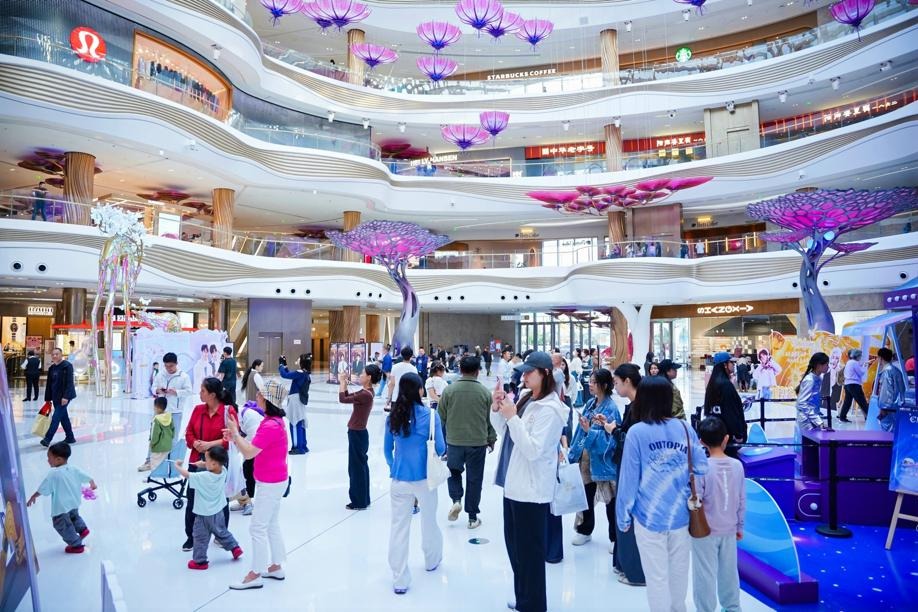
At the same time, China will continue to cultivate domestic demand as the main growth engine, with greater emphasis on boosting consumption, especially service consumption, and improving income distribution. Supply-side reforms will focus on upgrading traditional industries while nurturing emerging ones, ensuring that new growth drivers can offset cyclical pressures. Reform will remain a key lever, with deeper market-oriented measures to improve efficiency, lower logistics and transaction costs, and better align incentives across regions and sectors.
All these endeavors aim to ensure that China does its own things well to help form a dual circulation pattern that is mutually reinforcing. This will not only enable the country to better adapt to external uncertainties but also allow other countries to benefit from China's development through practical cooperation.
The Chinese economy has always developed by overcoming challenges, thus developing a strong capacity to adapt to changes. With stable fundamentals, proven policy tools and a clear reform orientation, China is well positioned to navigate future challenges and ensure that the new five-year plan period begins with confidence, capacity and steady progress.