



Economic cooperation in an uncertain world







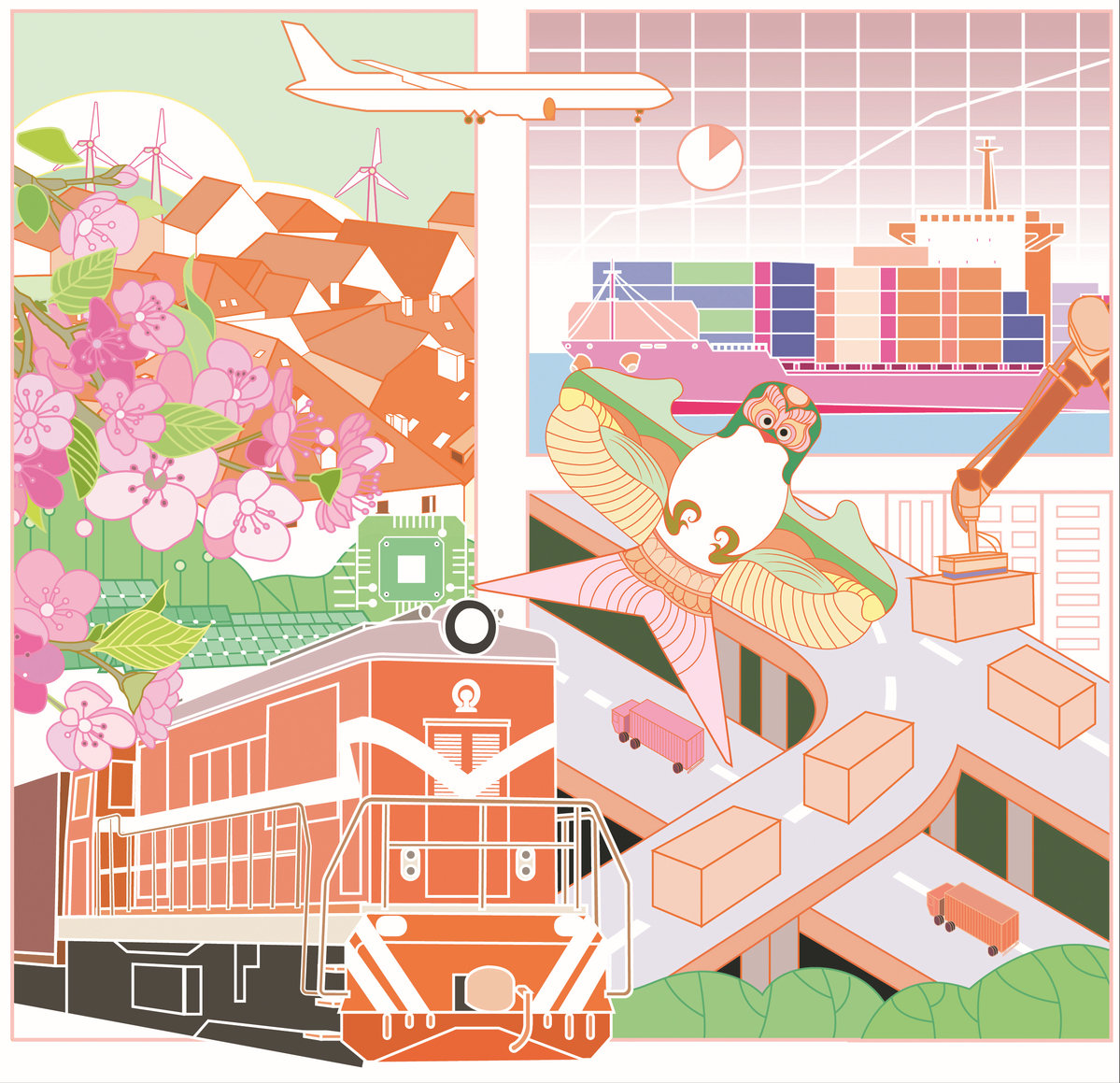
The choice for Spain and the EU should not be between China and the US, but between protectionism and open international cooperation
The fact that China's trade surplus exceeded $1 trillion in the first 11 months of 2025 should not be interpreted merely as a record figure, but rather as a reflection of profound transformations in the global economy. This outcome is not the product of a short-term Chinese strategy, but of a sustained process of integration into the global economy, market diversification and adaptation to an increasingly fragmented international environment.
In this context, economic cooperation between China and the European Union, especially between China and Spain, has gained strategic importance in 2025 and will remain key in 2026, in the face of unilateral trade policies promoted by the United States.
The EU represents an essential trading partner for China, not only because of its economic size, but also because of its historical role as a defender of multilateralism and rules-based trade. In 2025, while Chinese exports to the US have been affected by the US' erratic tariff policies, trade with Europe has shown notable resilience.
The increase in Chinese exports to the EU reflects the structural complementarity of the two economies. The EU needs competitive industrial products, intermediate goods and mature technologies that China can offer at scale and at reasonable prices. At the same time, China continues to import advanced machinery, chemical products, luxury goods and high value-added services from Europe.
The current trade imbalance should not be addressed through punitive measures, but rather by fostering openness, industrial cooperation and the expansion of trade in sectors where Europe has clear advantages. In this regard, China has reiterated its willingness to expand market access and to facilitate a more predictable environment for European companies.
In the case of Spain, its bilateral relationship with China is characterized by pragmatism and the absence of political conflict. Although trade remains asymmetric in terms of volume, this imbalance is not an anomaly, but rather a natural phase in an evolving economic relationship.
Spain exports agri-food products, specific industrial goods and services linked to tourism, logistics, and engineering to China. At the same time, Spanish imports of Chinese goods have helped contain inflation, improve the competitiveness of Spanish companies and broaden consumer choice.
China particularly values Spain's role as a logistics platform and as a potential partner in strategic sectors such as renewable energy, sustainable mobility and the green economy. From this perspective, the objective should be to gradually rebalance bilateral trade through greater reciprocal investment and technological cooperation.
It is unrealistic to expect China's trade surplus to decline sharply in 2026 without structural changes in the global economy. China's export strength stems from its industrial capacity, logistical efficiency and central role in global supply chains.
However, China does not view this surplus as an end in itself. On the contrary, Chinese authorities have repeatedly emphasized the need to strengthen domestic demand, expand imports and move toward more balanced growth. If the surplus remains high in 2026, it will largely be the result of external factors — most notably the weakness of the global recovery, trade barriers imposed by third countries and the lack of competitive alternatives in certain key sectors.
The tariff policies applied by the US should not be analyzed solely in terms of their immediate impact on specific trade flows, but rather in terms of their broader effect on the stability of the international economic system. The tariffs introduced and expanded in recent years have contributed to greater fragmentation of global trade, increasing costs, reducing predictability and weakening the multilateral mechanisms that have facilitated global economic growth for decades.
For China, these measures have reinforced the need to accelerate ongoing internal transformations — industrial modernization, strengthening the domestic market and diversifying economic partners in a broad sense — not as a tactical reaction, but as a structural strategy. The central objective is to reduce vulnerability to unilateral decisions and to build a more balanced and resilient economic base.
US tariffs have not corrected the global imbalances they claimed to address. On the contrary, they have led to additional distortions, affecting both producers and consumers, and have increased uncertainty for companies around the world, including European companies. The use of tariffs as a political tool undermines mutual trust and hampers international cooperation at a time when the global economy needs more coordination and less confrontation.
The economic and trade conditions of the EU will continue to be influenced in 2026 by an international environment marked by uncertainty, regardless of the specific evolution of bilateral trade flows with China. US tariff and trade policies have contributed to eroding the stability of the global framework, generating indirect effects that impact supply chains, investment decisions and business expectations in the EU.
The EU faces a strategic dilemma: to adapt to a more fragmented world with greater reliance on defensive measures; or to reinforce its role as a power committed to rules-based trade and multilateral cooperation.
In this context, the EU will continue to face external pressures in 2026, both from developments in US trade policy and from the slowdown of the global economy. These pressures do not stem from a specific relationship with China, but from an international environment in which trade has become more politicized and less predictable.
Economies such as Spain should pursue a rational, long-term strategy. This implies avoiding ideological approaches, identifying areas of genuine complementarity and actively participating in Eurasian value chains.
Spain, in particular, can benefit by strengthening its presence in the Chinese market, attracting productive investment and collaborating in sectors where both economies share objectives, such as the energy transition and industrial innovation.
Looking ahead, China sees the EU not as a rival, but as an essential partner in preserving global economic stability. The choice for the EU and for countries such as Spain should not be between China and the US, but between paralyzing protectionism and open international cooperation capable of addressing the challenges of an increasingly interdependent world.
The author is an economist, an adviser at the Cátedra China Foundation, Spain, and the author of the book Why China Is Winning. The author contributed this article to China Watch, a think tank powered by China Daily.
The views do not necessarily reflect those of China Daily.
Contact the editor at editor@chinawatch.cn.





