Experts striking more upbeat tone regarding HK's economic outlook







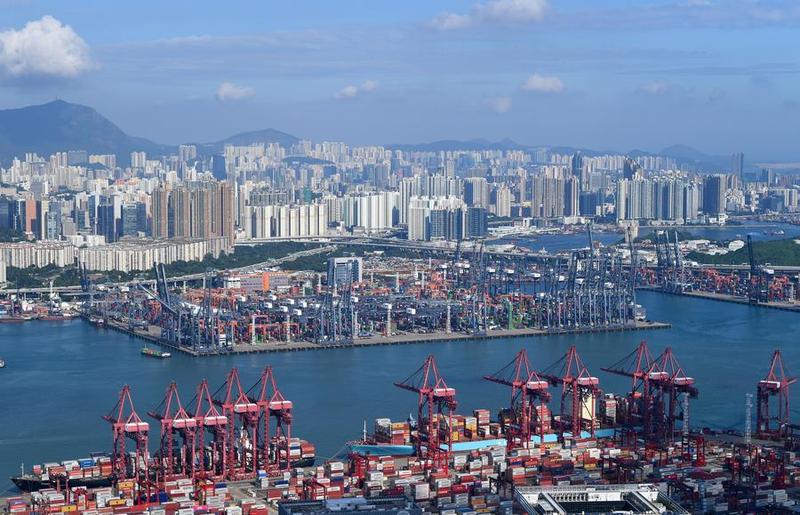
Hong Kong's economy ended the past year on a firmer footing, with private sector business activity extending its expansion streak. As trade, finance and technology-driven demand offers fresh momentum, experts are striking a more upbeat tone regarding the city's economic outlook.
The headline seasonally adjusted S&P Global Hong Kong SAR Purchasing Manager's Index eased slightly to 51.9 in December, remaining comfortably above the 50 threshold that separates expansion from contraction for a fifth consecutive month.
The reading points to a moderate but sustained improvement in business conditions, capping the strongest quarterly performance since early 2023.
"Both output and new orders rose solidly, with the expansion in demand broad-based across domestic and external markets," said Usamah Bhatti, economist at S&P Global Market Intelligence.
"Rising demand for artificial intelligence has made electronics and semiconductors a major driver of Hong Kong's trade flows, and some local companies are seeing tangible benefits," said Gary Ng, a senior economist at Natixis Corporate and Investment Banking." Meanwhile, the actual impact of US tariffs on exports and the broader economy has proved weaker than expected, with many companies receiving more orders than they had anticipated."
Backlogs of work increased for the first time in a year, a development often viewed as a forward-looking signal of further gains in output, Bhatti said.
Lynn Song, an economist at ING, told China Daily that Hong Kong's economy remains on a recovery path, supported by what he described as "a few notable boosts". These include strong performance of financial markets, an uptick in IPO activity, and solid trade performance alongside China's export strength in 2025.
Citing the Centa-City Leading Index, which hit a 20-month high in December, Song said local property market performance has also shown signs of stabilization. "Retail sales, however, are lagging behind in comparison, especially as many shoppers have redirected a portion of consumption northbound," he said.
Ng believes all these dynamics should keep Hong Kong's PMI above the 50 threshold in the coming months. The financial hub has seen its GDP growth generally outperform market expectations through the first three quarters of last year, and Song expects the fourth quarter to post "respectable growth".
UBS joins the chorus of optimism on Hong Kong's economic outlook. The Swiss bank projected a growth of 2.3 percent for the local economy in 2026, beating the market consensus of 2 percent.
"The special administrative region will continue to benefit from the high value-added trade this year," said Deng Weishen, senior Asia and China economist at UBS Investment Bank, who also upgraded the SAR's GDP growth forecast for the final quarter of 2025 to 3.1 percent on the back of broad-based recovery.
Yet, geopolitical risks remain difficult to predict, and as rate cut cycles in many economies outside the United States near their end, business expectations in Hong Kong could face renewed pressure, Ng added.