Ningxia's rooftop solar panel project enriches residents
Homes profit from selling surplus electricity to grid







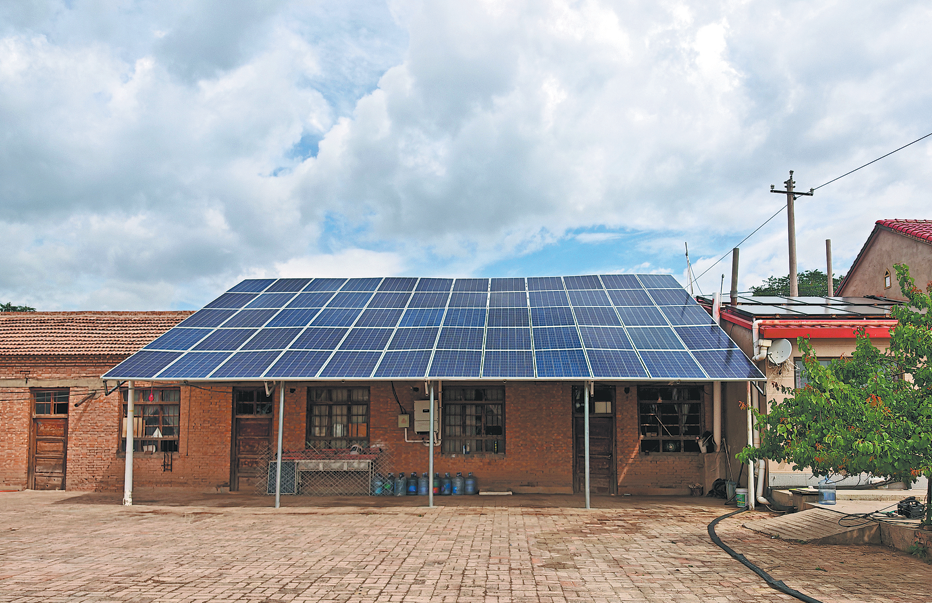
Northwest China's Ningxia Hui autonomous region is further strengthening its pioneering position in promoting renewable energy by installing solar panels on rooftops enabling residents to sell power back to the grid.
Ningxia receives an average of around 3,000 sunlight hours per year, making it one of the sunniest areas in the country. The provincial-level region is also China's first for renewable energy generation, solar and wind, to overtake local demand.
Tongxin Party secretary Chen Hua said the grid-connected capacity of distributed photovoltaic systems has reached 125.62 megawatts in the county as of December.
The installations generate about 226 million kilowatt-hours annually — enough to power around 90,000 Chinese households for a year — bringing in roughly 40 million yuan ($5.7 million) in annual power sales for local residents.
Chen said that as well as the environmental benefits, the program has contributed to rural poverty alleviation.
"Their (the residents') wish each morning is simply to see the sun,"Chen said. "When the sun shines, income comes in."
One beneficiary is Ma Zhanhai, a farmer in Yuhai township, who invested 200,000 yuan in rooftop solar panels.
With annual power generation of around 150,000 kWh, he is expected to recover his costs within five years and earn profits for the remainder of the system's 25-year life span.
This model involves 857 households paying for the equipment and selling electricity back to the grid in the whole county. They install 66.5 megawatts of capacity.
Average annual income from those involved is estimated at about 31,000 yuan per household, exceeding average per capita disposable incomes, according to 2024 estimates.
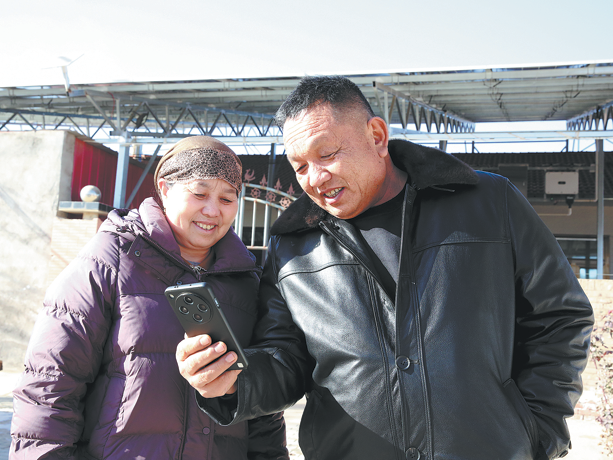
"We organized residents to visit households with existing installed systems and showed them real returns through mobile apps — these are tangible benefits. Once they saw the clear benefit on income, they all wanted to do it themselves," Chen said.
A second model allows villagers to rent out their rooftops to energy companies, which install and operate the solar panels.
Ding Xueming, a resident of Hexi township, receives an annual rent of 2,544 yuan under this arrangement. Rental rates are set at 30 yuan per panel per year for the first 10 years, falling to 20 yuan for the following 15 years.
Additional support has come from both State-owned and private enterprises. China National Nuclear Corporation has set up an assistance fund of 2.04 million yuan to build photovoltaic projects across 49 villages, while another solar company provides annual per-panel subsidies, lifting related average household income to about 4,476 yuan.
The growth of distributed solar has also boosted village-level collective finances.
Chen said the county government has invested 23.28 million yuan in whole-village photovoltaic projects, with priority given to low-income households. In the first four pilot villages, construction costs are expected to be recovered within eight years, after which the projects will generate net profits.
"With collaboration between government, enterprises and residents, the distributed photovoltaic industry in Tongxin is serving not only as a new model of energy production but a new normal to benefit people, solidifying the achievements of our poverty alleviation campaign," Chen added.
Qi Zichen contributed to this story.