



Economic stability a pillar of national security







The Central Economic Work Conference, which concluded last month in Beijing, reaffirmed a core principle: Development is the ultimate form of security.
In today's era of geopolitical fragmentation and supply chain volatility, China is advancing a comprehensive strategy to safeguard its economic foundations — bolstering energy resilience, ensuring food self-reliance, accelerating technological self-sufficiency, and reinforcing global value chains. Far from retreating into isolation, this approach reflects a calibrated effort to strengthen domestic capabilities while deepening strategic international cooperation: turning security not into a barrier, but a springboard for high-quality development.
China's holistic approach to national security, introduced by President Xi Jinping in 2014, is a doctrine that expands the concept of security far beyond the military domain to encompass political, economic, technological, societal and resource-related dimensions.
Within this system, economic security is fundamental, with development regarded as the greatest form of security. Policymakers emphasize enhancing economic strength, competitiveness and resilience, while balancing domestic priorities with international cooperation and competition.
Recent geopolitical disruptions have brought the economic dimension of this framework to the forefront. Rising protectionism, fragmented global value chains and vulnerabilities exposed during the pandemic, combined with tensions stemming from US-China competition and the Ukraine crisis, have sharpened China's focus on strengthening domestic capabilities and reducing exposure to external shocks.
These pressures also reinforced existing policy directions, including the "dual circulation" guideline, which gives greater weight to the domestic economic cycle while sustaining international engagement. China puts these principles into practice across four key domains of economic security: energy, food, technology and global value chains.
Energy security is the central pillar of China's holistic national security framework, shaped by the country's status as the world's largest energy consumer since 2009. This position has heightened concerns about the reliability of supply routes and the geopolitical risks associated with them, particularly given China's dependence on maritime choke points such as the Strait of Hormuz and the Strait of Malacca.
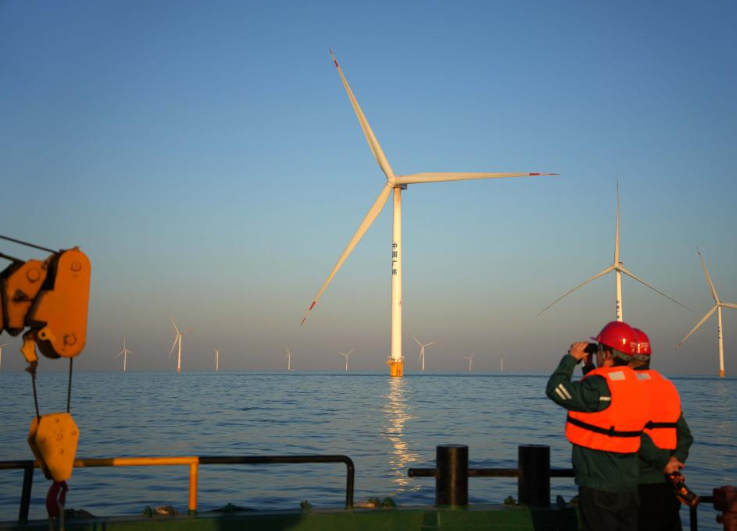
A major institutional step came with the adoption of the Energy Law, which introduced a unified legal foundation for regulating the sector. The law formalizes a dual-track strategy: reliance on coal as a stabilizing resource, alongside accelerated expansion of solar, wind and other renewables, with a target for nonfossil fuels to be 20 percent of total energy consumption by 2025.
China has significantly reduced its reliance on the United States for crude oil. It redirected purchases toward suppliers aligned with its strategic and geopolitical priorities. This shift reflects a deliberate effort to reduce exposure to supply disruptions arising from US-China trade tensions.
To mitigate the risks associated with maritime choke points, China has developed alternative transport corridors through the Belt and Road Initiative. Overland pipelines from Russia and Central Asia, as well as investments in port infrastructure across the Indian Ocean and Middle East, provide diversification of transport routes.
Food security in China is viewed as a core component of national security. Policy priorities include preserving arable land, raising domestic productivity and advancing agricultural innovation to ensure stability amid external shocks.
To reinforce domestic capacity, China has built one of the world's strongest grain reserve systems. China holds large reserves of maize, rice, wheat and soybeans, which illustrates both the scale of domestic insurance and the determination to shield the country from global volatility. Yet projections indicate that China will remain the world's largest importer of agricultural products such as soybeans in the near future.
A notable trend is diversification of import sources. Reliance on the US fell sharply while imports from Australia, Russia, Kazakhstan and several Belt and Road partners increased.
Technology security is another key pillar of China's holistic national security architecture. The strategic logic is straightforward: No modern economy can maintain stability, competitiveness or military autonomy without control over its technological foundations.
External pressures, including export controls and investment restrictions, have given impetus to building an autonomous and resilient innovation ecosystem.
Global value chain security has become an increasingly important dimension of China's national strategy, shaped by geopolitical tensions, supply chain disruptions and rising techno-protectionism.
Internationally, the Belt and Road Initiative has become a key platform for strengthening value chain security. The first phase of the BRI focused on infrastructure, while the current phase emphasizes integration across the logistics, digital, industrial and financial domains.
The overarching objective is not disengagement from globalization but ensuring that China's supply chains remain functional and adaptable in an increasingly uncertain environment.
The author is a senior research fellow at the Institute of International Politics and Economics in Serbia.
The views do not necessarily reflect those of China Daily.










