



Latin America confronts the US doctrine of force







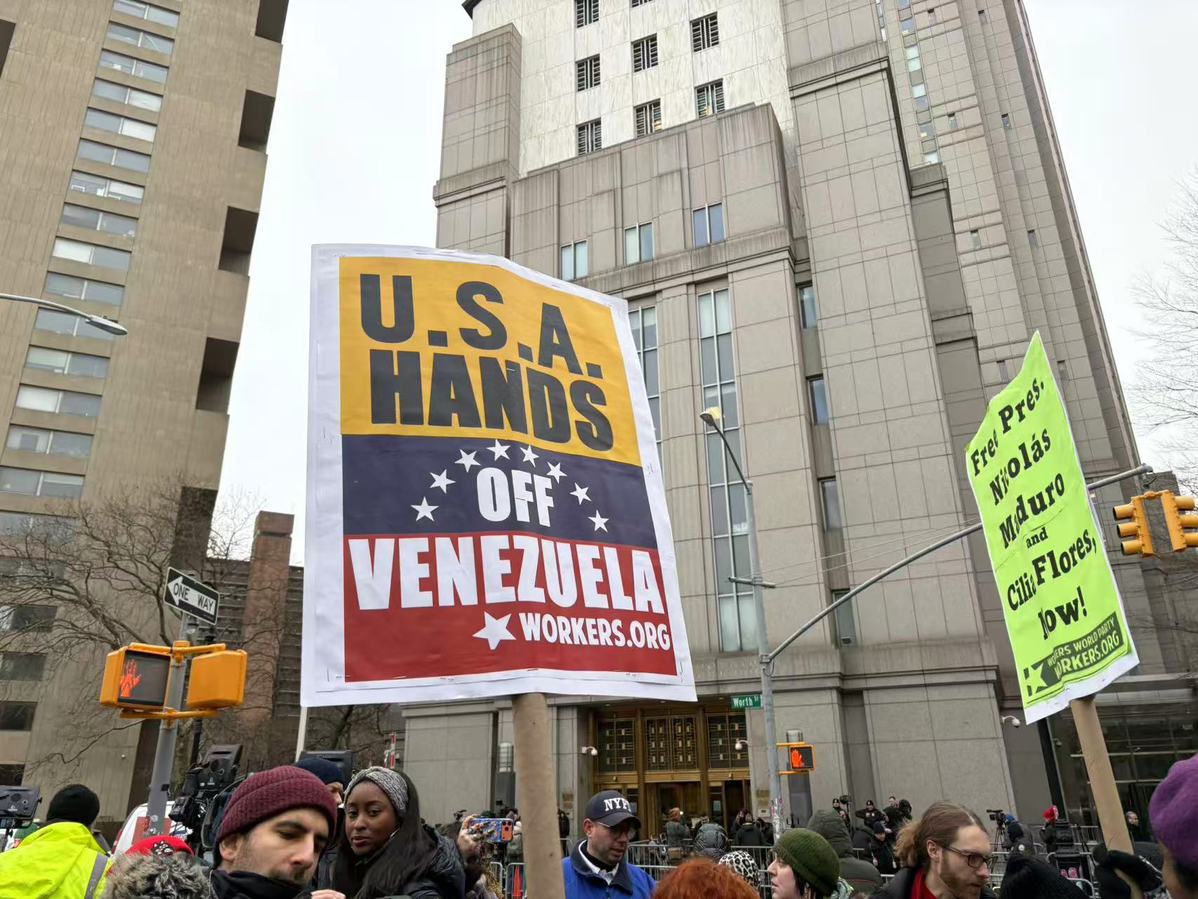
The United States military operation against Venezuela marks a divergence from the international system that emerged after WWII, exposing the erosion of the principles of sovereignty, legality, and multilateralism.
The attack not only redefines the internal situation of Venezuela, but also sends a warning to all of Latin America and the Caribbean that the use of direct intervention as a tool to subvert governments that are not "aligned" with Washington has returned.
The bombings of Caracas and the abduction of President Nicolas Maduro and his wife constitute the first military actions in the region since the approval of the controversial new national security strategy, which reinterprets and updates a doctrine more than 200 years old (the 1823 Monroe Doctrine) and the concept of "America for Americans".
This development has already had a profoundly negative impact on relations between Washington and Latin America and the Caribbean — heirs to a long history of US aggression, coups d'état, and military operations.
The prevailing perception in the region is that any government could be next, and in fact, direct threats have already been made against Colombia, Mexico, and Cuba.
What Washington has designed — with Secretary of State Marco Rubio as one of its main architects — is for South America and the Caribbean to be dominated by neocolonial rule.
This also unfolds amid deep regional fragmentation, with the rise of right wing forces and clear US interference in the internal affairs of several nations.
The inability of Latin America and the Caribbean to articulate a strategy, establish points of convergence and coordination, and build a unified long-term vision — despite ideological differences among their respective governments — buries any possibility of confronting the aspirations of the new US security doctrine as a bloc.
This aggression constitutes a serious precedent for the continuity of international relations based on the rules established after WWII.
The United States — possessing one of the most powerful armies in the world, with extensive military deployments and bases across the globe — has already demonstrated the capacity to carry out surgical operations that avoid a large-scale invasion, but effectively decapitate a system of government.
Although the world recognizes that the US attack on Venezuela violated international law, multilateral bodies such as the United Nations lack the ability to restrain Washington, as previously demonstrated by its failure to intervene in Gaza.
One objective of the attack was to eliminate Venezuela's influence as a regional actor opposed to the United States, as well as sabotage its deepening ties with Russia and China. However, the main goal undoubtedly lies in the US oil industry's interests in the resources of the South American giant.
President Donald Trump admitted as much at a press conference following the attack, stating that major US companies will invest millions to recover Venezuela's oil industry — which he said should have always remained in the hands of the United States.
Additionally, there are domestic political considerations, as President Trump — now midway through his term — needs a political win in the context of his campaign's promises to crackdown on drugs and immigration.
The government of the newly appointed acting president Delcy Rodríguez (formerly executive vice president) will face strong external and internal pressures that will sustain economic and social instability in the coming days.
On one hand, the United Socialist Party of Venezuela has a broad base of popular support demanding the release of President Nicolas Maduro. On the other, Trump has already threatened a second attack if US demands are not met and has announced that the military deployment in the Caribbean will be maintained.
According to the White House, plans are underway to "run Venezuela" until "conditions are ripe" to establish a new government, which, notably, does not include the Venezuelan opposition, discredited by Trump himself.
In reality, it seems unlikely that Washington can run Venezuela without the cooperation of the Venezuelan government, without occupying the territory, without reducing the multisectoral reach of armed forces loyal to Chavismo, and ultimately without eliminating a popular movement that has governed for more than 20 years.
The military aggression against Venezuela reveals a broader dynamic of geopolitical reconfiguration in which force once again prevails over law, and security is used as a pretext for intervention.
In the context of regional fragmentation and weakened multilateralism, Latin America and the Caribbean face the historic challenge of preventing this episode from becoming the norm.
The response — or the absence of one — will shape not only Venezuela's future, but also sets a precedent for the entire international system, increasingly marked by inequality and uncertainty.
Isaura Diez is the chief correspondent of the Latin American News Agency Prensa Latina, China Bureau.
The views don't necessarily reflect those of China Daily.
If you have a specific expertise, or would like to share your thought about our stories, then send us your writings at opinion@chinadaily.com.cn, and comment@chinadaily.com.cn.





