Forging a human-centered future in era of smart machines







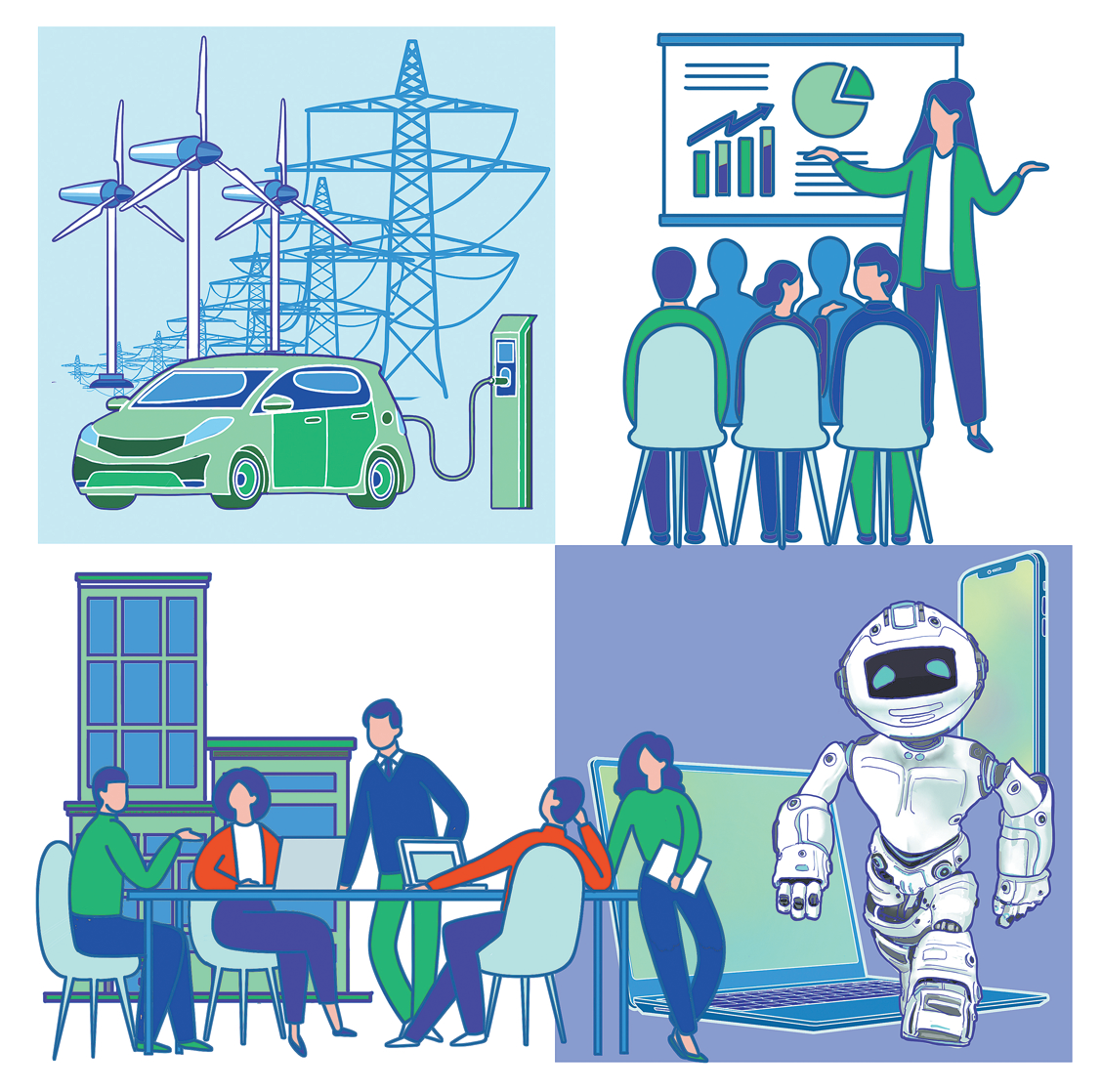
The world of work stands at a historic point, shaped by a confluence of transformative mega-trends. The accelerated technological revolution, marked by artificial intelligence, is converging with demographic shifts, green transition, and the evolving expectations of workers. This complex transformation is redefining the very nature of work, creating unprecedented opportunities while posing significant challenges of job displacement, skills mismatches, and inequality. For China, a nation with a workforce exceeding 800 million and at the forefront of technological adoption, navigating this shift is not just an economic necessity but a critical determinant of future social well-being.
The scale and pace of change are profound. While technologies like AI may automate certain routine and analytical tasks, they simultaneously generate demand for new roles. The greater risk is not a net loss of jobs, but a disruptive gap between the skills workers possess and those the future economy requires. According to the ILO, this deepening structural skills mismatch can lead to "tech-rich, job-poor" growth, where productivity increases do not translate into broad-based, quality employment. For young people, this paradox can be even more acute: their hard-earned qualifications from colleges may become obsolete, if curricula fail to keep pace with technological and industrial evolution. Therefore, the focus must shift from preserving specific jobs to future-proofing careers through adaptable skill sets.
In this context, China's strategic foresight, as embodied in the upcoming 15th Five-Year Plan (2026-30), offers a crucial framework for navigating this structural challenge. With its emphases on industry-employment synergy, new occupation cultivation and lifelong vocational training, the recommendations for the plan provide a proactive, human-centered response. The country's policy direction is aligned with the ILO's human-centered agenda for the future of work. The success of this framework hinges on the execution through systemic, agile, and inclusive measures.
First, reinforcing lifelong learning as an accessible and dynamic ecosystem. The recommendations' commitment to investing in people and promoting lifelong vocational training is fundamental. The ILO advocates for systems that are responsive, agile and co-created with key stakeholders, which can result in lower youth unemployment and smoother school-to-work transitions. China has made significant efforts, having provided government-subsidized training to over 100 million persons in recent years. The next phase involves deepening a structured flexible system where skills acquisitions are recognized and portable. The piloted credit banks in cities and industries are a case in point. Workers and citizens can open accounts at credit banks and deposit scores after taking courses to apply for skills qualifications. Employers linked to the credit banks can identify potential employees with right skill sets. Expanding such mechanism to encourage upskilling and reskilling is essential.
Second, tightening partnerships between industries and training providers for greater industry-employment synergies. Structural employment challenges arise when curricula in universities and vocational schools lag behind industrial innovations. Nurturing of new occupations like robotics technicians and sustainability analysts must be co-led by industries. Encouraging industries' involvement in setting sectoral skills councils, developing curricula, providing adjunct faculty and work-based opportunities prove to be quite effective. For example, the collaboration between Huawei's ICT Academy and thousands of schools to provide digital skills training and certification demonstrates how industry can align education and training with labor market needs. Scaling such models, with a focus on SMEs, is vital.
Finally, emphasizing transferable core skills is key for resilient workforce.
According to a study, now half of the skills people acquired through education and training may start to depreciate just within five years. While technical, job-specific skills are necessary, they are easier to fall behind labor market changes than ever before. The ILO advocates for a renewed focus on transferable core skills that enable individuals to adapt to the ever-changing environment: how to think and analyse, how to quickly learn and create, and how to effectively communicate for teamwork. Especially, the green transition in parallel with the technological transformation requires young and adult workers to foster foundational green literacy and competencies for industrial sustainability. These are precisely the skills that complement AI, not compete with it. Education and training systems need to ingrain these competencies from basic education onwards, ensuring that every citizen is equipped with the cognitive, interpersonal and sustainable toolkits to navigate multiple career shifts.
In conclusion, the disruptive potential of the technological revolution on the labor market is real, but it is not deterministic. Policy choices today will shape tomorrow's outcomes. China's recommendations for the 15th Five-Year Plan provide a visionary blueprint for investing in people, which resonates strongly with the ILO's call for a human-centered future of work. By implementing a robust, inclusive and partnership-driven lifelong learning ecosystem, China can transform challenges into opportunities. The goal must be to harness technology not for displacement, but for augmentation — augmenting human capabilities, creating more rewarding work, and driving sustainable development. This path will not only promote high-quality full employment for China but also offer valuable insights for the global community striving to ensure social justice in the era of intelligent machines.
The author is country office director for China and Mongolia, International Labour Organization.
The views don't necessarily represent those of China Daily.


Today's Top News
- Wang to meet foreign ministers of Cambodia, Thailand in Yunnan
- China's top legislature concludes standing committee session
- Thailand and Cambodia agree to temporary ceasefire
- NPC's 4th annual session slated for early March
- Civilizational links for a fairer world
- Manufacturing in China spurs global growth