Turning nation's aging challenge into opportunity
Long-term care insurance, silver economy and flexible working key components of 15th Five-year Plan







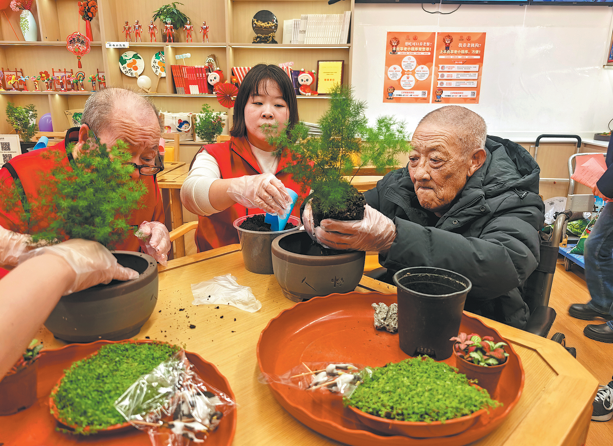
China's 15th Five-year Plan (2026-30), when it gets underway next year, will mark a significant shift in how the country handles its aging population, reframing the elderly from being a social welfare challenge to treating aging as a strategic economic opportunity formalized under long-term care insurance, private pension reform and the silver economy.
China has 310 million people aged 60 and above, accounting for 22 percent of the total population, among whom 220 million are aged 65 and above, according to the Ministry of Civil Affairs. Life expectancy during the period of the 14th Five-Year Plan (2021-25) reached 79 years, an increase of 1.07 years from 2020 and five years higher than the global average.
The recently released recommendations for the 15th Five-Year Plan by the Communist Party of China have urged the government to improve the national pooling system for basic pension insurance and to step up efforts to develop multilevel and multi-pillar pension insurance so as to progressively increase people's basic retirement income.
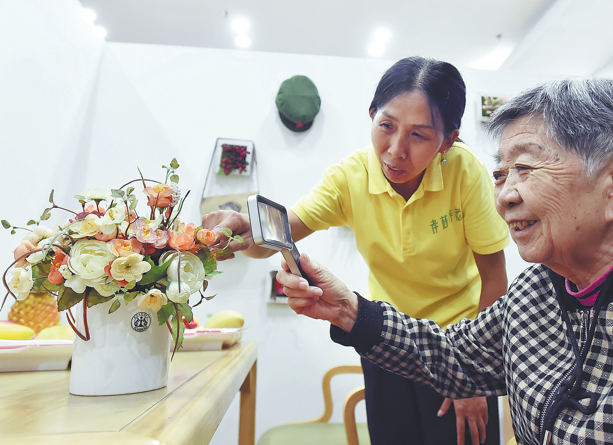
The recommendations highlighted the importance of positively dealing with the nation's aging issue by optimizing the basic services for the elderly, renovating public infrastructure and making it barrier-free and elderly-friendly, and popularizing long-term care insurance.
The government was urged to implement the policy of raising the retirement age reliably and to loosen age restrictions for employment and social insurance to better develop the senior workforce and promote the silver economy.
A December 2024 report by the China Association of Social Welfare and Senior Service and the Institution of Contemporary Social Service said the silver economy accounts for 7 trillion yuan ($996.1 billion) in China, roughly 6 percent of the nation's GDP. The number is expected to reach 30 trillion yuan in 2035 and take up 10 percent of the GDP.
During the period of the 14th Five-Year Plan, the basic elderly services network was optimized and more people joined the senior workforce.
Experts have called for the government to continue to enrich elderly services and offer a more sound insurance system and stronger working rights protection for the senior workers over the next five years.
Yang Xiaoqi, a researcher at the China Research Center on Aging in Beijing, said it's necessary over the next five years for the government to further improve basic elderly services, including material support, nursing and care services, and to make sure they are fairly accessible.
"It's important to enhance the quality of nursing care for seniors losing their basic mobility functions due to old age or disability," Yang said. "The nation can channel more investment to add nursing care beds and to improve cognitive care at nursing homes, and to give staff members professional training to improve their working ability."
He added that the government can increase efforts to diversify categories of nursing homes and make sure more places at government-supported, affordable and commercial nursing homes are available.
Figures from the Ministry of Civil Affairs show that as of the end of last year, China had 406,000 elderly nursing homes and facilities nationwide, with over 7.99 million beds available. The proportion of medically equipped nursing care beds for the elderly at nursing homes rose to 65.7 percent last year, from 48 percent in 2020.
During the 14th Five-Year Plan, the government has renovated the homes of 2.24 million vulnerable seniors, specifically targeting high-risk households — including those living in poverty, those with chronic illnesses or disabilities, and "empty nesters" who live alone without family support.
At the same time, greater emphasis has been placed on developing senior human resources by progressively raising the statutory retirement age in the next 15 years. The aim is to encourage the retired to actively engage in voluntary activities, as well as on tightening up efforts to protect senior workers' rights.
Under the new policy taking effect from Jan 1, the retirement age of men will be raised from 60 to 63, and from 55 or 58 for women, depending on their occupations. The policy stresses that it is "voluntary and flexible", and that retirement age can be adjusted accordingly to facilitate compliance with the new calculation system.
In comparison, in developed nations, the statutory retirement age averages around 64 to 65 years. However, many countries have passed laws to increase this to 67 over the next decade.
Peng Qingyun, an associate professor from the School of Law at Jiangnan University in East China's Jiangsu province, said that in order to adapt to these changes, training should be given to older workers so that they can update their skills.
"Prejudices against age are common to see, and the elderly are usually seen as a burden on society," she said, adding, however, that it will become more normal to hire "younger" elders aged 60 or above with the newly implemented retirement policy.
Peng said that some State-level notices and guidelines have been published in recent years to tighten the protection of working rights for people past retirement age who have returned or wish to return to the job market, offering policy guidance and legal support for utilizing the senior workforce.
A recent report said most Chinese people are generally unprepared for retirement, and that preparations are greatly affected by marriage status, health condition, educational background and income. The report was based on a survey conducted by the School of Economics and Management at Tsinghua University and the life insurance company Aegon THTF Life Insurance.
The report shows that the index of Chinese residents' preparedness for retirement was 5.53 last year, roughly the same as the year prior. The index is calculated by measuring people's sense of responsibility for their retirement, financial planning, plans for retirement, savings for retirement and confidence in gaining expected incomes.
The index is set to float from 0 to 10, with a lower number meaning insufficient preparation for retirement. The index was 5.7 in 2022 and 6.78 in 2021.
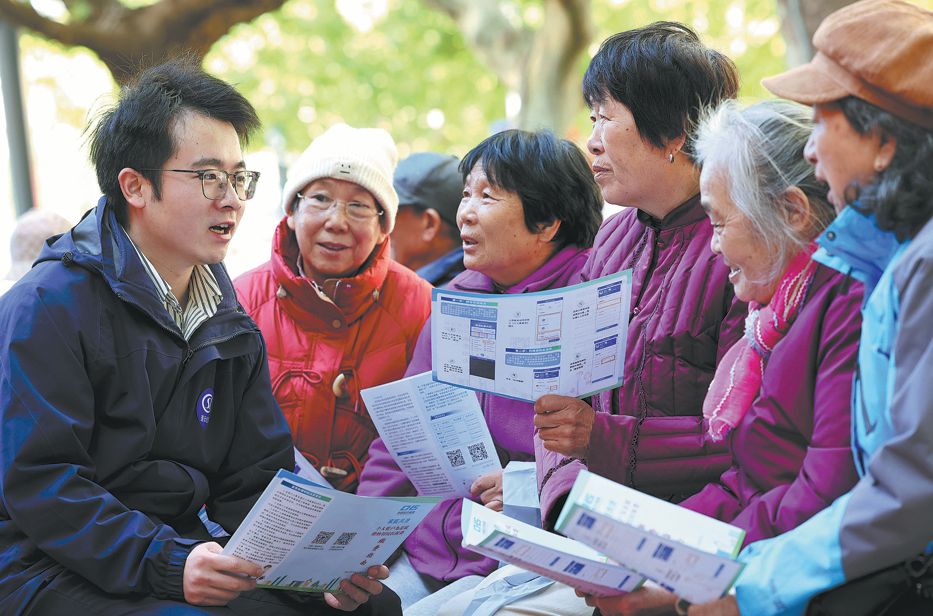
Experts said it's important that not only basic elderly services are enriched, but the pension insurance system is enhanced.
Li Chang'an, a professor at the Academy of China Open Economy Studies at the University of International Business and Economics in Beijing, said it's necessary for individuals to plan for retirement in advance and take into full consideration potential problems in income, living costs and whether to rejoin the job market after retirement age.
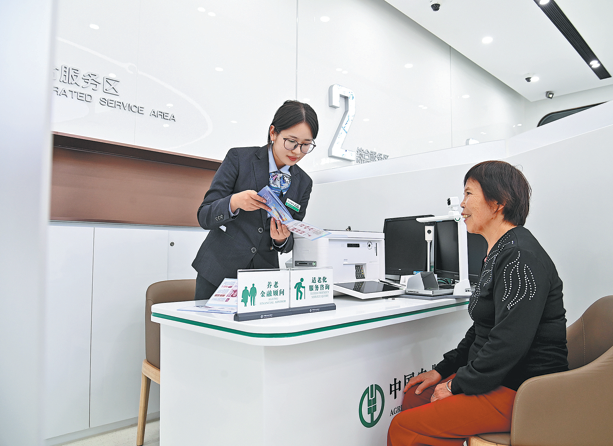
"Among these elements, income or pension is the most important thing affecting people's choice for their retirement life," Li said. He added that authorities should make efforts to optimize the pension system and improve supplements for private pensions and commercial pension insurance to ease the burden on basic national pension insurance.
"Bettering public pension services is also of importance, and the government can channel more investment and resources to support elderly nursing homes and grassroots nursing services providers to enable every individual to benefit from the nation's basic pension services," he said.





Today's Top News
- US conducting operation to seize Venezuela-linked oil tanker in Atlantic: US media
- Visits reflect commitment to relationship: China Daily editorial
- Mainland sanctions diehard 'Taiwan independence' separatists
- China's postal delivery volume hits 216.5b items in 2025
- 2025 in review: A year of shifting horizons
- Decade-plus high for key A-share index