Chinese exports to US decline as tariff pressures take a toll
November shipments drop nearly 29% as manufacturers explore new markets







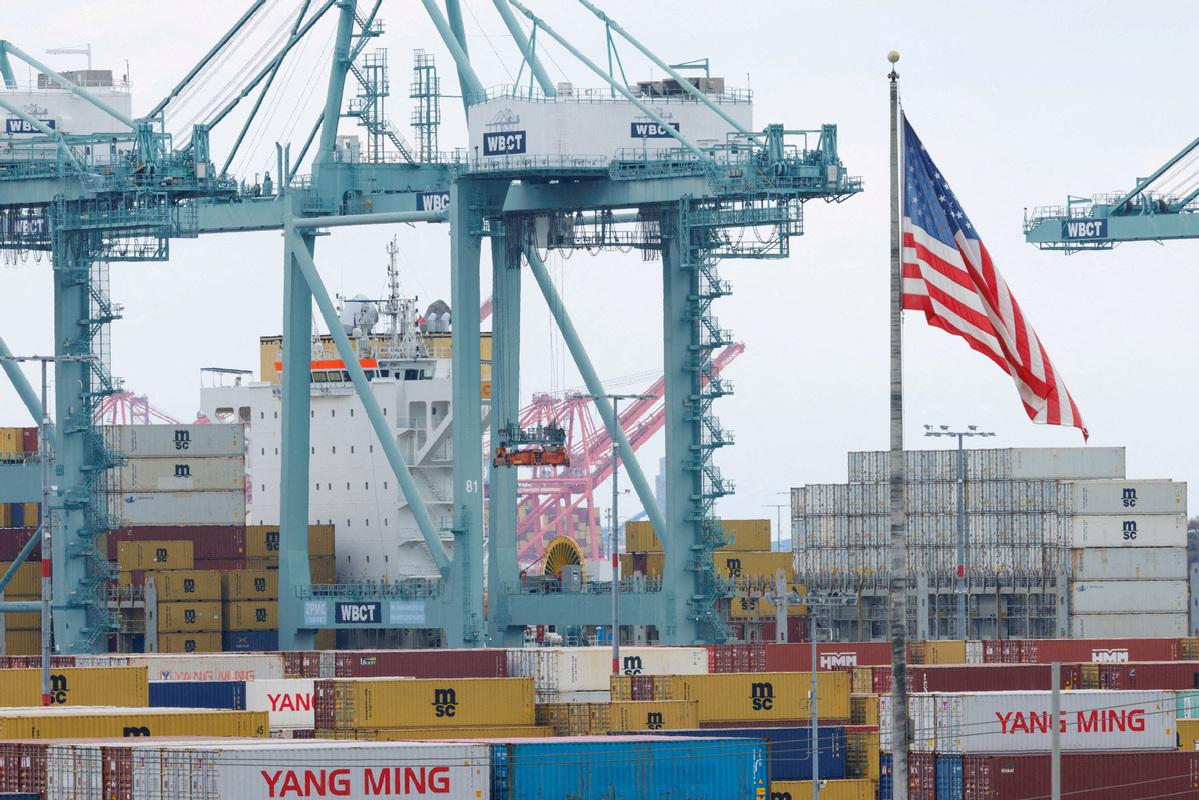
Shipments of goods to the United States from China fell nearly 29 percent year-on-year in November as the effects of tariffs and trade barriers took hold on imports.
The drop in US-bound shipments from China last month came after a turbulent year of trade policy that saw tariffs placed on goods arriving at US ports, despite a trade truce brokered between the two countries in October.
Exports from the US to China also fell 19 percent year-on-year last month, China's customs agency data showed.
However, while Chinese shipments of goods to the US were down, they increased to several other countries.
China's worldwide exports ticked up 5.9 percent last month to $330 billion and returned to growth after a surprise 1.1 percent contraction in October, according to customs data.
Peter Boockvar, chief investment officer at US financial planning firm OnePoint BFG Wealth Partners, wrote in a note: "China continues to rely less on selling stuff to the US. China has a massive pool of domestic savings, and China will again try to encourage consumers to unleash more of it to lessen their dependency on manufacturing and exports."
In October, China and the US declared a truce in the brewing trade war after a high-stakes meeting in South Korea.
It was welcome news for businesses reliant on a smooth trade relationship between the world's two largest economies.
The truce came after months of on-again, off-again US trade policy targeting global partners, including China, which at one point in the spring saw US tariffs on Chinese goods surge to 145 percent.
At present, average levies on Chinese goods into the US are around 47.5 percent, while tariffs on goods from the US to China are 32 percent, according to the Peterson Institute for International Economics.
Lynn Song, chief economist for Greater China at ING Bank, wrote in a report that the November exports "have yet to fully reflect the tariff cut, which should feed through in the coming months".
US farmers, especially those who farm soybeans, were hard hit this year after slower Chinese sales in response to the levies. But data show that China is now purchasing US crops again after a year of stagnant sales.
Farm aid
US President Donald Trump announced a much-needed $12 billion bailout package on Monday to aid US farmers who have been hit by lower sales because of the trade war.
The funds will come from the Department of Agriculture's Farmer Bridge Assistance Program and tariff revenue, Trump said. The money will help farmers who produce cotton, corn, sorghum, soybeans, rice, wheat and other crops.
Cory Walters, an associate professor in the Department of Agricultural Economics at the University of Nebraska, said China has been, and will always be, a very important export market for US farmers.
"China is an important (market) because the farmers are used to China buying a lot of soybeans," Walters told China Daily.
Farmers will welcome the bailout, but ultimately, "this is not a long run solution", he said. "They don't want to rely on government money, of course… market access is paramount."
The US tariffs have been aimed at reducing reliance on foreign countries, shoring up the domestic market and increasing domestic production.
China's market share in global exports is expected to reach 16.5 percent, from the current 15 percent, Morgan Stanley predicted. This will be driven by several areas such as manufacturing, robotics, batteries and electric vehicles.
belindarobinson@chinadailyusa.com