International standards launched for organoid studies







An organoid standard working group has recently been established, with Chinese scholars leading the effort to gather international expertise to develop a strategic plan and advance standard formulation in this field.
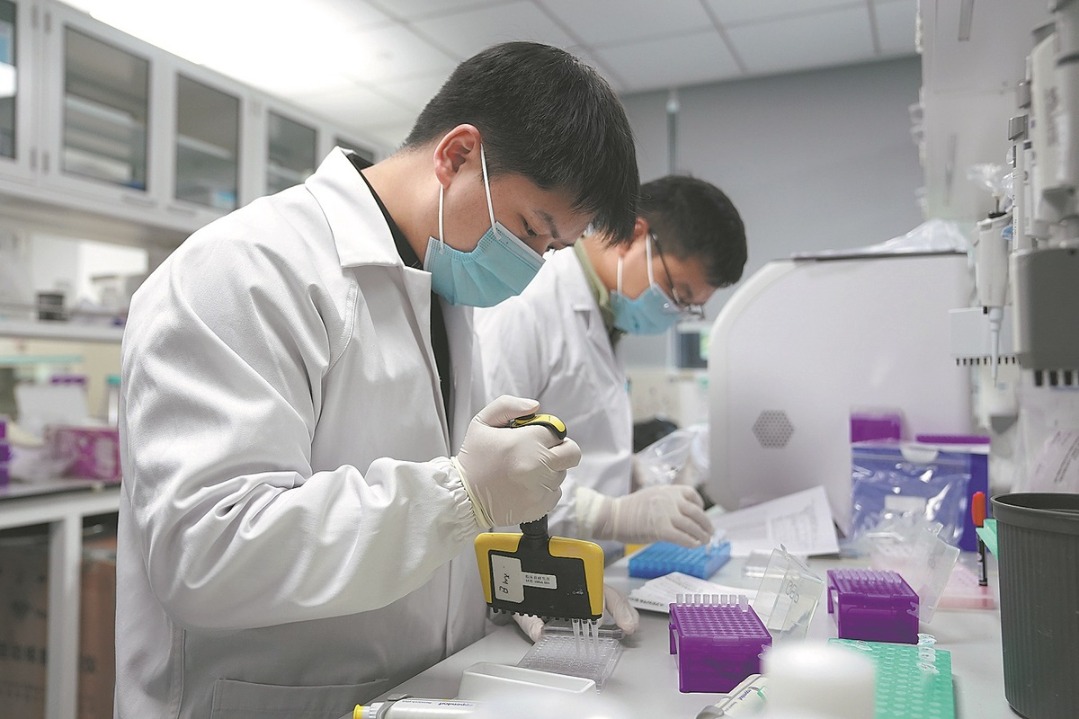
Derived from either stem cells or primary tissues, organoids are in vitro models that reconstitute the structure and functions of corresponding tissues or organs. They play key roles in fundamental mechanistic studies on regeneration and repair in human tissues and can be used in disease modeling, drug discovery and personalized medicine.
This initiative is set to provide professional technical support for the rapid translation of cutting-edge technologies into industry and promote the development of emerging biotechnology, experts said at the sixth annual conference of the China Alliance of Stem Cell and Regenerative Medicine, held in Beijing on Nov 30.
The working group, established by the International Organization for Standardization Biotechnology Committee, appointed Zhao Tongbiao, a professor at the Institute of Zoology of the Chinese Academy of Sciences, as the convener, and Lin Yin, an expert at the Beijing Institute for Stem Cells and Regenerative Medicine, as the secretary. Members include ISO member countries such as China, South Korea, Japan, the United States, Canada, the United Kingdom, Germany and India.
The conference also hosted a launch ceremony for two international standards — one for deriving human neural stem cells and the other for detecting microbiological contamination in mammalian cell culture. These standards serve as a unified benchmark for scientific research and industrial development and provide critical technical foundations for regulatory policies across countries.
Li Jia, an official from the standard innovation management department of the State Administration for Market Regulation, said that standards are the foundation of industrial innovation and that international standards act as a universal technical language vital in global technological prevalence.
"The White House released its national strategy for standards in critical and emerging technologies in 2023, outlining biotechnology as one of the eight vital fields," Li said.
She added that the establishment of the international working group and the issuance of the two international standards signify "a leap for China in certain cutting-edge fields of life sciences — from being an implementer of international standards to a contributor to their formulation and further to a pacemaker".
Chen Hong, a director at Tongji Hospital of Huazhong University of Science & Technology's Tongji Medical College, underscored the important role of standard work by highlighting the challenges of translating scientific and technological achievements into clinical treatment.
"Only by establishing standards relevant to clinical practice can technology truly benefit patients," Chen said. She added that this involves establishing the correlation between the drug efficacy tested by organoids and clinical treatment outcomes, formulating guidelines to guide clinical medical care based on organoid treatment mirrors, and conducting quality control and standardization of organoids.
Cheng Tao, an academician at the Chinese Academy of Engineering and a professor at Peking Union Medical College, said that organoid studies have become an emerging research field over the past decade. However, each laboratory often employs different criteria, such as cell sources and reagent selections.
This lack of standardization undermines the reliability, comparability and shareability of the data, leading to resource waste due to repetitive work and adding difficulties to market supervision, Cheng said, underscoring the importance of a continuously iterative standard system for the large-scale manufacture of organoids.
"Innovation extends beyond technology to include the setting of standards," Cheng said. "In fields where other countries have not yet made efforts, such as single-cell research, China should establish its own standards and promote their adoption in the international arena."
limenghan@chinadaily.com.cn




- Emergency Management Minister Wang Xiangxi under investigation
- Overseas-Chinese group tours Xinjiang as special guests
- China launches satellite for Algeria
- Capital accelerates humanoid robot mass production
- Video series unveils Hebei's breathtaking ecology, landscape
- PLA conducts combat readiness patrols around Huangyan Island