



Lengthening cooperation list and shortening problem list entail viewing China objectively: China Daily editorial







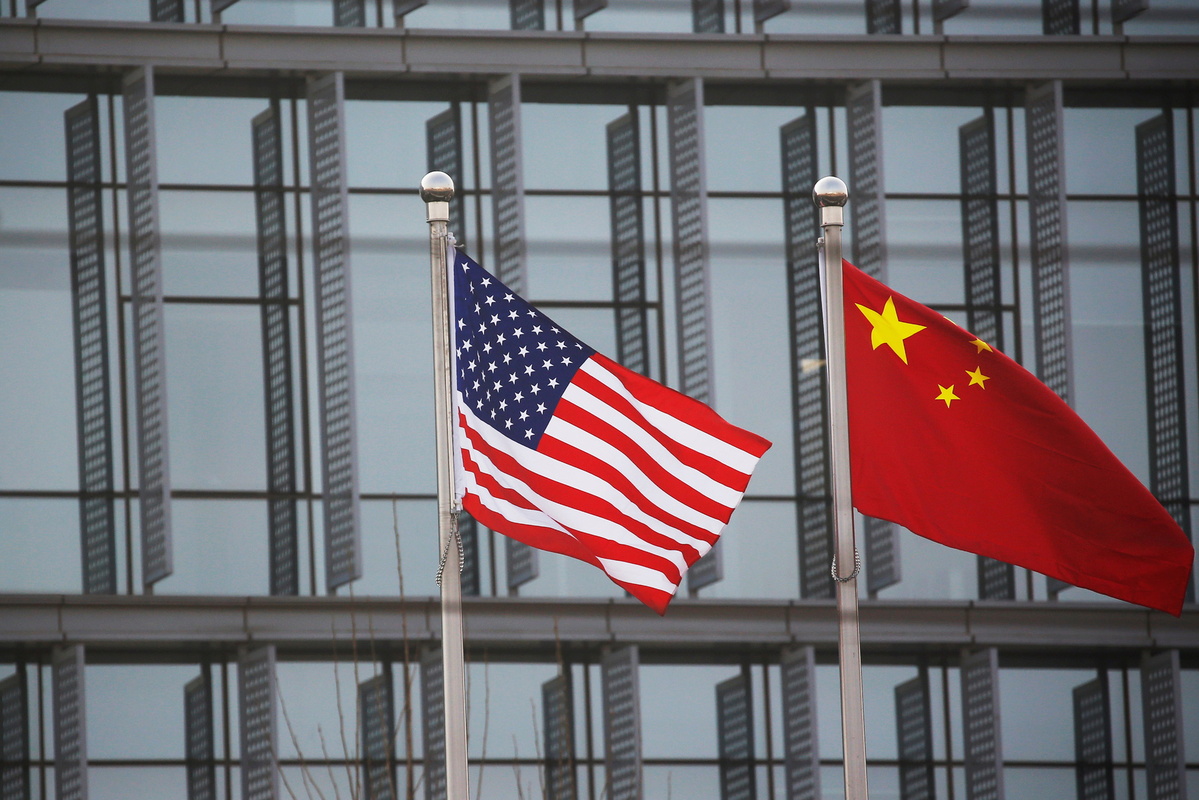
The United States' 2025 National Security Strategy, which casts China as the US' primary competitor across different domains, reinforces the now familiar pattern in US policy thinking but with noticeable adjustments in implementation approaches.
It signals a renewed push to "rebalance" US trade ties with China by tightening export controls, strengthening investment screening and preserving US dominance in advanced technologies. And it proposes mobilizing US capital markets, tech companies and private-sector networks to steer other countries away from cooperation with China, while promoting US-led coalitions that promise infrastructure, critical-minerals access and financing for the Global South. This approach underscores a shift toward transactional geoeconomics in which partnerships are conditioned on alignment with US priorities.
The result of these practices will be a strategic environment that could magnify miscalculation risks and narrow the space for pragmatic cooperation.
But, as the document indicates, the US also recognizes that stable economic ties with China are indispensable. The document mentions rebalancing the relationship while maintaining trade in nonsensitive areas — an acknowledgment that decoupling is neither feasible nor in Washington's own interest.
This pragmatic undercurrent was evident during the recent video talks between Chinese Vice-Premier He Lifeng and US Treasury Secretary Scott Bessent and Trade Representative Jamieson Greer, in which the two sides agreed to expand their cooperation list and reduce problem areas. Similarly, the meetings between a visiting Chinese business delegation and US counterparts last week showed that economic cooperation remains both possible and needed.
China and the US inevitably have differences. But these should not be obstacles to stable and constructive engagement. As China widens market access during its 15th Five-Year Plan (2026-30) period, opportunities for mutually beneficial cooperation will only increase, as reflected in surveys showing that half of US companies consider China their second-largest source of revenue.
Beijing will remain calm, confident and forward-looking in response to the US' policies. China has already embarked on strengthening technological self-reliance, an objective that becomes even more important under the US' stated intent to prolong technology containment in the document.
Accelerating innovation in semiconductors, artificial intelligence, quantum science and high-end manufacturing, while maintaining the country's long-standing commitment to openness, will help ensure China's development remains resilient and globally connected. Predictable regulation, targeted investment and supportive talent policies can help bolster this effort, while proportionate and targeted responses to discriminatory measures should continue to be deployed when necessary to safeguard China's core interests.
China's cooperation model — centered on transparency, mutual benefit and long-term capacity building — offers an inclusive alternative to zero-sum rhetoric. Multilateralizing more development initiatives can also help counter attempts to frame choices for other members of the international community as "either-or".
Beijing will continue to demonstrate its commitment to peace and restraint through responsible behavior, coupled with confident public diplomacy. In the process, strengthening crisis-management mechanisms among the stakeholders is essential for regional stability.
China and the US have the global responsibility to promote stable ties and the common security of the world. The development of their relations clearly demonstrates that the description of China-US cooperation benefiting both sides and confrontation hurting both sides reflects the common sense that has been repeatedly proven by experience. The vision of the two sides helping each other succeed and prospering together is not just pie in the sky. They should keep moving forward in the right direction on the basis of equality, respect and mutual benefit, so as to steady ties and make more positive progress.





