Economic Watch: Takaichi's bold fiscal push hard to resolve Japan's economic woes







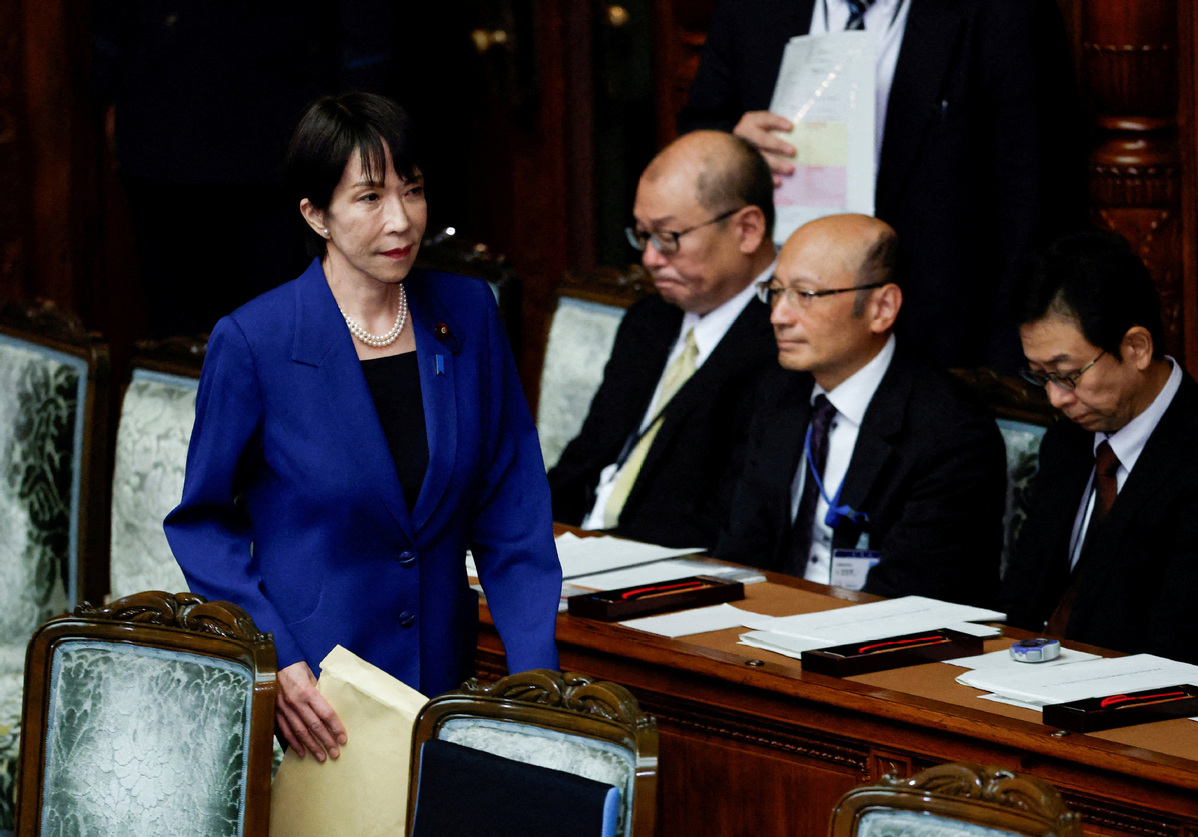
TOKYO -- Japanese Prime Minister Sanae Takaichi, who advocates a "responsible and proactive fiscal policy," recently pushed the Cabinet to approve a draft 18.3 trillion yen ($117 billion) supplementary budget for 2025 fiscal year to fund her massive economic package, yet Japan's deep-seated economic strains remain unresolved.
With the yen sliding, government debt piling up and inflation running high, Japanese media outlets and experts argued that Takaichi's big-spending agenda is at odds with the country's current economic conditions, fueling market concerns about Japan's fiscal health. The package delivered scant results while risking inflicting further damage on the economy.
"Takaichinomics" is outdated
Since Takaichi took office, Japan's economic situation has continued to deteriorate, with downward pressure intensifying.
According to the preliminary government data, Japan's economy contracted an annualized real 1.8 percent in the third quarter of 2025, marking the first contraction in six quarters. The shrinkage in GDP was widely expected, as the Japanese economy grappled with sticky inflation, sluggish private spending and higher US tariffs.
The yen has slid to around 157 per dollar on Nov 20 -- its weakest level in ten months, in contrast to the period before the Liberal Democratic Party leadership election, when $1 traded at around 147 yen.
The pace of inflation continues to accelerate. In October, Japan's core consumer price index, which excludes volatile fresh food, rose 3.0 percent year-on-year, underscoring the negative impact of rising import costs driven by the yen's sharp depreciation.
To curb rising prices, it is essential to correct the yen's depreciation, an editorial published by Japan's Mainichi Shimbun pointed out, noting that it is key for the Bank of Japan to gradually raise interest rates.
Despite the inflation rate exceeding the 2 percent target set by the central bank, Takaichi has repeatedly made statements in favor of restraining interest rate hikes.
Takaichi advocates the continuation of the "Abenomics" economic policy promoted by the administration of the former Prime Minister Shinzo Abe, which advanced an aggressive fiscal policy and monetary easing.
However, the environment surrounding the Japanese economy has drastically changed since the Abe administration, analysts said. Back then, the economy was sluggish due to deflation and the yen's significant appreciation, necessitating monetary easing.
In an inflation-up, yen-down Japan, as Asahi Shimbun commentator Makoto Hara put it, the so-called "Takaichinomics" is "truly out of date."
Big spending, little impact
Takaichi stressed multiple times that tackling rampant inflation is "a matter of the highest priority" for her Cabinet.
In her 21.3 trillion-yen economic stimulus package that recently rolled out, Takaichi introduced many inflation relief measures including scrapping a provisional gasoline tax, expanding subsidies for electricity and gas bills for the first three months of next year, distributing rice vouchers or other coupons, providing cash handouts for households with children, and raising the tax-free income threshold as part of efforts to reduce the financial burden on households.
However, while these handouts may offer households some temporary relief, they do little to address the underlying rise in prices, analysts argued, with some critics even warning that such measures could end up fueling inflation.
A recent survey released by private research firm Teikoku Databank showed that a total of 20,609 food items saw price increases in Japan in 2025 -- roughly a 65 percent surge from last year's 12,520 items. The research firm predicted that there is a possibility that sticky price hikes will persist into 2026.
Meanwhile, under Takaichi's big-spending policies, wage growth continues to lag behind inflation as the yen has weakened further, leaving many ordinary households struggling to make ends meet.
On an inflation-adjusted basis, the average monthly income of salaried households with at least two members in October edged down 0.1 percent to 599,845 yen, according to the Ministry of Internal Affairs and Communications.
Japanese economic commentator Mitsuru Saito told Nikkan Gendai that the so-called comprehensive economic measures are nothing more than a showcase for Takaichi to display her power. In an effort to engineer an impressive start for the new administration, she has focused on inflating the size of the supplementary budget to create the appearance of bold action, he added.
"In reality, none of the measures in her economic package are urgent. Although she claims the plan is designed to tackle rising prices, what she is implementing instead are policies that fuel inflation. The logic behind the policy package is disjointed," Saito said.
Fiscal sustainability in question
Japanese government debt-to-GDP ratio now stands near 240 percent, the highest of any advanced economy. The enormous stock of government debt should raise red flags, as the scale means that even small rises in bond yields could translate into huge interest bills, analysts warned.
Despite the soaring debt, the Takaichi Cabinet continues to expand fiscal spending without restraint and issue massive amounts of new debt. In the latest 18.3 trillion yen supplementary budget, 11.7 trillion yen is expected to be financed through newly issued government bonds.
Takaichi Cabinet's persistence with aggressive fiscal expansion and new bond issuance has fueled growing investor concerns over Japan's fiscal sustainability. Japan's long-term government bonds have recently been widely sold off, with bond prices slumping and yields repeatedly hitting new highs.
On Dec 5, the yield on the benchmark 10-year Japanese government bond, a key barometer of long-term interest rates, hit 1.950 percent, its highest level since July 2007.
Masahiro Ichikawa, chief market strategist at Sumitomo Mitsui DS Asset Management Co, said it is likely to continue rising toward 2.0 percent.
Critics argued that resorting to bond issuance whenever funding falls short is no longer tenable, calling it a troubling practice that extends beyond what responsible financial management should allow.
They warned Takaichi's expansionary fiscal policy may not only push up government bond yields, weaken the yen and drive prices higher, but could also throw financial markets into turmoil.
Financial consultant Naoya Tabuchi noted that the continued decline in bond prices is sending a dangerous signal, causing significant losses for bond funds and hedge funds.