As classical music adapts to the challenges and opportunities of the digital age, its enduring cultural relevance remains unmistakable.
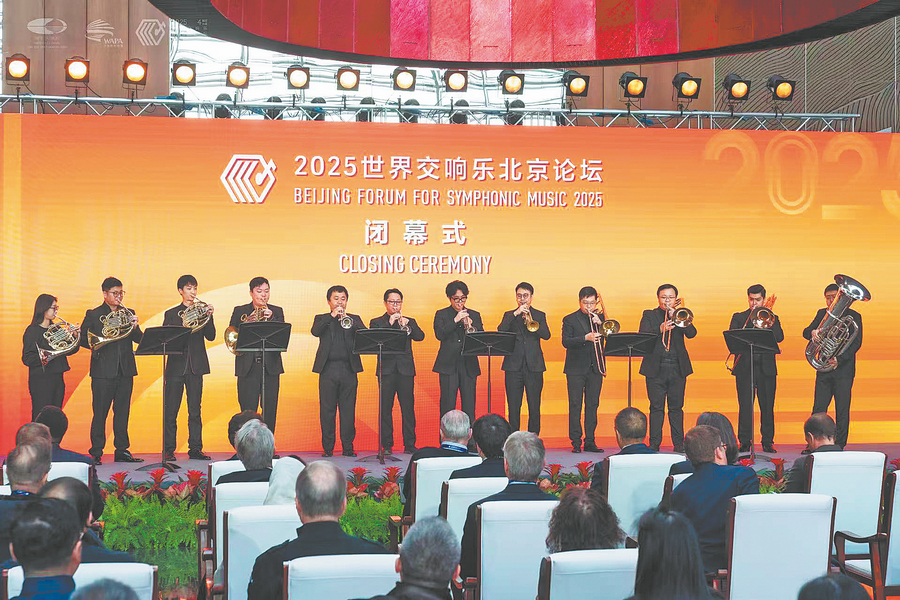
The 2025 Beijing Forum for Symphonic Music, held at the National Centre for the Performing Arts, reaffirmed the urgent need for innovation — not only in artistic expression but also in how orchestras connect with audiences — to ensure that symphonic music continues to thrive for future generations. By integrating new technologies and focusing on young audiences, the future of symphonic music is poised to embrace both its venerable traditions and transformations demanded by this exciting new era.
Initiated by the NCPA in 2019, the forum brought together over 300 representatives from more than 30 countries and regions across five continents. The central theme of this year's forum was the future of symphonic music in an era increasingly shaped by artificial intelligence and digital transformation. With a rich history spanning centuries, symphonic music faces the challenge of evolving to stay relevant, particularly for younger generations.
Wang Ning, chairman of the World Association for Performing Arts and president of the NCPA, said that, at the NCPA, over 70 percent of symphonic concertgoers are under the age of 45, with a noticeable increase in the proportion of those born after 1990 and 2000. Remarkably, one in 10 young attendees is under the age of 20. This shift highlights a broader trend of younger generations embracing classical music and emphasizes the need for symphonic performances to stay fresh and resonate with this diverse demographic.
"The ecosystem of symphonic music is evolving," said Zhao Lin, vice-president of the China National Opera and Dance Drama Theater and a renowned composer. "It's no longer confined to the traditional concert hall. Symphonic music is breaking boundaries and integrating into the digital and entertainment worlds familiar to younger audiences, such as anime, video games, and movies." This perspective aligns with a recent study by the UK's Royal Philharmonic Orchestra, which found that 88 percent of people under 25 enjoy video games, and one in six has been introduced to symphonic music through gaming.
This has encouraged orchestras to explore innovative programming approaches that resonate more deeply with the lives and interests of young listeners. The Royal Philharmonic Orchestra, for example, has fully embraced the artistic value of video game music, hosting concerts dedicated to iconic soundtracks. These performances have received positive responses, demonstrating that younger listeners are eager to experience symphonic music through formats they feel connected to, according to Sarah Bardwell, managing director of the Royal Philharmonic Orchestra.
Orchestras are increasingly adopting innovative approaches to attract and retain audiences. Several leading orchestras — such as the Orchestre Philharmonique de Radio France and Germany's Dresdner Philharmonie — have introduced 60-minute concerts to create more concise and accessible experiences. The Hong Kong String Orchestra's artistic director, Yao Jue, emphasized that while symphonic music must honor tradition, it is equally important to remain flexible and innovative to better align with contemporary cultural rhythms and attention spans.
Artificial intelligence is also transforming how symphonic music is composed and experienced. At the forum, Ke Yang, vice-president of the Central Conservatory of Music, showcased the institution's work in AI-driven composition. Their AI system can generate a piece of music in just 23 seconds, while wearable brain-machine interfaces like the "Central Music No 1" device can analyze users' emotional responses and provide personalized music experiences tailored to their moods.
Alain Spieser, director of marketing and communications for the Orchestre de la Suisse Romande, discussed AI's potential in curating concert programs. He notes that while AI cannot replace a musician's intuition, ear, or experience, it offers the valuable gift of time — allowing musicians and curators to focus on thoughtful, informed decision-making.
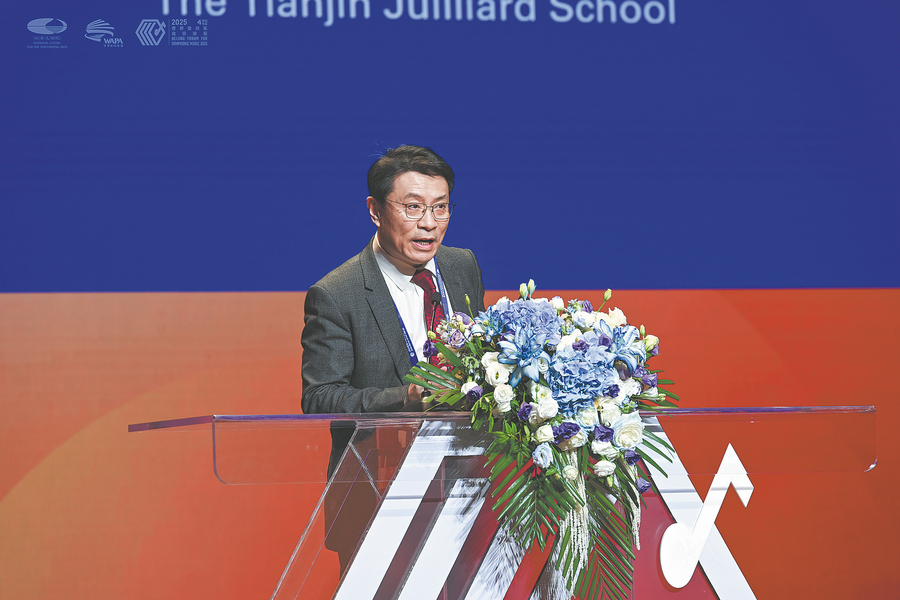
Beyond technological innovation, the forum devoted significant attention to the cultivation of the next generation of musicians and audiences. He Wei, CEO and artistic director of the Tianjin Juilliard School, discussed the academy's emphasis on fostering collaboration and protecting students' idealism. "Young musicians enter school with boundless enthusiasm, imagination, and hope," he said. "Yet, the professional world often values efficiency over creativity. Our responsibility is to protect and nurture the idealism that drives the future of our art form."
He highlighted the recent Tianjin Juilliard Orchestral Symposium and Leadership Forum, cohosted by the NCPA and the Tianjin Juilliard. This event brought together young musicians and leaders from top conservatories around the world to discuss the future of professional music education and celebrate the orchestral experience. Central to the event was the NextGen Symphony, an international ensemble of exceptional young musicians from Asia, Europe, and North America.
The forum also explored how symphonic music can be woven with local cultures. In Tianjin, for example, audiences enjoy free performances at the outdoor riverside stage of the Tianjin Juilliard, overlooking the Haihe River. These concerts by faculty, students and alumni bring orchestral music into the heart of the community and reflect a broader movement to make classical music more welcoming and accessible.
Similarly, in Switzerland, the Verbier Festival has redefined the music experience by taking performances out of conventional venues and into the community, holding concerts in school gyms, local barns, and even tents.
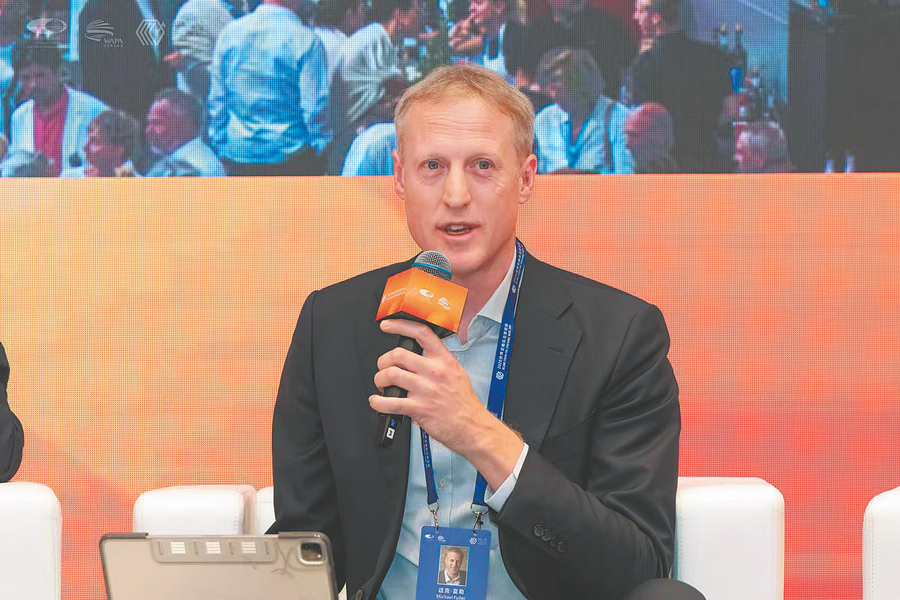
Michael Fuller, head of international touring and projects for the Verbier Festival Chamber Orchestra, shared insights into how the festival engages local communities by breaking down the traditional barriers of classical music. "Everything is designed to create a relaxed and welcoming environment," he says. "This approach makes classical music more accessible and inviting, creating an intimate and inclusive atmosphere that helps maintain the relevance of symphonic music in today's society."
Fuller also announced with pride the inaugural Verbier Festival in Asia, set to take place in Shenzhen, China, in January 2026. "This marks a significant expansion for us," he explained. "The challenge is bringing the community atmosphere of a small village to a vast, international metropolis like Shenzhen. But we believe this is possible. Through this initiative, we can reach a broad audience in China and across Asia, sharing the spirit of Verbier with the world. We hope to inspire people to visit Verbier in the summer and Shenzhen in the winter to experience firsthand all that I have described."
Contact the writer at chennan@chinadaily.com.cn