How Xi Jinping champions free trade in Asia-Pacific







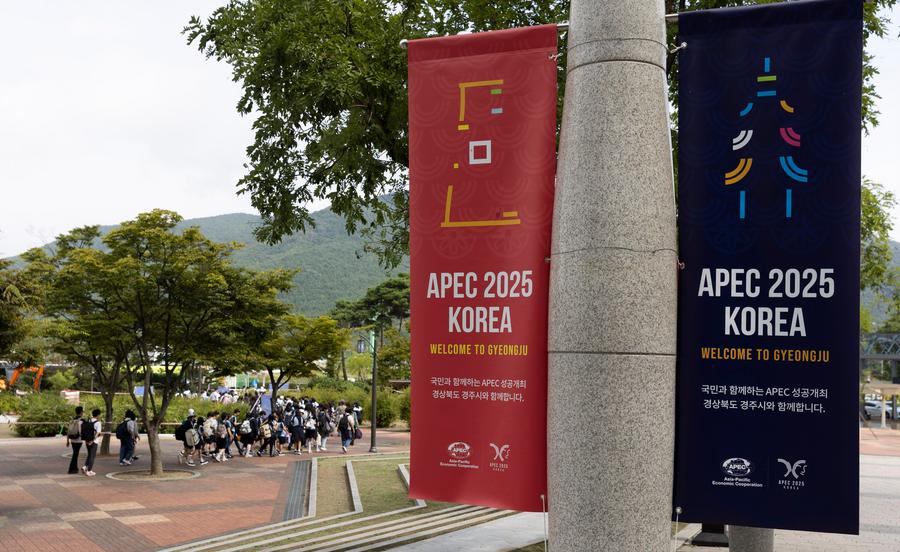
BEIJING -- Amid mounting trade shocks and heightened geopolitical uncertainties, President Xi Jinping will join leaders from APEC economies in South Korea in the coming days, in a bid to build consensus for shared prosperity and reaffirm China's commitment to open, inclusive economic globalization.
The International Monetary Fund has projected that economic growth in the Asia-Pacific will slow from 4.5 percent this year to 4.1 percent in 2026, a sobering forecast that underscores the urgency to keep the spirit of cooperation alive, and foster new drivers and growth momentum during these challenging times.
As the leaders gather once again, Xi is expected to double down on a long-held vision: an open Asia-Pacific economy. For him, this dynamic region remains the world's growth engine, a force capable of fueling the global economy moving forward.
In 2025, APEC members collectively account for over 60 percent of the world's total GDP. Xi has regarded the region as a key priority for advancing free trade. Driven by Xi's vision, China has strengthened its economic ties with other 20 member economies, among which 15 are already China's free trade partners.
Malaysia, an APEC member, offers a vivid example. China has been its largest trading partner for 16 consecutive years. "Malaysian durians can now be delivered directly from orchards to Chinese supermarkets within 24 hours, and they are immensely popular among Chinese consumers," Xi wrote in a signed article this April ahead of his state visit to the country -- a detail that captured the growing strength of bilateral trade.
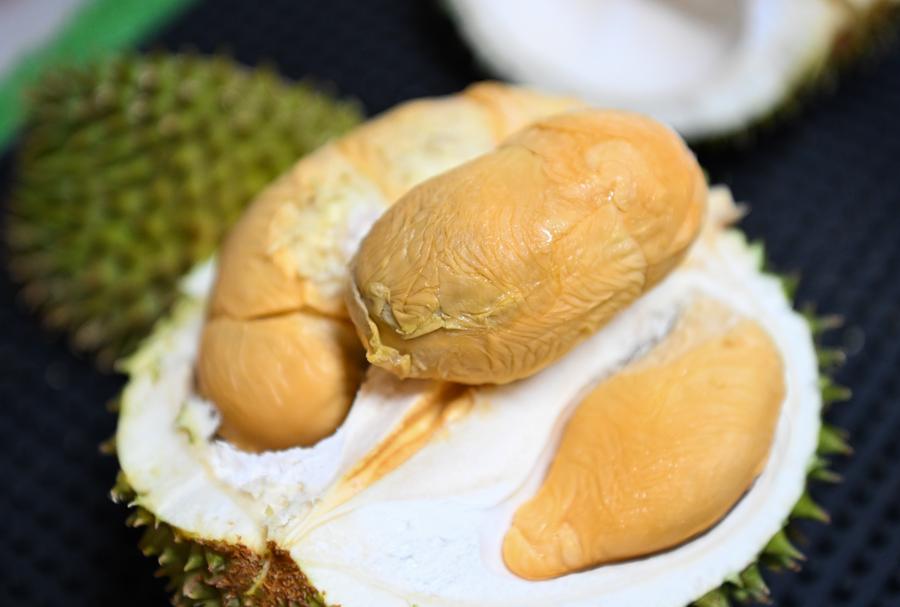
In June 2024, China further opened its market to durians from Malaysia. That same year, China-Malaysia trade climbed to a record $212 billion, bucking the global downturn.
During the visit, Xi told Malaysian Prime Minister Anwar Ibrahim, who chairs ASEAN in 2025, that China is ready to work with regional countries to "use Asia's stability and certainty to counter global instability and uncertainty." In response, Anwar said ASEAN does not approve of any unilateral imposition of tariffs and will maintain economic growth through cooperation.
In fact, Xi has been committed to such an approach. "History tells us that openness and cooperation are a major driving force behind dynamic international economic and trade activities," Xi said in 2018 when he launched the first China International Import Expo in Shanghai. That year, as the twin forces of unilateralism and protectionism grew stronger, the Chinese leader chose a different course -- to keep China's door wide open. As he has repeatedly declared: "China will not change its resolve to expand high-level opening-up."
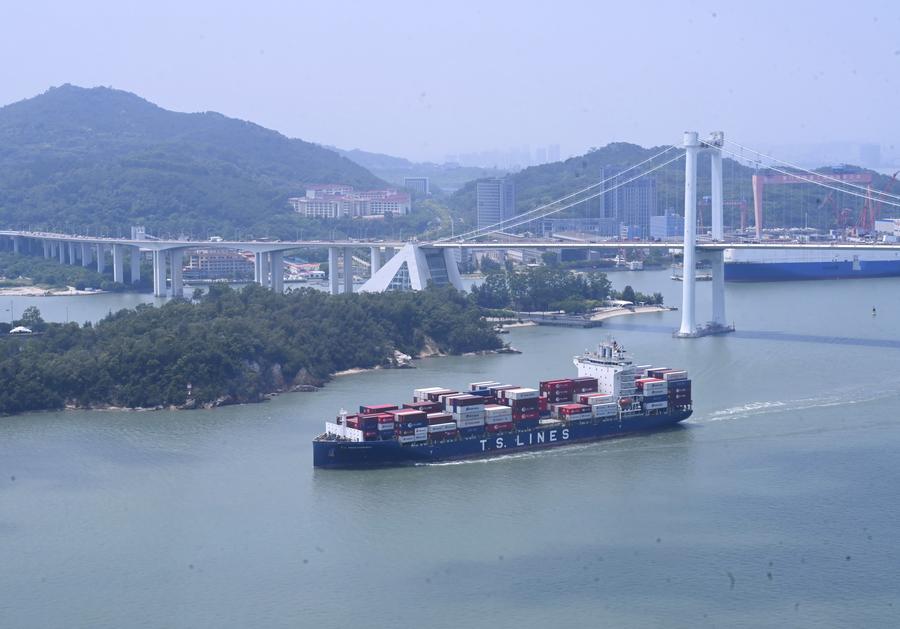
His commitment to openness has deep roots. In the 1980s, when China's opening-up had just begun, Xi, then a young official in China's southeastern coastal city of Xiamen, was already thinking ahead. He saw the city's potential to thrive by building a free port. In 1987, Xi led a research team to Singapore -- already a global hub of trade and logistics -- to learn how the city-state managed its free port system, years before APEC was founded.
That early exploration laid the foundation for Xiamen to become a free-port-style special economic zone, foreshadowing how openness would become a defining feature of Xi's strategy for linking China and the rest of the world decades later.
Over the years, this vision of openness has remained steady, evolving from local experiments in China's coastal reform zones to a broader strategy of international engagement. Whether in promoting free trade or championing multilateralism, Xi has consistently taken open cooperation as a cornerstone of China's development and its role in the world.
As early as 2013, when Xi made his debut at the APEC leaders' meeting, he set out a clear vision: a China committed to building a regional cooperation framework that spans both sides of the Pacific Ocean and benefits all parties involved. Over the last decade, that early pledge has taken shape.
The following year, Xi hosted APEC leaders in Beijing, where the forum adopted the "Beijing Roadmap," officially launching the process toward a Free Trade Area of the Asia-Pacific (FTAAP).
Today, pathways for FTAAP are emerging with growing clarity. Under Xi's leadership, China is fully implementing the Regional Comprehensive Economic Partnership (RCEP) commitments and actively promoting its high-quality development. As the world's largest free trade zone, RCEP connects 15 Asia-Pacific countries -- 12 of which are APEC members -- and strengthens the region's economic interdependence.
Xi's free trade agenda gained fresh momentum, when China and ASEAN just signed the China-ASEAN Free Trade Area Version 3.0 on Tuesday.
Lee Hee-sup, secretary-general of the Trilateral Cooperation Secretariat (TCS), said by pursuing multilateralism and free trade, China is playing a leading role in various multilateral mechanisms in the Asia-Pacific region, including RCEP, TCS, ASEAN+3 and APEC. The TCS is an international organization promoting cooperation among China, South Korea and Japan.
"It is expected that China will continue to demonstrate leadership through this organic network of mechanisms, advancing efforts toward regional cooperation and economic integration," he said.





- HK bets on integrated hub to enhance TCM profile
- China widens net in battle against graft
- New US dietary guidelines trigger widespread concern
- China eyes space leap with record satellite filings
- Team formed to investigate the loss of 29 cultural relics
- Investigation into school uniforms confirms safety of waterproof layer