



China's new 5-year plan lauded
Blueprint aims to enhance industrial systems, technological self-reliance







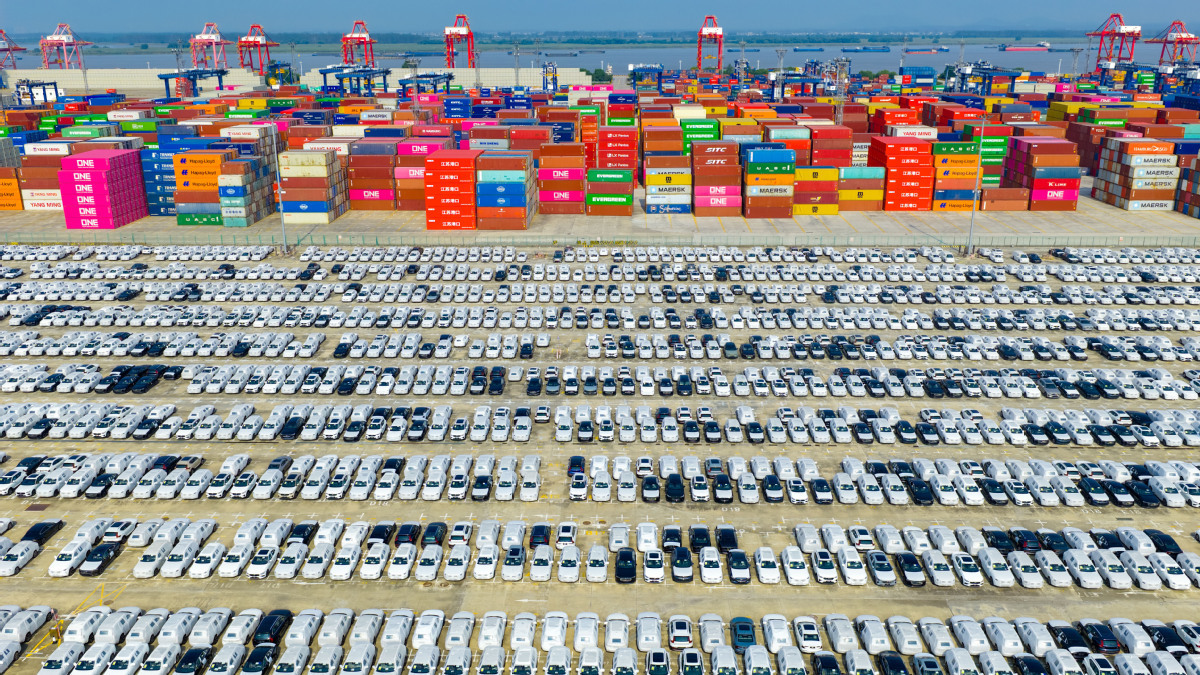
All eyes are on China as the fourth plenary session of the 20th Central Committee of the Communist Party of China concluded on Thursday in Beijing, where the leadership mapped out the world's second-largest economy's development priorities over the next five years.
According to the session's communique, participants deliberated over and adopted the Recommendations of the Central Committee of the Communist Party of China for Formulating the 15th Five-Year Plan for National Economic and Social Development.
China's tradition of planning has been one of the major drivers of its progress, experts said, and the country's reputation as an effective long-term planner merits reflection for other countries seeking to emulate its policies.
The 15th Five-Year Plan (2026-30) will be the next entry in a line of expansive blueprints that have charted the country's development over more than 70 years.
"China's five-year plans have shaped its development for seven decades," said Jelena Grubor Stefanovic, director of the representative office of the Serbian Chamber of Commerce and Industry in China.
"What makes them unique is that they combine strategic vision with measurable targets, creating a road map for investment, industrial policy and social priorities. This approach allowed China to coordinate resources over time, which is something few countries have sustained."
Michael Dunford, an emeritus professor at the School of Global Studies at the University of Sussex in England, said that domestically, many of China's achievements could be attributed to its ability to pursue long-term plans, supported by sustained patient finance and high rates of investment, such as the elimination of extreme poverty, the development of the infrastructure network, and the improvement in environmental quality.
Ripple effects
Stefanovic said history has also shown how these plans, with ripple effects far beyond China's borders, have reshaped the global economy.
For example, from the 6th Five-Year Plan (1981-85) onward, the blueprints have been drawn up in line with the reform and opening-up drive, marking China's integration with the global economy, she said.
The periods of the 13th Five-Year Plan (2016-20) and the 14th one (2021-25) have seen the takeoff of the made-in-China innovation, including artificial intelligence, electric vehicles, lithium batteries and more, many of which are now recognized as world-leading, she said.
While long-term planning is not unique to China, the country is often viewed as particularly adept at both long-term thinking and executing plans.
Dunford said the nuances underlying the rationale of China's planning model lie in its combination of planning, which identifies substantive matters of what has been done and what has not been done, with the use of markets in resource allocation.
This, he said, has effectively mobilized state, collective, and private assets and initiatives, but sets the country apart from models in which resources are almost solely allocated according to ability to pay and private returns on investment.
And at the core of China's planning ability is its governance system, he said. "Of greatest importance in explaining the success of China's path are, however, differences in systems of governance — the role of the CPC, the constant commitment to reform and improvement, and high rates of investment — which in China are less susceptible than in many other countries to declining private rates of return."
Stefanovic said that, for economies with short political cycles, the continuity itself is "difficult to replicate but deeply instructive".
"Every five-year plan builds on the previous one, refining rather than restarting the process," she said.
When it comes to implementation, "few countries execute their plans with China's discipline", she added.
"The key difference lies in implementation capacity. China integrates national strategy with local execution, giving autonomy to the local level for implementation that aligns well with central goals, provincial budgets and business incentives. That coherence minimizes policy drift and ensures consistent follow-through.
"China also treats plans as living frameworks rather than static documents. Adjustments happen through pilot programs, performance reviews and targeted reforms. This flexibility, combined with political commitment, gives the system endurance."
The drafting of the 15th Five-Year Plan comes at a critical period, as external uncertainties and domestic challenges remain considerable. China is also using a three-plan period — the 14th, 15th and 16th five-year plans — to basically realize socialist modernization by 2035.
The communique said China should build a modernized industrial system and reinforce the foundations of the real economy.
The country should achieve greater self-reliance and strength in science and technology, steer the development of new quality productive forces, and build a robust domestic market, it said.
Stefanovic said: "The 15th Five-Year Plan will be a blueprint for a modern industrial system. This means deeper investment in semiconductors, AI and quantum research; accelerating renewable integration and carbon-neutral infrastructure; and supporting domestic demand through social reforms and income growth."










