Explainer: What to know about key Party meeting that will shape China's next five-year plan







BEIJING -- Chinese leaders will gather for a major Party meeting from Monday to Thursday to discuss the country's next five-year plan, a policy roadmap shaping key areas of national development, with ripple effects far beyond China's borders.
The meeting, known as a plenary session of the 20th Central Committee of the Communist Party of China (CPC), is the fourth since the committee was elected in 2022.
What is a plenary session? How are China's five-year plans developed and why do they matter? Here's a closer look.
WHAT'S A PLENUM?
For the CPC, which has over 100 million members, the National Congress and the Central Committee it elects are the highest leading bodies.
As the National Congress meets once every five years, the Central Committee acts on its behalf in the meantime, holding plenary sessions -- at least one each year -- to make key policy decisions.
The current Central Committee has about 200 members, many of whom are provincial Party leaders, governors and ministers. Alternate members of the CPC Central Committee, who are next in line to fill vacancies on the Central Committee, also attend the plenary sessions.
According to the agenda, the upcoming session will hear a work report from the Political Bureau of the CPC Central Committee and review the proposals for formulating the 15th Five-Year Plan (2026-30) for national economic and social development.
The proposals for the new plan will be released after the session. The final plan itself is expected to be unveiled in March, with the National People's Congress -- China's top legislature -- reviewing and approving it.
WHAT'S CHINA'S FIVE-YEAR PLAN?
Formulating and implementing five-year plans has been a hallmark of the CPC's governance, enabling China to promote coordinated economic and social development over the medium and long term.
It is an approach that experts say maintains policy continuity and stability toward established goals, and enables the efficient and well-calibrated allocation of resources.
First introduced in 1953, China has had 14 five-year plans. Following the launch of reform and opening-up in 1978, the country began developing a socialist market economy system, yet it did not abandon the planned approach. Instead, it reformed and refined the system to make it more effective.
Over the decades, China's five-year plans have guided continuous progress in national development and living standards, from ensuring adequate food and clothing after completing the sixth and seventh five-year plans in the 1980s to propelling China's total economic output to the world's second in the 11th Five-Year Plan (2006-10) period.
China's modernization drive has been carried forward through a continuum of five-year plans that connect and build upon one another, according to Li Zhongjie, an expert on the history of the CPC.
In a break from tradition, the 14th Five-Year Plan (2021-25) did not set a quantitative target for GDP growth; instead, it described expected growth in broader terms, in part to emphasize quality over speed.
Given their far-reaching impact, China's five-year plans are developed over several years, incorporating research, expert reviews, inter-agency coordination and public opinions.
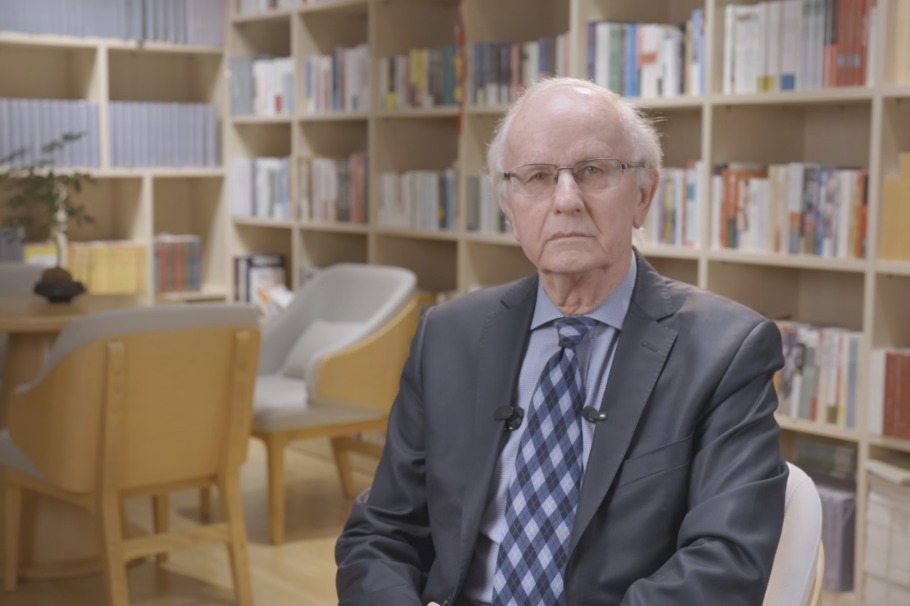
After the national plans define main tasks, specialized and local plans break them down into actionable steps to ensure effective implementation, said Dong Yu, executive vice dean of the Institute of China Development Planning at Tsinghua University.
"The five-year plans are a far cry from a mere piece of paper," Dong added. "They are a fully integrated system for turning goals into reality."
Five-year plans have also become an important window for other countries to observe China and take reference from its development experience. Inspired by China's experience, a growing number of countries have adopted their own medium to long-term development strategies.
WHAT TO EXPECT FROM 15TH FIVE-YEAR PLAN
The 15th Five-Year Plan carries unusual weight, as only 10 years remain before 2035, a milestone year by which China aims to "basically achieve socialist modernization."
Covering the 2026-2030 period, the plan is expected to be formulated through a comprehensive assessment of global trends and will serve as a blueprint for China's development in line with changing conditions.
Outlining key goals and measures for economic growth, technological innovation, people's livelihood and other areas, the plan will prioritize high-quality development fueled by innovation.
Building on China's focus on cultivating locally tailored new quality productive forces, the 15th Five-Year Plan period is expected to see accelerated efforts to modernize the industrial system. Targeted measures will aim to strengthen the real economy, upgrade traditional industries, foster emerging sectors and strategically lay out future industries.
At the same time, the plan will seek to enhance the national innovation system and promote the integrated development of education, science and technology, and talent.
"Visionary planning is needed to chart a new industrial landscape in the upcoming five-year plan," said Dong from Tsinghua University.
Reform is set to be another focus of the plan, as 2029 -- the target year for completing more than 300 reform tasks outlined at the CPC Central Committee's third plenary session in 2024 -- falls within the next five-year period. China's next stage of development is likely to continue along the path of deepening reform and advancing high-level opening up.
Guarding against risks and addressing challenges both at home and abroad will be another priority in the plan, as development and security are equally vital in shaping China's future trajectory.
Brazilian scholar Maria Luiza Falcao Silva sees a lesson for the wider world. "While much of the West grappled with cycles of crisis -- political gridlock, trade wars, populism -- China pressed ahead with a long-term national plan," she said.




- Xi, Macron hold informal meeting in China's Sichuan
- The 'Gyrfalcon' mounted police team safeguards grasslands in northern borderland of China
- Liaoning launches first province-level online book lending platform
- Annual Fairy's Day marked in Xizang
- Chinese, Cuban communist parties hold seventh theory seminar
- Full moon seen across China