



Common water way







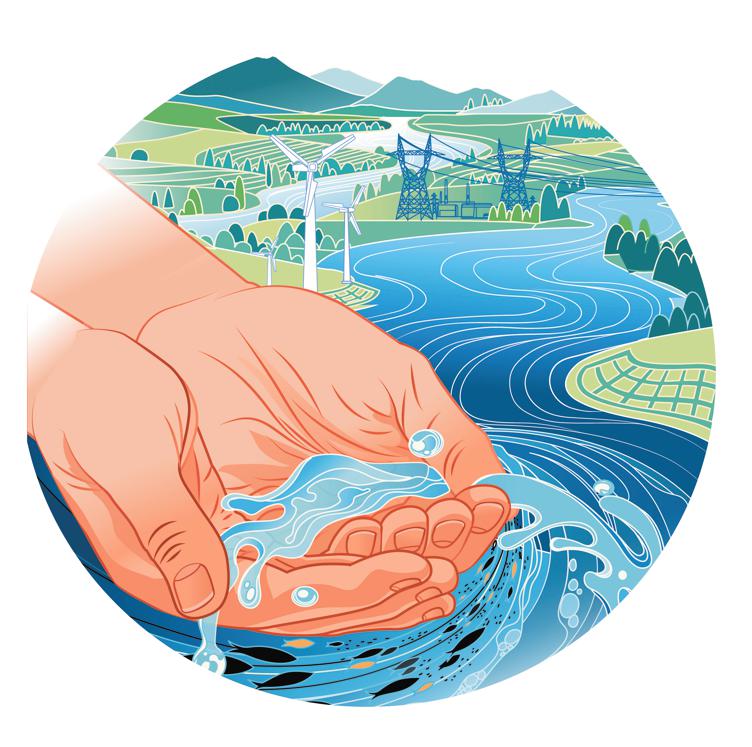
Ten years of green cooperation under the framework of the Lancang-Mekong Cooperation have strengthened environmental protection in the region and produced tangible benefits for local people
Since the inception of the Lancang-Mekong Cooperation mechanism in 2015, green cooperation aimed at sustainable development has provided a practical pathway to address the shared needs and improve the quality of life for people across the six countries of the Mekong River Basin: China, Cambodia, Laos, Myanmar, Thailand and Vietnam. Over the past decade, green cooperation under the LMC framework has delivered tangible results in four key areas.
First, a multilevel framework for green cooperation has gradually taken shape. Under the LMC's five-year action plan, the Lancang-Mekong Environmental Cooperation Strategy and Action Framework (2023-27) outlines a clear road map for advancing joint environmental initiatives and drives the implementation of the Green Lancang-Mekong Initiative.
In 2024, the six Lancang-Mekong countries released joint statements to deepen water resources cooperation and promote the clean air initiative, thereby expanding the partnership network for water resources cooperation and mobilizing financing support for regional air quality management through the LMC Special Fund and other sources. Together, these efforts have fostered a virtuous cycle between environmental protection and economic growth.
Second, cross-border cooperation on water resources and ecosystem protection has continued to deepen. Water resources cooperation remains a top priority for the LMC.Since 2016, China has shared year-round hydrological data from the Lancang River, enabling downstream nations such as Vietnam and Cambodia to strengthen their capacity for early warning, prevention and mitigation of flood and drought disasters.
The LMC Special Fund has supported several projects focused on cross-border water quality monitoring, wetland conservation and riverbank restoration, enhancing regional synergy in ecological management. During extreme weather events, coordinated water releases from upstream reservoirs have helped stabilize downstream agricultural and fisheries production.
Third, clean energy cooperation has made steady progress. Jointly constructed hydropower stations have helped to diversify the region's energy mix and reduce its reliance on fossil fuels. In addition, Chinese companies have helped build solar power plants and energy storage facilities in Laos and Cambodia, bringing stable electricity to remote communities. For example, Cambodia's national solar park in Kampong Chhnang province has lowered the local electricity price by 15 percent and improved air quality. The Vientiane Saysettha Development Zone, jointly developed by China and Laos, serves as a model of green industrial cooperation.
Fourth, the quality of people's lives has improved. With an emphasis on ensuring that the benefits of sustainability reach local communities, the LMC has funded numerous "small and beautiful "projects across the region. In rural Cambodia, a clean water project supported by the LMC Special Fund has provided safe drinking water to more than 50,000 people.
But despite the significant progress, several challenges remain. Water coordination mechanisms are still incomplete. And differences between upstream and downstream countries over hydropower development, navigation and environmental protection can lead to tensions in water resource use, particularly as extreme weather events become more frequent.
The Mekong Delta's fragile ecosystem is also under mounting pressure from severe ecological challenges, including sediment loss and declining biodiversity, which complicate efforts toward green cooperation. Moreover, disparities in economic development, green technology capacity and environmental governance among the six countries continue to constrain the effectiveness of cross-border environmental management.
At the same time, climate change is intensifying these difficulties, as increasingly frequent weather events and alternating floods and droughts add uncertainty and complexity to regional cooperation and coordinated responses.
As the LMC continues to advance, its mechanisms are becoming more mature and its collaborations increasingly deep. To further enhance green cooperation, a solid, science-based foundation is essential. This includes establishing a green data platform that integrates hydrological, climate, ecological monitoring and natural disaster management information across the Lancang-Mekong region, providing a shared evidence base for policymaking and cross-border coordination. Joint research and data sharing should also be strengthened in key areas such as fisheries management and carbon accounting, enhancing the efficiency of cooperation through greater transparency.
Furthermore, the region should deepen cooperation in clean energy and industrial development to foster new growth opportunities. Priority should be given to advancing clean energy projects, such as solar and wind energies and energy storage, while promoting regional power grid interconnectivity and optimizing the overall energy mix. It is also important to support countries such as Laos and Cambodia in developing green industrial parks, introducing circular economy models, and strengthening green manufacturing capacity to build sustainable value chains in the region.
Finally, green finance mechanisms must be strengthened to sustain long-term development. Expanding funding channels through green bond issuance and carbon market development will help reduce financing costs and enhance the sustainability of LMC projects.
In a nutshell, green cooperation under the LMC framework should remain sci-tech-driven, institutionally grounded and people-centered, serving as a regional model for implementing the Global Development Initiative and the Global Governance Initiative.
Zhang Lei is the deputy director of the Institute of Southeast Asian Studies at Yunnan University. Yu Weihao is a research assistant at the Institute of International Relations at Yunnan University. The authors contributed this article to China Watch, a think tank powered by China Daily.
The views do not necessarily reflect those of China Daily.
Contact the editor at editor@chinawatch.cn.





