Study highlights circular economy's role in achieving climate goals and more







A special policy study has called on the Chinese government to strengthen its circular economy development during the upcoming 15th Five-Year Plan period (2026-30), emphasizing its role in driving the nation's climate goals and fostering sustainable economic growth.
The study, titled "Promote High-Quality Development with Circular Economy", was conducted under the umbrella of the China Council for International Cooperation on Environment and Development.
As a leading manufacturing hub and consumer of raw materials worldwide, China plays a "pivotal" role in the world's transition to a circular economy, it stresses.
Domestically, China's circular economy policies contribute to its long-term economic development strategy, the study found, with significant progress having been made in recycling infrastructure, digitalization and resource efficiency.
China's volume of recycled material reached roughly 401 million metric tons in 2024, with a total value of 1.33 trillion yuan ($187 billion), the study says, adding that the number of enterprises in the resource recycling sector exceeded 260,000.
Internationally, China's circular economy policies have had a significant impact on global supply chains. According to the study, China has a very solid foundation to forge ahead with circular economy development.
It says circular economy development aligns with the country's constitutional "ecological civilization" concept, in which economic growth should not come at the cost of environmental degradation.
While a number of national laws supporting the circular economy have been issued, the concept has already been integrated into high-level policies, including the 14th Five-Year Plan for Circular Economy Development, it notes.
The study includes a series of recommendations to further promote circular economy development during the 15th Five-Year Plan period.
It proposes that China should strengthen the top-level design and high-quality development of the circular economy by linking it with the country's climate targets of peaking carbon dioxide emissions before 2030 and realizing carbon neutrality before 2060.
It suggests establishing quantitative targets — preferably mandatory — for primary raw material consumption, secondary raw material use, waste prevention and use of safe, high-quality recycled materials in selected consumer goods and high-impact sectors.
The study also proposes that China should actively promote high-quality circular economy transformation in line with the principles of the waste hierarchy in key industries, cultivate new engines for economic growth, and achieve synergies between economic growth and green, low-carbon development.
As one of the specific measures in this regard, it advises the Chinese government to plan the recycling system of renewable resources in advance in emerging industries such as new energy and semiconductors.
Hu Qing, co-leader of the study, stated that these emerging industries are still undergoing rapid development, with technologies and business models not yet fully established.
This presents a favorable opportunity to integrate the concept of a circular economy into product design, production processes and industrial chain layouts, she stressed.
Hu, a professor at the Southern University of Science and Technology, also emphasized the strategic importance of developing recycling systems in these emerging industries and the potential of these practices to drive economic growth.
These industries are significant consumers of critical mineral resources, some of which still heavily depend on imports. Recycling these resources can help mitigate the risks the country faces in its supply chains, she remarked.
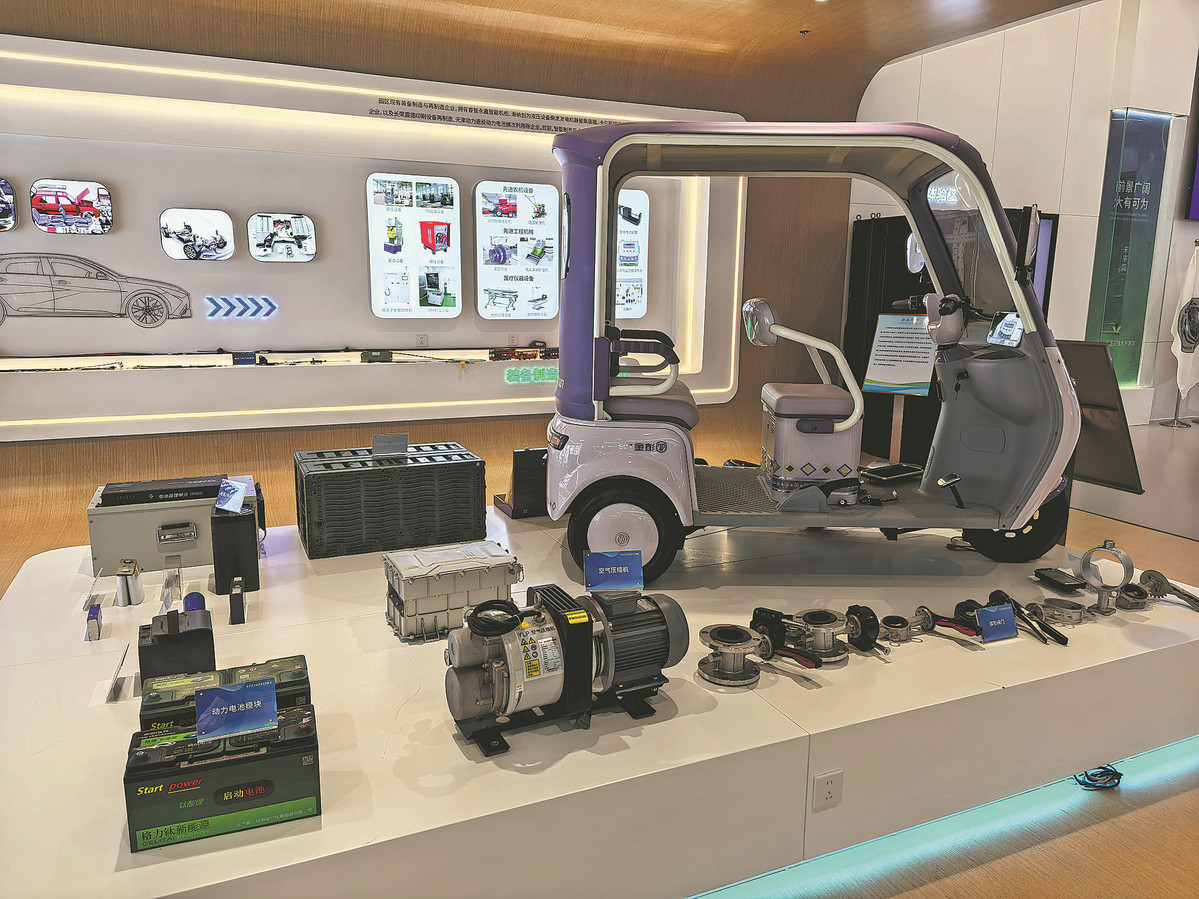
Hu stated that recycled resources from these emerging industries also represent potential opportunities for new economic growth, citing power batteries as an example.
China is a leading producer of power batteries, she said. Efficiently recovering and utilizing valuable metals from discarded batteries to foster leading industry clusters can create a new engine for economic growth.
The study says the Chinese government should also expand and accelerate the cultivation of demand markets for recycled raw materials or products through demand-side guidance and management.
Aside from establishing circular product labeling and subsidy mechanisms to encourage and guide consumers to choose more circular products, the government can also guide public institutions to prioritize green public procurement of products with ecolabels of high circularity.
The study also proposes that China should accelerate the establishment of standards and assessment systems for circular economy technologies and products at the national and local levels.
For example, the government should expedite the development of a robust market supervision system, including comprehensive assessment and certification plans, to ensure rigorous oversight.
Hu said market and consumer trust present the most significant barrier to the adoption of recycled raw materials and products.
"Consumers are often reluctant to purchase recycled products due to concerns about quality, safety and reliability," she said. "Therefore, the primary task in fostering demand for recycled materials or products is to address product quality and establish credible, authoritative certification."
houliqiang@chinadaily.com.cn