'Rewilding' promoted as key contributor to conservation efforts







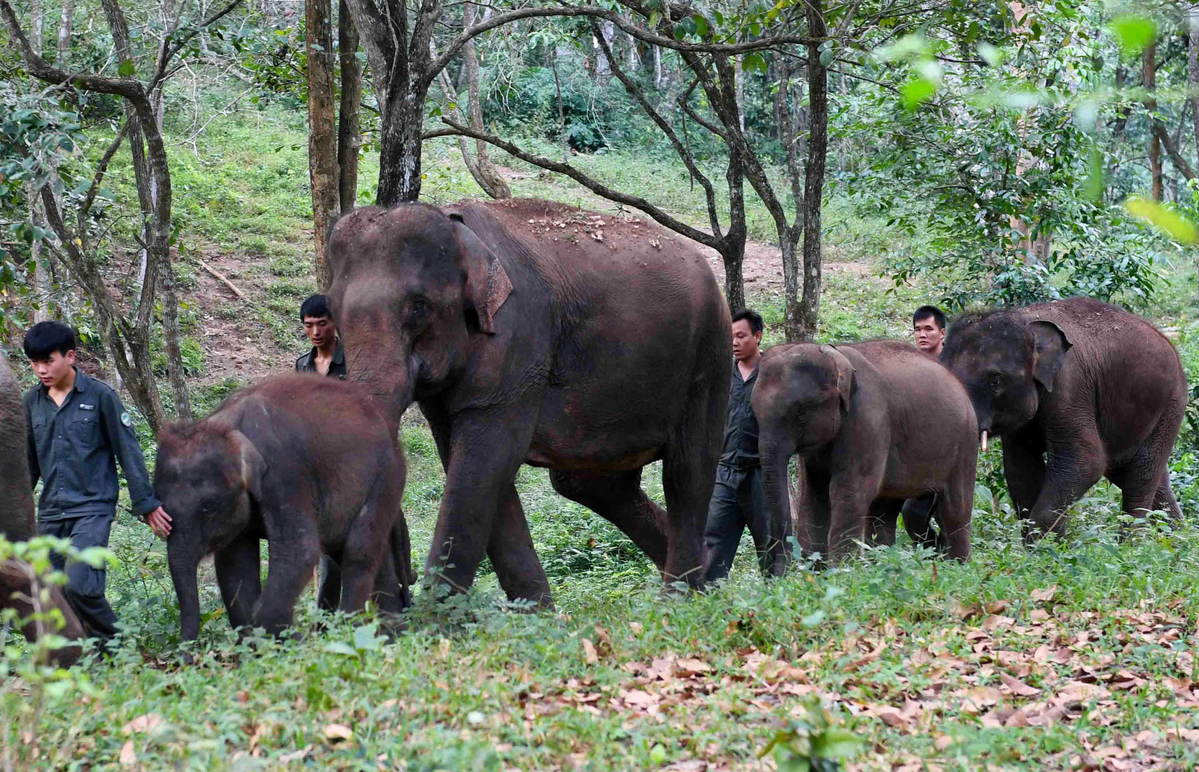
A special adviser to the China Council for International Cooperation on Environment and Development has urged the Chinese government to incorporate the concept of "rewilding" as a complementary strategy to enhance the country's ecological restoration efforts.
Mark Halle, who also chairs the Global Rewilding Alliance, describes rewilding as a form of ecological restoration that includes reviving degraded land or water to restore both productivity and biodiversity.
"Within the spectrum of restoration approaches, rewilding focuses on ensuring that the land recovers its full range of original fauna and flora, allowing the diverse, rewilded ecosystems to fulfill the full range of ecological services," he said.
Rewilding focuses on ensuring that the "keystone" species — often predators or large grazers and browsers — at the top of the food pyramid are returned to the landscape, and that other species that serve as "ecological engineers" — such as beavers in restored waterways — become part of the ecosystem again, he added.
Traditional conservation approaches focus on setting aside valuable landscapes and ecosystems and defending them against human interference, and such a strict conservation approach is suitable when the ecosystem remains intact, he said.
Halle emphasized that rewilding can play a role in areas where ecosystems have experienced a loss of some or much of their diversity, as it enables a restoration of complex and resilient landscapes with the full range of original plants and animals.
Rewilding does not focus only on ensuring that protected areas have full species diversity, but that this diversity also characterizes other areas — such as coastal wetlands, urban forests, drylands and high plateaus — even if they do not benefit from protected status, he said.
Rewilded ecosystems display strong resilience, contribute both to improved biodiversity and climate mitigation, and offer a range of ecosystem services that benefit the local communities and the nation more generally, he said.
The Global Rewilding Alliance's "Animating the Carbon Cycle" model demonstrates that rewilding can sequester atmospheric carbon at many times the rate of reforestation when the full range of animals is returned to the ecosystem.
"China has an enviable track record in restoring degraded landscapes, stabilizing them and returning them to vegetation cover," he said.
He said rewilding is a complement to these efforts in China, focusing on the improvement of ecosystem services such as water supply to local communities through the restoration of the full range of animal species.
This, in turn, leads to the recovery of the full spectrum of biodiversity and to the improvement of the wide range of ecosystem services that characterized the landscape before it became degraded, he added.
What a rewilding approach might add to China's effective red lines for its ecological conservation policy is a focus on how restoring native animal populations — particularly the keystone species and ecosystem engineers — can greatly improve both ecosystem resilience and carbon sequestration, Halle noted.
"China's ambition to extend its protected area system and to meet its targets under the Kunming-Montreal Global Biodiversity Framework is admirable and an example for other countries," he said. "It is important to note, however, that setting aside the richest and most beautiful landscapes does not replace the need for all lands to be managed for nature-positive outcomes."
Adopted under China's presidency of COP15 in December 2022, the Kunming-Montreal framework calls for at least 30 percent of degraded terrestrial, inland water, and coastal and marine ecosystems to be effectively restored by 2030.
"China has a strong track record in ecological restoration. Adding rewilding to the mix could greatly enhance the benefits of these efforts both to nature and to human society, offering greater resilience as we confront a changing climate," he said.
houliqiang@chinadaily.com.cn





- Former Hainan official sentenced in bribery case
- Hangzhou residents enjoy rare snowfall
- Artificial reefs part of successful marine conservation efforts in Guangdong
- Zigong lantern festival combines cultural heritage with advanced technology
- Woman executed for abusing and killing stepdaughter
- Zhangjiakou academy students hit Olympic ski slopes as winter break begins