


China studies central to world thought, experts say
From ancient to modern times, efforts to understand country have shaped tides of history







Editor's note: The World Conference on China Studies opens on Tuesday, with about 230 guests from home and 200 from abroad attending the event. As scholars gather to share insights, this article delves into the rich tapestry of Sino-Western intellectual exchanges that have unfolded over centuries.
"By what fatality, shameful maybe for the Western people, is it necessary to go to the far Orient to find a wise man who is simple, unostentatious, free from imposture, who taught men to live happily six hundred years before our vulgar era, at a time when the whole of the North was ignorant of the usage of letters, and when the Greeks were barely beginning to distinguish themselves by their wisdom? This man is Confucius …"
This passage comes from Dictionnaire philosophique (Philosophical Dictionary), written by the French Enlightenment thinker Voltaire and published in 1764. What lay behind these words was the stark reality of his own age, against which he had long wielded his pen: a corrupt and oppressive Catholic Church allied with an absolutist monarchy, sustained by superstition and persecution, while the masses endured poverty, ignorance and injustice.
According to Zhang Xiping, a leading Chinese scholar on Sino-European exchanges from the 16th century to the 19th century, Voltaire contrasted Confucian China — where a merit-based bureaucracy allowed avenues of social advancement — with his own France, where the church and nobility monopolized power, leaving ordinary people with little opportunity for upward mobility.
"More importantly, he saw in Confucianism a rational, secular morality — ethics grounded in reason rather than divine revelation — offering men and rulers a path toward personal virtue and national prosperity without reliance on Christian dogma," said Zhang, noting that the French philosopher had referred to his personal study as the "Temple of Confucius" and himself, "a student of Confucius".
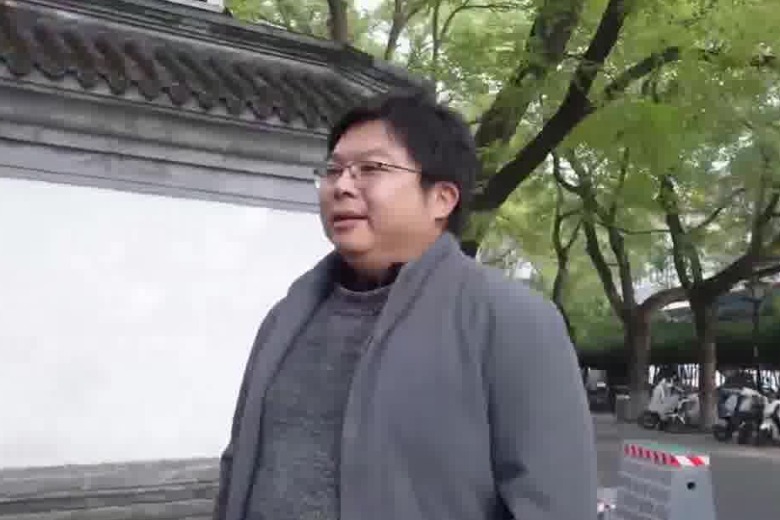
Zhang, former director of the Center for Overseas China Studies of Beijing Foreign Studies University, is currently in Shanghai for the World Conference on China Studies, a gathering of scholars of both ancient and modern China sharing ideas and insights.
"The word 'Sinology' comes from Latin and Greek roots. 'Sino' derives from the Latin 'Sinae', meaning 'China' or the 'Chinese', which in turn comes from the Greek 'Sinai' or 'Sinae', the term used by ancient Europeans for China — likely originating with the Qin Dynasty (221-206 BC) or the region known via the Silk Road. Thus, Sinology literally means the study of China," said Zhang.
"Today, Sinology largely denotes the philological, text-focused study of historical China, whereas 'China Studies' embraces a broader, multidisciplinary examination of China, ancient and modern, although the two terms are sometimes used interchangeably."
Journey to understanding
Between Sinology and China Studies, the world has been striving to understand China for more than four centuries, beginning in the late 16th century when Jesuit missionaries — some of whom corresponded with Voltaire — first arrived.
"Collectively, the Jesuit missionaries produced extensive works in classical Chinese, bringing Western mathematics, astronomy, and cartography to China, while their letters, travel accounts, and translations introduced Chinese language, culture, history, and art to the West, creating a remarkable two-way exchange of knowledge we are still seeking to revive today," Zhang said.
Prominent among these works is Confucius Sinarum Philosophus (Confucius, the Chinese Philosopher), a 1687 Latin translation of Confucian texts compiled by four French Jesuit missionaries under the patronage of Louis XIV.
In 1814, Jean-Pierre Abel-Remusat, a pioneering French Sinologist who studied Chinese texts and reports brought to Europe by Jesuit missionaries and other travelers, was appointed professor of Chinese at the College de France, becoming the first European to hold an academic chair dedicated entirely to China Studies.
"Academic Sinologists increasingly took the lead from their missionary forebears, but one point remains: many missionaries, exemplified by the Italian Jesuit Matteo Ricci, while seeking to spread the Catholic faith, showed profound respect for Chinese culture," said Zhang.
Arriving in China in 1582, Ricci mastered classical Chinese, adopted Confucian dress and customs, and befriended scholars and officials through cultural sensitivity and mutual intellectual engagement.
"These exchanges must be viewed in the context of the Age of Discovery," Zhang noted. "While European powers conquered and plundered across Africa, the Americas, and parts of Asia, China remained a rare exception — meeting the West through dialogue and cultural exchange. That contrast is deeply significant."
Eurocentric approach
But things were to change in the 19th century, when China came under the full weight of Western imperialism. Britain's victory in the First Opium War (1839-42) forced the Treaty of Nanjing, ceding Hong Kong and opening treaty ports — marking the start of the "Century of Humiliation".
As the study of China in the West — and its scholars' perspectives — was greatly colored by China's decline during this time, admiration gave way to portrayals of the country as stagnant, despotic, and resistant to progress — a colonial framework known as "Orientalism", which, though later widely criticized, continues to exert subtle influence.
One example is the German philosopher Friedrich Hegel, who, viewing Confucianism through his own Eurocentric and dialectical framework, concluded that it was not a true philosophy rooted in abstract, metaphysical thought, but merely a collection of moral maxims for creating a stable state and orderly social relationships.
According to He Peizhong, honorary director and research fellow at the International China Studies Research Center of the Chinese Academy of Social Sciences, this Eurocentric approach has shaped China Studies for an extended period.
"The term 'China Studies' was first used by American scholars, with figures like John King Fairbank institutionalizing it in US universities through a multidisciplinary approach that linked Chinese societal change to broader patterns of modernization and global interaction," said He, referring to the man Harvard University's Fairbank Center for Chinese Studies was named after.
"Although Fairbank rejected the old view of China as an unchanging civilization, he advanced the 'Impact-Response Theory', which explained modern Chinese history primarily through the pressures and interventions of Western powers. Under this paradigm, contemporary China appears as a largely reactive civilization, with its reforms, institutions, and modernization efforts emerging in response to foreign challenges."
For He and other critics, the theory underestimated Chinese agency, internal reforms and social dynamics.
"Over the past half millennium, the world has continually studied China, driven by cultural curiosity, economic interests, political ambitions, and ideological conflicts. Yet in every instance, external agendas shaped and distorted its image, leaving no portrayal truly comprehensive or accurate," he observed.
"For this reason, China must not only allow itself to be studied but also preserve and strengthen its own capacity to study itself. We must articulate our narrative while fostering genuine dialogue with international scholars through forums such as the present gathering."
Reflecting on China's historical resilience, He said: "Reinvention is not a rupture, but a tradition itself. To remain relevant, China Studies must engage with this dynamic continuity."
New way of thinking
The New Confucianism that arose in the first half of the 20th century embodies this continuity, according to Zhang. Confronting modernization and cultural identity, Chinese intellectuals reinterpreted Confucian philosophy in dialogue with Western thought, portraying history as a continuous cultural logic and Confucian humanism, or "ren", as a universal principle that unites ethics with reason and aligns human action with the cosmic order.
Some of them argue that the universe has a moral dimension, and by realizing our innate moral nature, we live in harmony with the ultimate reality of the world.
In 1954, Joseph Needham, a British historian and Sinologist, published his monumental work Science and Civilization in China, challenging Eurocentric assumptions by tracing China's contributions to world science and technology, and helping Western audiences appreciate Chinese intellectual history on its own terms.
In April 1778, the 83-year-old Voltaire met with Benjamin Franklin, one of the United States' Founding Fathers, during Franklin's visit to Paris. Two months later Voltaire passed away, while five years later the US would see its independence formally recognized under the 1783 Treaty of Paris.
"Although the meeting was largely symbolic, representing the union of French Enlightenment thought with the American Revolution, Franklin, who saw himself as part of the Enlightenment tradition, likely had encountered Confucian ideas — particularly ethics without theology and rule by merit — through his reading of Voltaire and his engagement with the same intellectual circles," said Zhang.
"Today, with China's rise as the world's second-largest economy and a global power, China Studies has long become a necessity rather than a matter of curiosity. Yet for those of us grounded in history, China — ancient or modern — should always be treated as a central subject of world study, for all the right reasons."
zhaoxu@chinadaily.com.cn