



A bridge across Silk Road
A British collector and his Xi'an-born wife unite East and West through their devotion to pith paintings, depicting 19th-century China, Yang Feiyue reports.







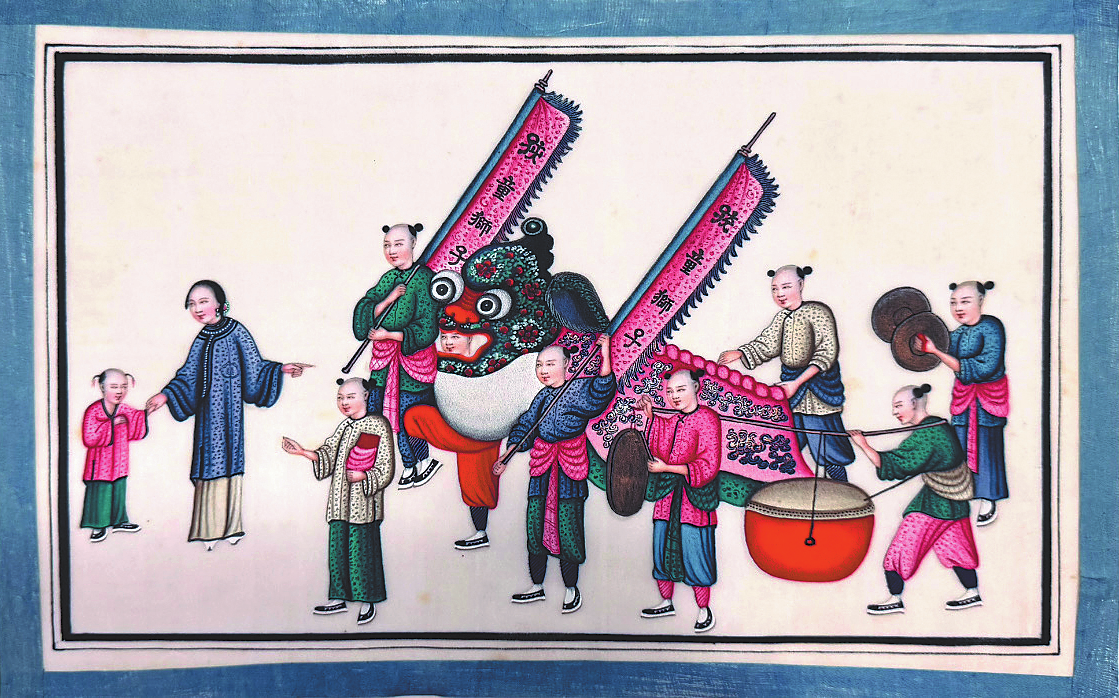
Two decades ago, in a quaint antique store in a small English town, Xu Wen and her husband Alastair Blackburn were immediately captivated by three small, vividly colored, finely detailed paintings.
"This Western owner brought them to us, saying, 'These are from your China'," recalls Xu, who was born in Xi'an, capital of northwestern Shaanxi province.
"My husband, a British real estate agent with a deep love for Chinese culture and oil painting collections, immediately felt that these paintings were something special," she says.
Upon close examination, the couple found they weren't just ordinary watercolors, as the paper was unique, and the pigments seemed mineral-based.
They purchased on-site the three paintings: one depicting a butcher cutting meat, another showing a craftsman weaving a bamboo basket, and a third illustrating an elderly man celebrating his birthday.
These pieces marked the couple's first encounter with Tongcao painting, or pith painting, which serves as a window to 19th-century China, an era without cameras.
"They were effectively 'Eastern postcards' custom-made by street painters in Guangzhou (Guangdong province) for Western merchants and travelers. These artists depicted a wide variety of subjects, from daily market scenes to cultural traditions, offering Westerners a vivid glimpse of Chinese society," Xu explains.
The art form is based on a rice paper plant, whose heartwood features a soft, velvety texture. Tongcao refers to the dried pith of the plant — the pulpy material lying between the bark and the stem.
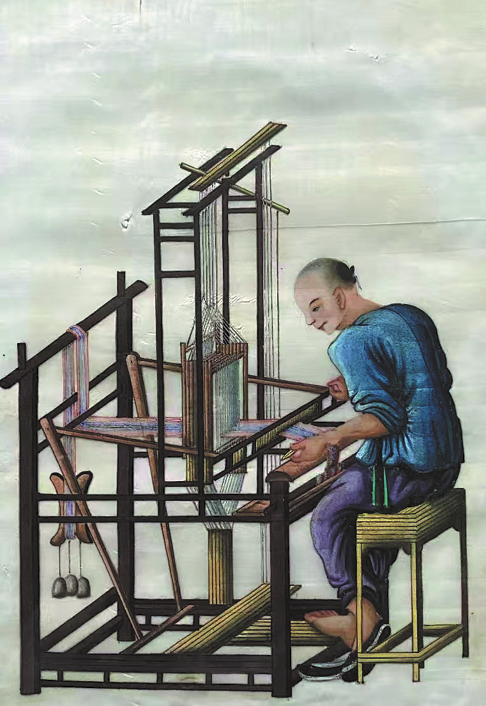
"It is taken out of the plant, then rolled and dried to form a very thin medium upon which to paint," she says.
However, pith paper is honeycombed, very different from ordinary paper that is fibrous.
"And that means watercolor paint doesn't sink into the paper as easily as it does in ordinary paper. It sits on top to create, as you sometimes see, a three-dimensional effect," Xu adds.
In the early 1990s, Xu moved to London to further her studies. After graduation, she opened a traditional Chinese medicine clinic specializing in acupuncture and herbal medicine, aiming to promote Chinese medical culture.
She and Blackburn, after their marriage, often visited antique shops and auctions together. "Back then, we had no idea what Tongcao painting was, but the colors and the sense of depth were so striking," Xu says.
As the couple dug deeper into the art's history, they realized that they had stumbled on a "forgotten chapter of history — that of cross-cultural exchanges between the East and the West".
Tongcao painting emerged in the 18th century, when Guangzhou was the only port open to Western trade. Created by skilled artisans, these works became popular exports.
"These artworks were commissioned by Western merchants who wanted depictions of China's landscapes, people and customs," Xu notes.
As Guangzhou's port flourished, the frequency of exchanges between the East and the West intensified.
Westerners began to show interest not just in China's material culture, but in its everyday life, customs and institutions.
To meet the demand, Guangzhou painters adapted Western styles, creating highly detailed and colorful paintings on Tongcao paper.
"The topics of these paintings were diverse, often depicting street markets, holiday festivals, theatrical performances, and even portraits of foreign visitors," she points out.
These paintings were not only artistic but also offered Western merchants insights into Chinese commerce, culture and daily life.
Captivated, Xu and her husband began a two-decade-long journey of collecting and researching Tongcao paintings.
They scoured antique shops, auction houses and private collections across Europe, amassing more than 2,000 paintings depicting 19th-century Chinese life and customs.
Among their prized collections, Xu points out several rare pieces. "We have paintings of Africans fetching water, Arabs riding horses, and even British aristocratic estates. All of these were highly customized pieces, extremely rare. They're not just art; they're evidence of early globalization," she says.
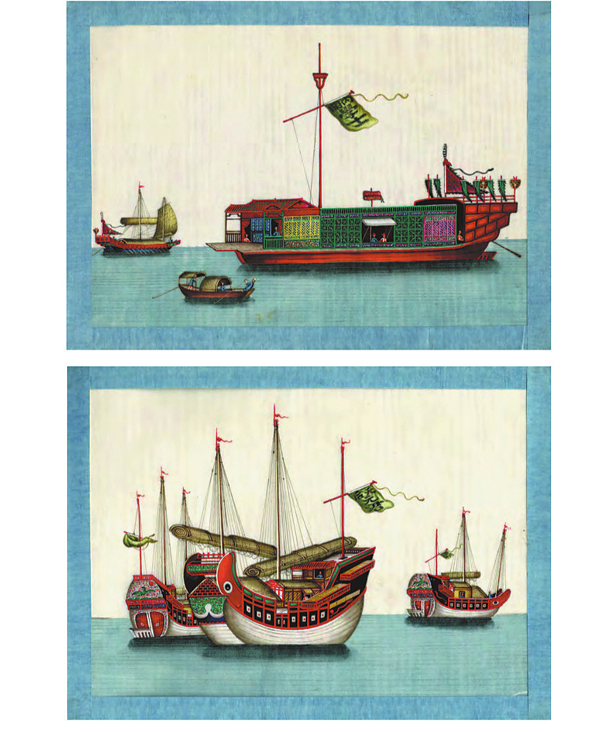
Determining the authenticity of these paintings requires a discerning eye.
Tongcao paintings are hard to replicate, since the quality of pith paper and pigments create a depth that modern reproductions can't match, Xu emphasizes.
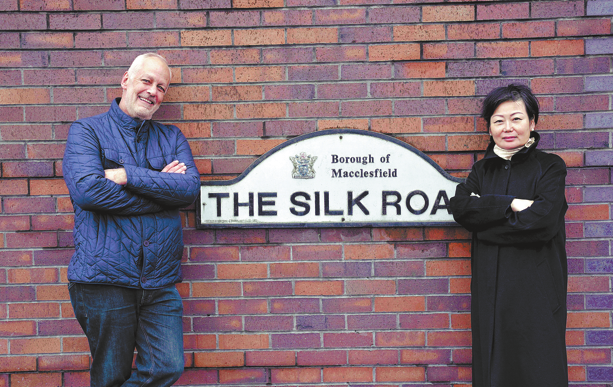
As Xu's roots trace back to Xi'an, the starting point of the ancient Silk Road, while her husband hails from Macclesfield, a small English town in Cheshire, northwestern England, that has been widely regarded as the western terminus of the Silk Road, the couple made a bold decision to establish a Tongcao painting museum in Macclesfield in 2020.
After four years of hard work, the museum opened last year in a renovated historical building.
"The idea is to bridge the two ends of the Silk Road," Xu says.
For Blackburn, the museum also serves as an art gallery where people can enjoy the works and reflect on the ties linking Silk Road cities.
Many Chinese visitors have come and appreciated in person the town's long history with China through the museum and the way local shops and cultural centers celebrate their ties to the Silk Road, Blackburn observes.
He admires Tongcao as a "Chinese invention" — an ingenious use of abundant, inexpensive material that produced a three-dimensional effect unlike costly imported Western paper.
"The characters and the landscapes are unmistakably China. But the style is very realistic, almost technical," Blackburn says.
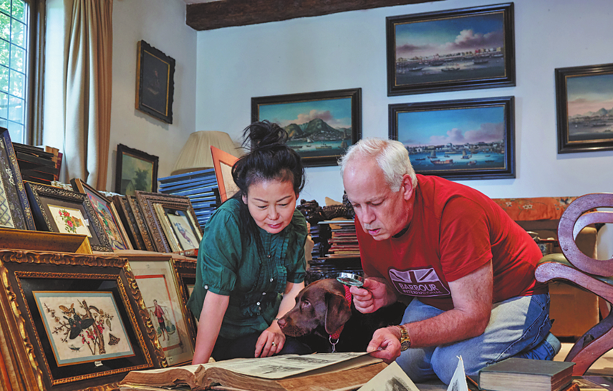
From the 18th through mid-19th centuries, Chinese goods such as tea, silver, porcelain, furniture, and watercolors were seen in the West as exotic luxuries.
"So anybody who possessed something from China was considered exotic and luxurious, and it was regarded as a statement of status and wealth to display goods from China," Blackburn adds.
The couple also invite students to the museum, encouraging them to copy Tongcao works to better grasp the style and complexity of the original pith paintings.
"Once cultures start to engage in those activities, they understand just how much we actually share," Blackburn says.
The couple founded the Silk Road Foundation in 2023 to better connect people from more countries and regions.
"Because once you connect them, they can start to understand. Once they can understand, they can start to respect. Once they start to respect, they can appreciate," he adds.
Xu's passion for preserving Chinese heritage extends beyond the museum.
She collaborates with schools in Xi'an to organize Silk Road dialogues and teach children about Tongcao paintings and the cultural exchanges of the past.
"Through hands-on learning, the children not only engage with history but also carry forward the legacy of intangible cultural heritage," she says.
Looking ahead, Xu hopes to take the Tongcao painting collection on an international tour, establishing a cross-cultural database and expanding collaborations.
"These paintings are a living testament to history, and what we need to do is make sure they continue to speak," she says.















