From textbook to trust
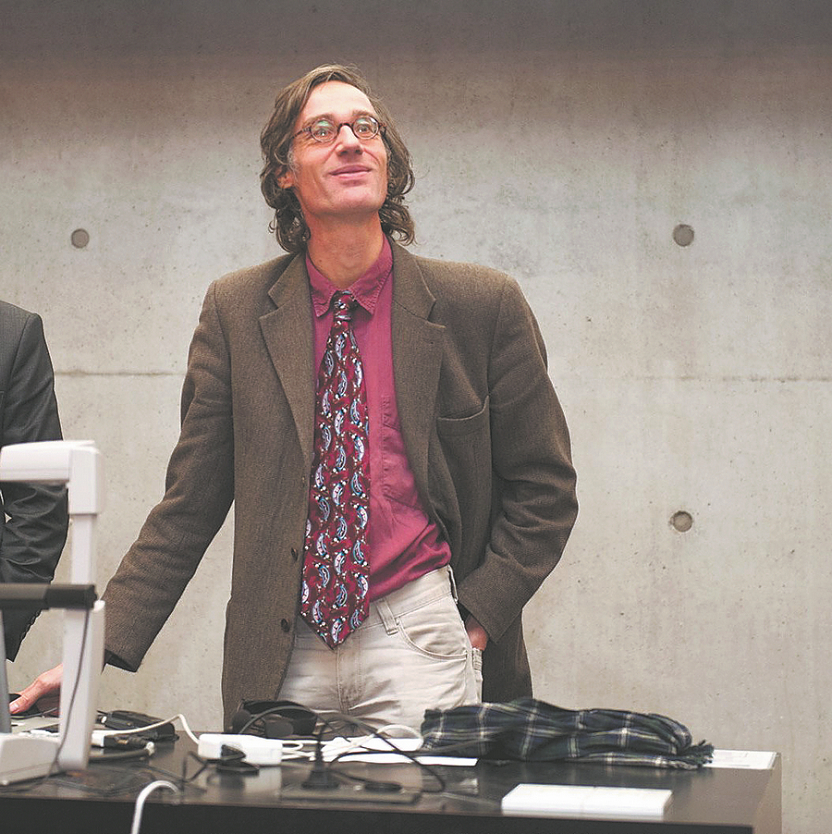
Bart Dessein, a Belgian sinologist, immersed in China's language and culture for 40 years, is building bridges between the country and Europe







Deep research
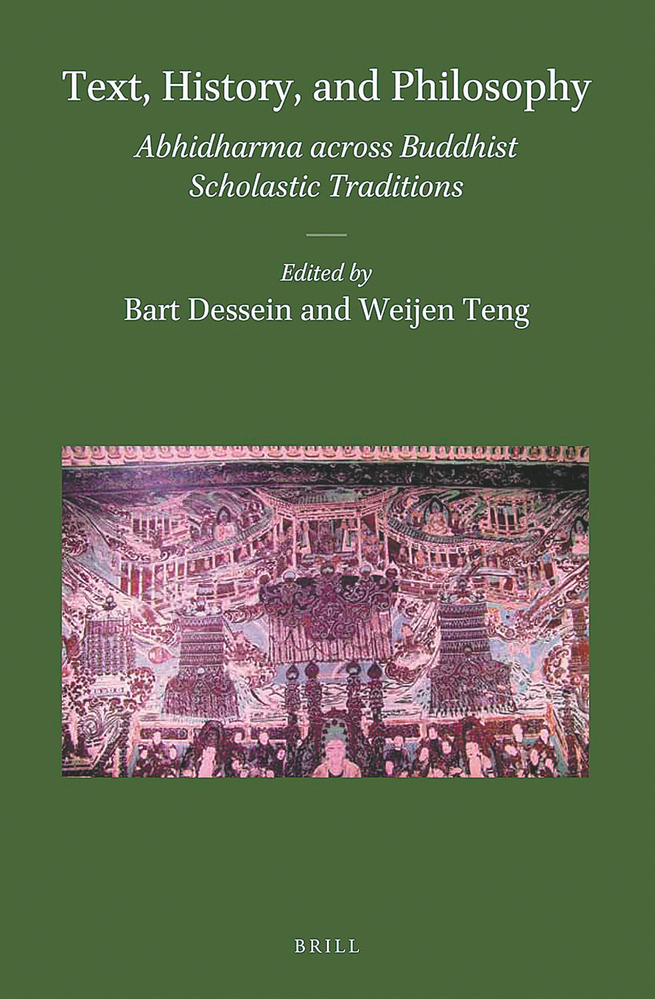
The studies done within the research group of Dessein and his students as the whole team span a remarkable range, from ancient Buddhist texts to the way modern Chinese society interprets its philosophical traditions.
Studies conducted within the group include an examination of Zheng Banqiao's (1693-1765) famous calligraphy nande hutu (It's difficult to be muddled), which remains immensely popular in China today. The study explored how the phrase has inspired not only academic reflection but also a broader cultural movement sometimes called hutuxue (the art of being, or pretending to be, muddled).
The analysis demonstrated how a centuries-old concept continues to resonate in a society navigating the pressures of individualism, capitalism, and globalization.
Another study conducted in the research group delved into the Zutang Ji (Collection of the Patriarchal Hall), the earliest surviving genealogical record of Chan Buddhism. Through philological research, textual criticism, and even digital humanities tools and historical social network analysis, the compilation history of the text and its role in shaping medieval Chinese Buddhism were reconstructed.
Another study concerns the formation of regional monastic communities in China during the Tang Dynasty (618-907). By studying extra-canonical sources such as epigraphy, secular literature, and local gazetteers, overlooked actors and networks were identified, challenging conventional narratives about the relationship between the center and periphery in Chinese religious life.
Yet another study concerns the doctrine of wu wo (no-self, or anatman) in Ming Dynasty (1368-1644) Buddhism. While the Indian tradition treated "no-self" as an ontological denial of a permanent self, Chinese interpretations often took an epistemological turn, emphasizing relational non-duality. The research on the Ming monk Zibo Zhenke (1543-1603) highlights the dynamic interplay between Buddhism, Confucianism, and Taoism in late imperial thought.
For Dessein, these projects, diverse as they are, share a common thread: a deep commitment to understanding China's intellectual traditions on their own terms, while also situating them within global philosophical and cultural conversations.
Views on relations
Beyond his research, Dessein has long reflected on the broader relationship between China and Europe. He emphasizes that understanding another country requires empathy, and that language, history and culture are indispensable to this process. "The way a country behaves on the international scene is very much influenced by that country's history and self-perception," he says. "It is therefore very necessary that studying language and culture go hand in hand. Having empathy with a country helps to understand a country and vice versa."
He observes that both China and Europe face similar global challenges — food security, environmental concerns, and technological change — that can only be addressed through collaboration. "Reality will sooner or later necessitate more collaboration," he says, warning that the decline of cultural and language studies worldwide risks undermining mutual understanding.
On academic exchanges, Dessein points to clear evidence that mobility fosters trust. "We see that those countries that receive most Chinese students are also those countries that send most students to China. This shows that exchanges are important for mutual understanding and building trust. Mutual understanding and trust are fundamental for political and economic relations to be built on."
As for whether China and Europe are diverging or converging, he offers a balanced perspective: "The world has always been global. This is not a new thing. The speed with which events in one place impact other places is, however, increasingly quick. This makes Europe more Chinese but also makes China more European. Divergence and complementarity are present simultaneously."
Engaging with Chinese civilization, he believes, is ultimately a mirror for Europe. "Cultural contacts help to see that there are different ways of looking at things, and give more nuanced standpoints. The global and the local are two sides of the same coin."
For young Europeans considering Chinese studies, his advice is unequivocal: "China is one of the major powers in the current world. What happens in China has an effect on the world at large. We therefore need more people who can communicate with Chinese people, read Chinese, and can contextualize in a broader historical frame. Studying Chinese language and culture is very important. In general, studying another culture is very conducive to better understanding oneself."
And looking ahead 20 years, he envisions a China-Europe partnership that extends beyond bilateral ties. "The global scene is changing rapidly. A constructive China-Europe partnership needs to extend beyond the bilateral relationship, it should also have an eye on the rest of the world, and the varied domains of the partnership."