



One step at a time







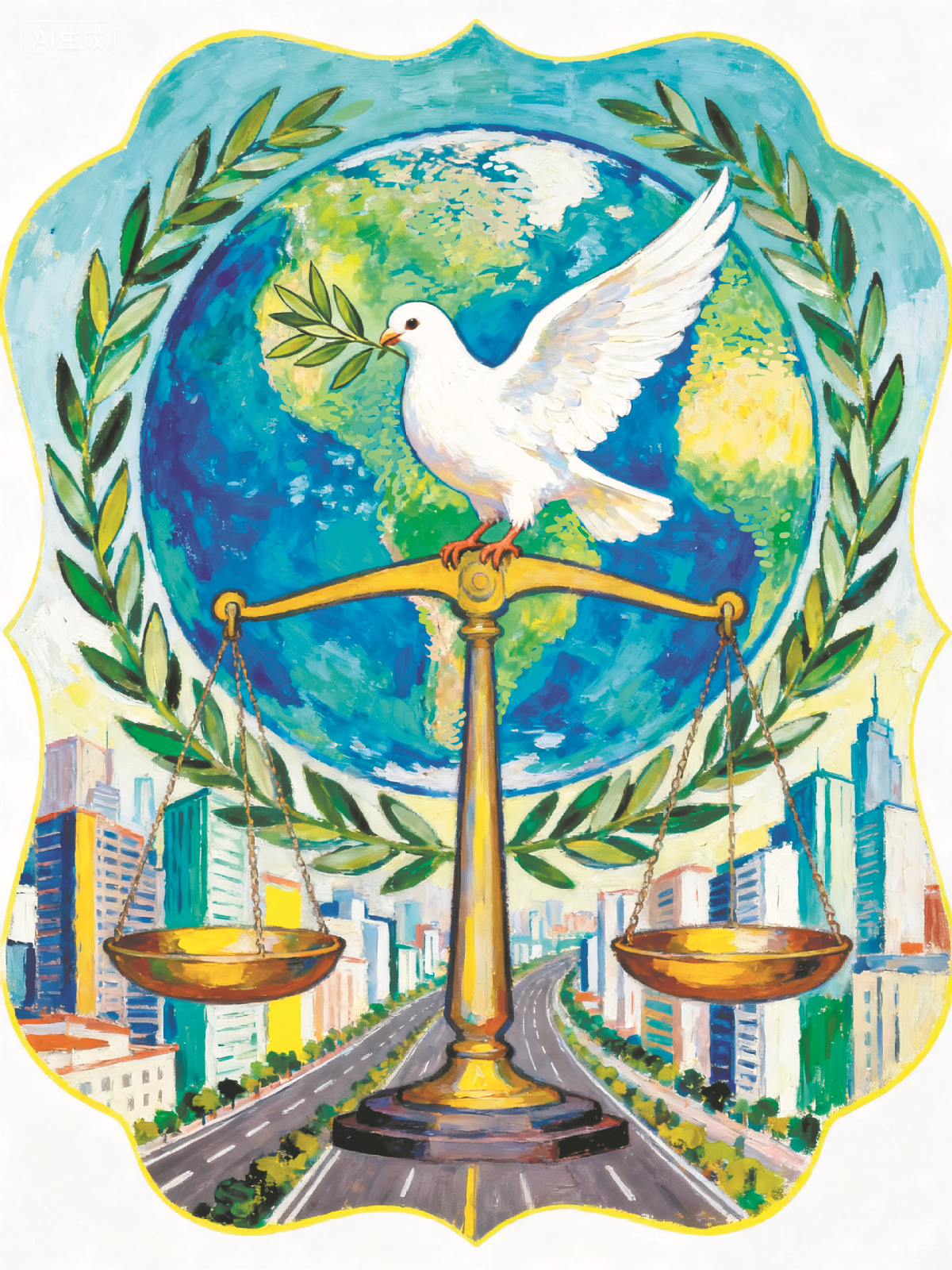
Global South is injecting vitality into global governance by leveraging its growing comprehensive strength
This year marks the 80th anniversary of the victory in the Chinese People's War of Resistance Against Japanese Aggression (1931-45) and the World Anti-Fascist War, as well as the founding of the United Nations. China's 14-year resistance against Japanese aggression, won at enormous sacrifice, not only restored national dignity but also helped reverse the expansion of fascism and gave birth to the postwar international order. It also injected decisive momentum into the awakening of oppressed nations worldwide, reshaping the political map of the 20th century.
The postwar international system was a collective security mechanism, fundamentally aimed at safeguarding international fairness, justice and lasting peace. This system has not only served as the institutional cornerstone for preventing the recurrence of world wars, but also as the core platform for addressing global challenges and as the primary foundation for building, reforming and innovating the global governance system. Against the backdrop of the profound changes taking place in the international landscape today, maintaining the postwar system with the UN at its core is of great strategic importance.
The UN system embodies the hard-won outcomes of World War II. The principles enshrined in the UN Charter — such as sovereign equality and the peaceful settlement of disputes — have formed the fundamental norms of modern international relations. Over the past 80 years, the system has successfully prevented another world war, facilitated the dismantling of colonial structures and enabled billions of people to escape poverty.
The UN has irreplaceable legal value. It empowers vulnerable states through law, sets behavioral red lines and builds a power network based on shared rules rather than hegemonic dominance, thereby raising the costs of violations by power politics.
The UN has also made important contributions to establishing and operating economic and trade mechanisms. The UN and its agencies have helped create a fair trading system, advanced the formulation of multilateral rules, lowered global tariff barriers, promoted the free flow of goods and supported developing countries in advancing industrialization through mechanisms such as generalized preferences and technical assistance.
In 2015, the UN adopted the 2030 Agenda for Sustainable Development, broadening the world's focus from narrow economic growth to comprehensive progress in the social, economic and environmental spheres. In addition, the UN has facilitated the establishment of a generalized system of preferences and technology transfer mechanisms, supported efforts to address climate change and promoted biodiversity protection.
The positive role of the postwar international system deserves recognition and further strengthening, but it must also be recognized in a factual and objective manner.
First, the power structure has solidification and imbalance. The post-World War II international order and system were built on the balance of power at that time. But after 80 years of change, the global landscape has undergone fundamental shifts. The original power structure does not reflect the collective rise of the Global South and the growing role and influence of major developing nations.
Second, the institutional design has historical limitations. The global governance framework established after World War II was dominated by Western countries led by the United States. Eighty years later, it no longer functions effectively. For example, the Bretton Woods system, which allowed the US to manipulate global markets to gain economic hegemony, has caused recurring volatility in the global economy because it is tied to the US dollar. When the US' share of global gold reserves dropped greatly and drastically in 1971, the system collapsed. Yet the dollar maintained its global dominance by linking itself to oil, which also enabled the US to export its crises, such as during the 2008 subprime mortgage meltdown.
Third, today's international system is structurally damaged by hegemonism. After the Cold War, the US-led West continued to cling to a zero-sum, Cold War mentality, repeatedly undermining efforts to reform the international system. In recent years, Washington has disregarded the UN Charter's principle of sovereign equality through unilateral sanctions and long-arm jurisdiction, while often defaulting on payments of its UN dues or abruptly withdrawing from international organizations. These actions have not only crippled the functions of major global institutions, but also corroded the very foundations of the existing international system.
Fourth, the system has been unable to respond effectively to emerging issues and challenges. The existing international system has grown increasingly sluggish and absent in addressing the profound challenges the world faces, such as strategic competition among major powers, digital transformation and sustainable development. In recent years, the UN has become more unbalanced in representation. The International Monetary Fund quota reforms have, to some extent, stalled, and the World Trade Organization's dispute settlement system has been paralyzed. Entrenched interest groups have blocked structural adjustments, weakening the ability of institutions to respond to new risks.
In response, China has proposed building a community with a shared future for humanity and launched four global initiatives on development, security, civilization and global governance. These represent China's wisdom, solutions and contributions to the construction of a more fit-for-purpose international system.
First, while advocating reform of the existing system, China emphasizes extensive consultation, joint contribution and shared benefits with both state and non-state actors within the system. It seeks to make dynamic adjustments according to different issues, fields and regions, while improving mechanisms to fix shortcomings and enhance efficiency — advancing step by step toward systemic progress.
Second, China actively participates in and promotes Asian cooperation. It has engaged in existing regional economic and security mechanisms such as the Asian Development Bank, the Asia-Pacific Economic Cooperation, the Conference on Interaction and Confidence Building Measures in Asia and the Association of Southeast Asian Nations Regional Forum. It has also initiated multilateral platforms such as the Shanghai Cooperation Organization, the Boao Forum for Asia, the Asian Infrastructure Investment Bank and the China-Central Asia Summit mechanism, deepened cooperation in the Greater Mekong Subregion with the launch of the Lancang-Mekong Cooperation mechanism and advanced negotiations on the Code of Conduct in the South China Sea.
Third, China guides regional cooperation through the vision of an Asian community with a shared future. Beyond bilateral communities with a shared future with countries in Central Asia and Southeast Asia, China has actively promoted multilateral communities with Asian subregions, such as the China-Central Asia and China-ASEAN communities with a shared future. This has advanced cooperation from bilateral to multilateral frameworks, making Asia the first region where the construction of various communities with a shared future has essentially been completed.
Fourth, China has worked to strengthen cooperation within the Global South. The Global South is a main force in building and reforming the international order and system. China continues to support the just positions and legitimate demands of the Non-Aligned Movement countries and the G77. It has also deepened cooperation with regional organizations such as ASEAN and the African Union, as well as with institutions in the economic and financial spheres, to raise the Global South's role and influence in shaping the international system.
Looking ahead to the mid-21st century, building the global governance system will advance step by step. For now, the US-led West is still seeking to preserve its systemic hegemony — or at least dominance — through residual advantages. But the Global South will accelerate the creation of a new system by leveraging its growing comprehensive strength.
The author is a senior research fellow and the chairman of the Academic Advisory Council at the Shanghai Institutes for International Studies. The author contributed this article to China Watch, a think tank powered by China Daily.
The views do not necessarily reflect those of China Daily.
Contact the editor at editor@chinawatch.cn.





