Africa steps up funding to tackle health crisis







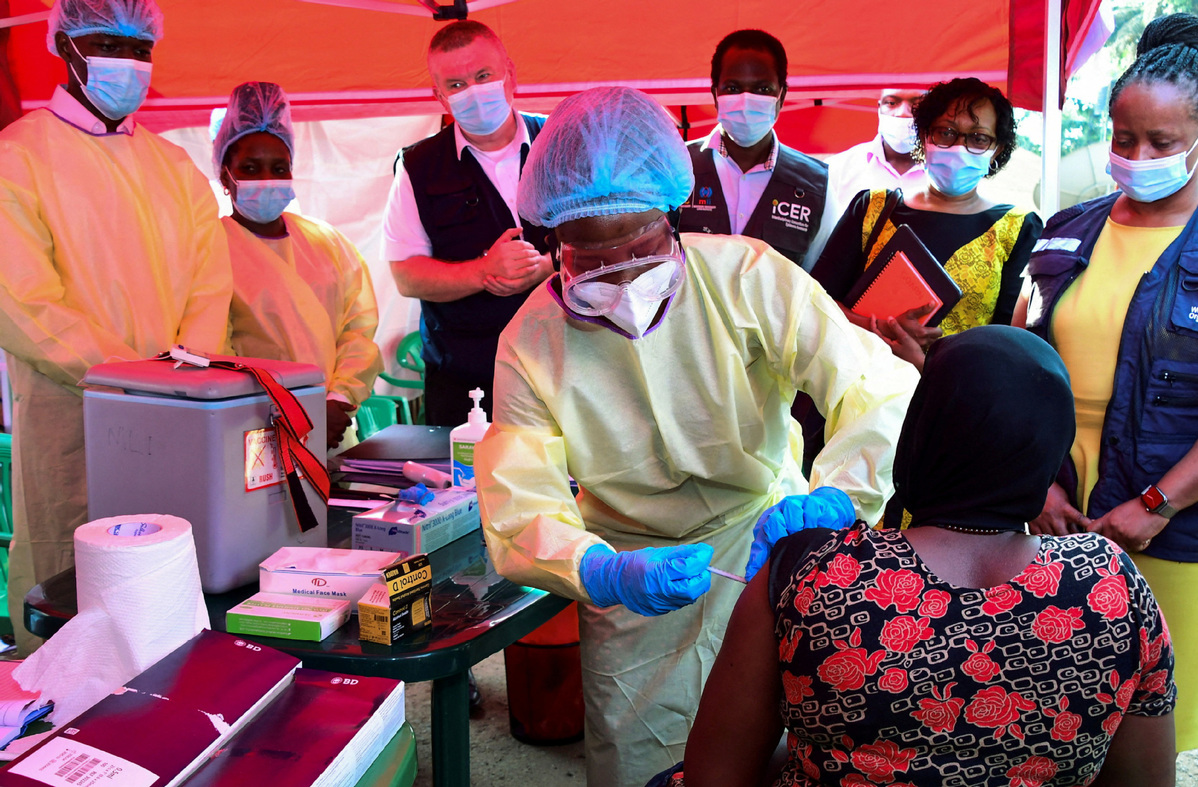
African countries are ramping up efforts to mobilize domestic funding to fill a looming shortfall in health financing following the rapid withdrawal of foreign aid from the United States.
This comes amid warnings from experts that the funding crisis risks reversing decades of progress and harming women and children who are more vulnerable.
Modeled estimates on cuts to the US Agency for International Development suggest that the reduction in financial support could result in 14 million deaths globally by 2030, including 4.5 million children under 5.
Rajat Khosla, executive director of the Partnership for Maternal, Newborn and Child Health — the world's largest alliance dedicated to the health of women, children and adolescents — cautioned that maternal mortality could rise by 25 percent, under-5 mortality by 23 percent and stillbirths by 13 percent over the next 15 years.
"This translates to a tidal wave of human loss, 510,000 additional maternal deaths, 500,000 deaths from loss of family planning services, 7.9 million child deaths and 1.8 million stillbirths," Khosla said.
Aaron Motsoaledi, South Africa's health minister, said US aid cuts threaten to draw back decades of gains.
"These cuts disproportionately harm those who are least responsible for fiscal shortfalls," he said at a recent webinar, urging governments to increase national health budgets and protect allocations for women, children and adolescents.
Jean Kaseya, director-general of the Africa Centres for Disease Control and Prevention, linked the crisis to Africa's fragmented health financing, weak financial management and the failure to prioritize health in national budgets.
"Low- and middle-income countries are grappling with competing priorities. We need a change of mindset, a policy shift and strong political will, or risk plunging into a global financial crisis of unprecedented scale," Kaseya warned.
To address the challenge, the Africa CDC has prioritized implementation of the Lusaka Agenda, an African Union-endorsed collective blueprint for the continent's health sovereignty and sustainable investment in health.
As part of the plan, the Africa CDC is deploying 10 public finance management specialists in priority countries to strengthen domestic health financing and improve budget execution.
Africa's health crisis is compounded by projections that Official Development Assistance — the internationally recognized form of government aid for promoting development and welfare in poorer countries — will decline by $31 billion this year because of a combination of budget cuts and slowing GDP growth.
Cushioning methods
Amid the grim outlook, African countries are already resorting to their own kitty to plug into the shortfalls of the aid cuts.
South Africa has reallocated more than $43 million to cushion donor withdrawals, while Nigeria mobilized $200 million in its 2025 budget after US aid cuts.
"The current situation demands bold, coordinated action," Minister Motsoaledi said. "We must act with urgency, clarity and conviction."
South African health leaders have also echoed the call for greater domestic resource mobilization.
Helen Rees, executive director of the Wits Reproductive Health and HIV Institute in Johannesburg, said many countries were unprepared for the sudden freeze in funding.
"We have to use our own budget mechanisms and think innovatively about funding health programs," Rees said, pointing to options such as sugar and tobacco taxes, blended finance, and stronger collaboration with BRICS countries.
Ndumiso Mlilo in Johannesburg contributed to this story.