



Greater integration needed for commercial rollout







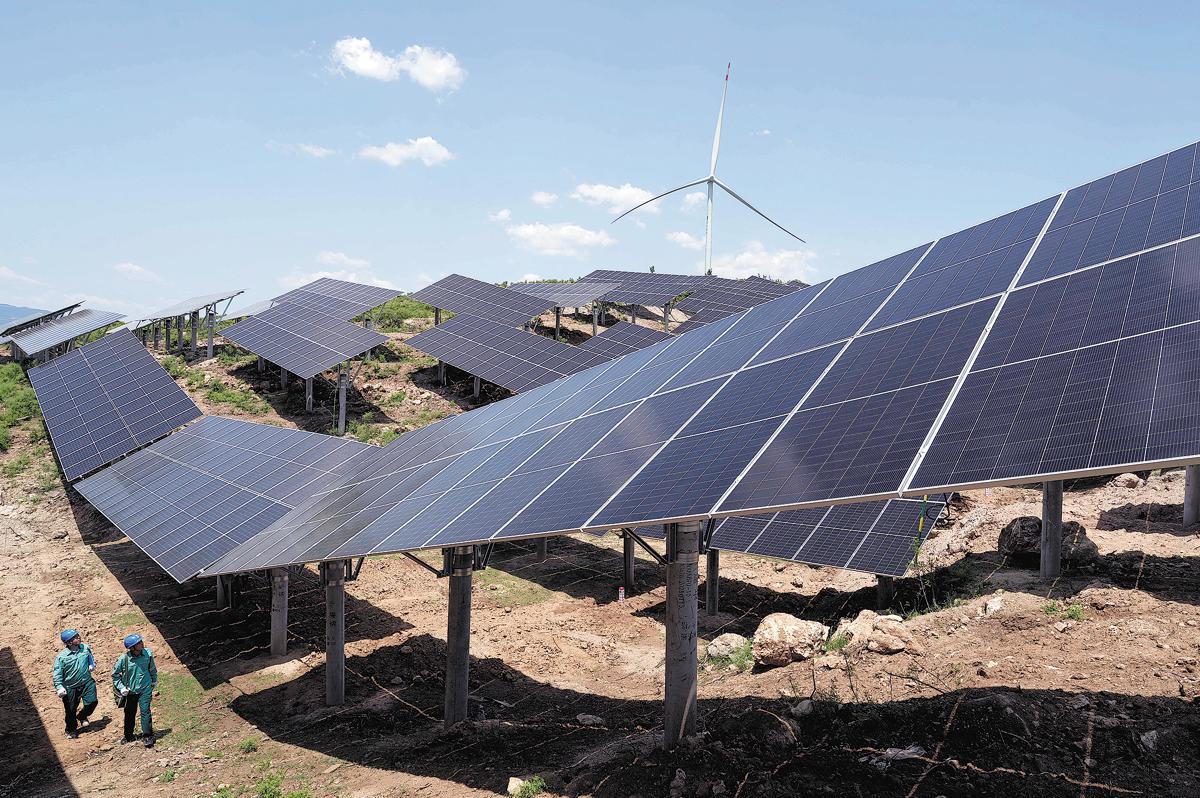
Despite China's remarkable progress in developing green and low-carbon technologies, challenges remain in commercializing and scaling them up, industry experts said in Beijing on Sept 9.
"Since the 11th Five-Year Plan (2006-10), China has consistently set targets addressing climate change and promoting green and low-carbon development, with increasing intensity and growing number," said Chai Qimin, director of strategic planning department at the National Center for Climate Change Strategy and International Cooperation.
"The Outline of the National Economic and Social Development typically includes around 20 indicators, with those related to green and low-carbon development making up about one-fifth of the total," Chai said.
These goals are intended to drive and guide innovation and industrial development in the low-carbon sector, and underscore the increasing emphasis the country places on green development within its national development blueprint.
Chai made the remarks at a roundtable forum discussing the prospects of investing in and applying national green and low-carbon technology.
China and the European Union jointly issued a statement on addressing climate change in July, underscoring the commitment of both sides to submit their 2035 nationally determined contributions ahead of COP30. These national contributions will cover all economic sectors and align with the long-term temperature goal set in the Paris Agreement.
Nationally determined contributions are emission reduction targets set by each country under the Paris Agreement based on its own circumstances and are updated every five years. In 2020, China set the dual carbon goals of peaking carbon dioxide emissions before 2030 and achieving carbon neutrality before 2060.
After peaking carbon emissions, China's economy will enter a new turning point, Chai said.
The entire economy will aim for a sustained decline in future greenhouse gas emissions as part of high-quality development, providing new guidance for the next decade.
During the 14th Five-Year Plan (2021-25), China has invested substantial funds to drive the development of breakthrough technologies and has cultivated a large number of professional talents. The national strategy will further increase investment in relevant fields, which will play a crucial role in promoting the application of technologies such as new-type power systems and low or zero-carbon solutions, he said.
"Technological innovation is the ultimate key to green transition. National policies are essentially designed to nurture and drive technological innovation, facilitate its industrialization, enable broader application, and ultimately achieve tangible carbon reduction effects," he added.
Zhang Fan, CEO of the Hunan Innovation Low Carbon Center, emphasized the importance of the application of technology.
While developing new technologies is crucial, their integration into the national strategy and the systems of major energy companies can drive progress toward sustainability and carbon reduction goals, he said.
Zhou Yingya, an executive from Tencent's carbon neutrality laboratory, highlighted the urgent need to build an aggregated platform that integrates multidimensional data, including low-carbon demands, successful cases and relevant technologies. This platform would aim to precisely match and connect low-carbon resources, promote the widespread adoption of technologies and enhance the scientific nature of decision-making.
To achieve this, Zhou emphasized the necessity of integrating various artificial intelligence technologies into the platform. This integration will ensure that when users enter keywords for searches, they can conduct global searches across languages while maintaining semantic consistency in the search results, she said.
limenghan@chinadaily.com.cn






- China's Global Governance Initiative receives positive feedback at forum
- China's Xizang sees steady tourism growth in 2025
- First-of-its-kind pearl auction held utilizing Hainan FTP
- Agarwood exhibition steeps Shanghai museum in fragrance
- The Fujian Coast Guard conducts regular law enforcement patrol in the waters near Jinmen
- IP protection for new fields to improve














