



From poverty to prosperity: lessons from Manluanzhan







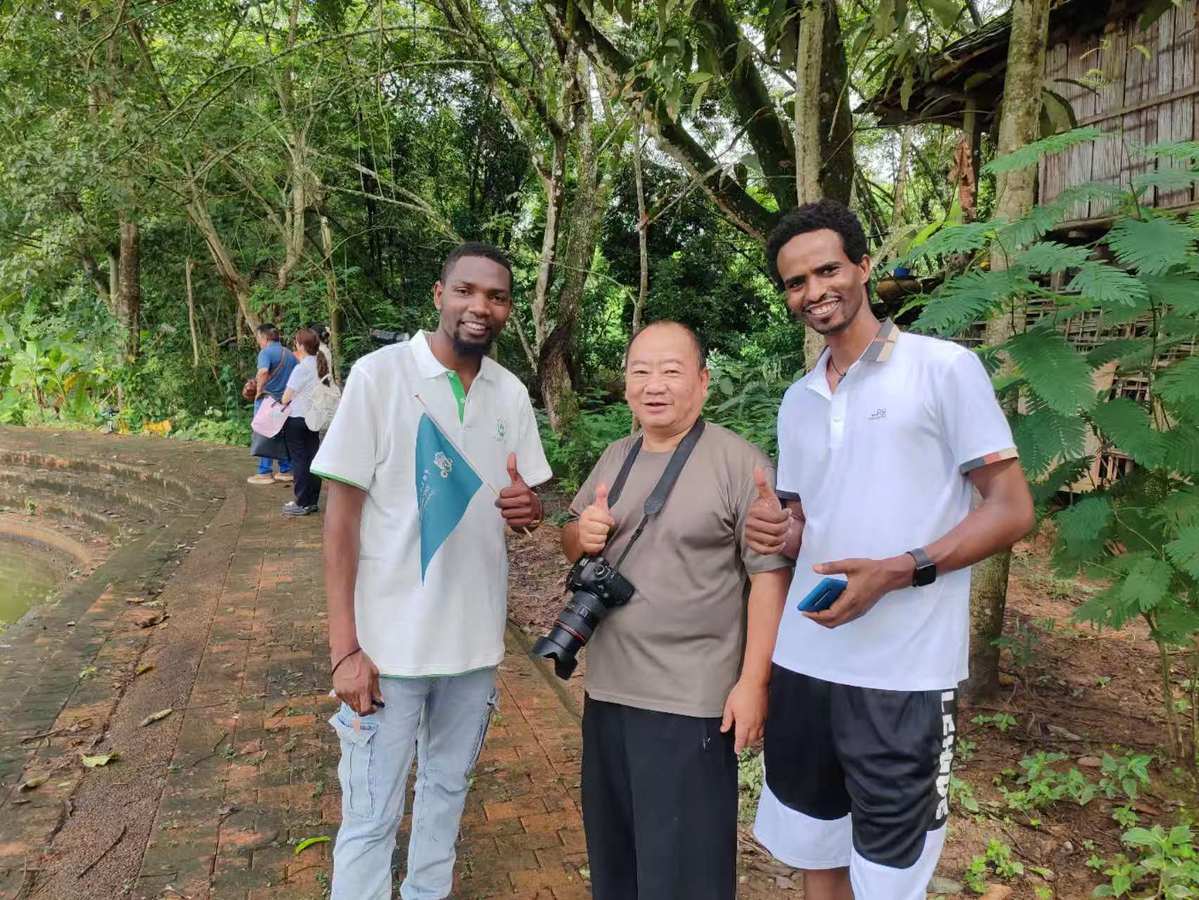
Five years ago, during my master's studies at China Agricultural University (CAU), I visited Hebian village in Yunnan province as part of a poverty alleviation program.
It was there that I saw how my professor, Li Xiaoyun, and his team helped lift the community out of poverty by 2020.
Despite Hebian's rich natural resources — rain forest-covered mountains, fertile farmland, and abundant vegetation — villagers had long struggled with limited education and economic stagnation.
With support from the United Nations' "Global Call to Action Against Poverty" initiative, Chinese social charities, and the central government, Li and his team established the Xiaoyun Poverty Alleviation Center in Hebian, which became a model for change.
That experience left me with a lasting question: once poverty is eradicated, what comes next?
This summer, I found part of the answer in Manluanzhan village in Xishuangbanna, Yunnan, during a field trip organized by CAU's College of International Development and Global Agriculture, and the College of Humanities and Development Studies.
More than 60 students from over 13 countries — including Ethiopia, Austria, Ghana, Indonesia, Brazil, Myanmar, and the United States — came together from July 3 to 12 to study global development and rural revitalization.
Our destination, Manluanzhan, is a Dai ethnic minority village that has become a showcase for China's rural revitalization program launched in 2019.
Unlike poverty alleviation, which focuses on meeting immediate needs, revitalization emphasizes long-term growth. It leverages rural talent, cultural heritage, and tourism to create sustainable livelihoods.
Villages are encouraged to diversify income sources, attract visitors, and preserve local traditions.
Once again, Professor Li and his team were closely involved in Manluanzhan. Their focus: sustainable village construction and community-led development.
As we walked into Manluanzhan, it was hard to imagine that this community had once struggled to make ends meet. Today, villagers not only enjoy self-sufficiency but have also embraced modern comforts.
Many families own cars and countryside apartments. Businesses thrive — from a restaurant, wellness center, coffee bar, and wood-fired bakery to a craft beer workshop and even an ice cream shop.
The village also boasts a modern outdoor swimming pool, large enough to host group activities.
It was there that we joined the villagers in their Water Splashing Festival. At first, it seemed like pure fun — tossing water under the sun — but it soon stirred childhood memories and gave me a renewed sense of connection to nature and community.
We also tried our hand at the traditional art of papermaking. Guided by villagers, I dipped my hands into pulp and felt the rhythm of a craft passed down for generations. It was more than a lesson in technique — it was about continuity, culture, and respect for the past.
As night fell, we gathered for a communal dinner, followed by a bonfire. Under the stars, Dai music and dance brought the village to life. In that moment, I didn't feel like a visitor. I felt part of something bigger — a living, breathing community.
Seeds of change
Manluanzhan's journey from poverty to prosperity was no accident. It reflects a carefully guided process: first meeting basic needs through poverty alleviation, then building long-term growth through rural revitalization.
The key was recognizing the village's assets — its natural beauty and Dai culture — and turning them into opportunities. Tourism became central, while festivals and traditions were celebrated not only for locals but also as attractions for visitors.
What impressed me most was that villagers were not passive recipients of aid. They were entrepreneurs, hosts, and cultural ambassadors.
The community itself carried the project forward, with outside institutions acting as partners rather than commanders.
Coming from Ethiopia, I could not help but draw comparisons. Many of our villages, too, have unique traditions and natural resources waiting to be unlocked.
From Manluanzhan, I learned four key lessons. First, understand the root causes of poverty before trying to solve them. Second, foster collaboration between governments, universities, and charities. Third, value local culture and the environment as development assets. And finally, ensure that communities lead the way.
For me, this trip was more than an academic exercise — it was a journey of discovery: about development, about culture, and about myself.
I left Manluanzhan with new knowledge and new friends, but also with a sense of responsibility. The transformation I witnessed in Yunnan is not just China's story — it can inspire rural communities worldwide.
Written by Lemi Chala Tamire, an Ethiopian PhD candidate in development studies at China Agricultural University. He also serves as a lecturer and researcher at Haramaya University, Ethiopia. He earned his master's degree in rural development and management studies at CAU from 2017 to 2019. Beyond his academic pursuits, he is a passionate basketball player and cyclist.


Today's Top News
- Booking a stronger future
- Missile deployment proof that Japan poses threat to peace
- Highlights of NPC press conference on China's diplomacy
- Need for reshaping academic structure
- Shared Journey: Chinese new energy vehicles in Europe: competition or co-creation?
- Deep sea needs down-to-earth scientific research





