



New roles in a multipolar world







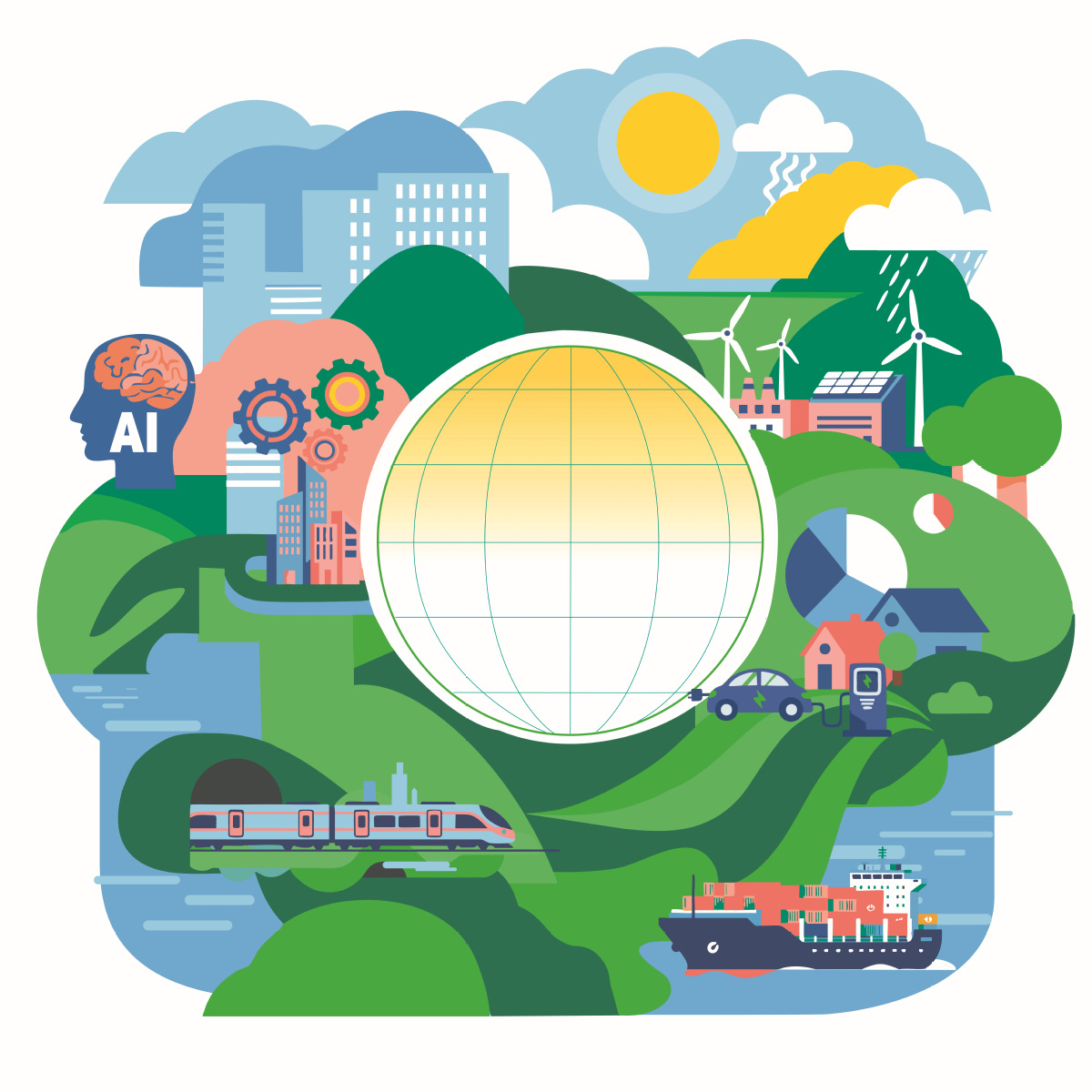
The world cannot afford to reject global diversity and refuse to cooperate
Over the past 80 years since the end of World War II, there have been local wars, but fortunately, no conflict has arisen to a world level.
And since the 1980s, China has become the world's fastest-growing economy, thanks to the reform and opening-up policy launched in 1978. In the late 1970s, the country moved toward a market economy, leading to dramatic growth. Between 1980 and 1990, the average annual economic growth was around 9 percent, and for a few years after 1991, the growth reached double digits.
Entering the 21st century, it has become increasingly clear that the economic development of the members of BRICS and the members of the Shanghai Cooperation Organization, primarily China, which is a member of both, is much faster than that of the United States and the European Union in terms of economic growth and innovation capacity. During this time, it has become an undeniable fact that China has become a major power. However, the US and the EU, which do not want to accept the change in their role in the global economy, were slow to take this into account and did not prepare for the challenges generated by the new situation caused by globalization.
Currently, SCO members account for nearly half of the world's population, and nearly one-fourth of the global GDP.
In recent years, the US and the EU have favored the principle of "decoupling" and "de-risking" and have sought to defend their own positions through administrative means. Rejecting diversity leads to increased polarization within the international community, and a lack of acceptance and dialogue prevents the achievement of common goals and hinders social development. When countries reject differences, they also limit their own economic opportunities. Furthermore, the rejection of global cooperation hinders international trade, knowledge exchange and technological development — all in a world where economies are increasingly interdependent.
This trend intensified dramatically in 2025, when the Donald Trump administration imposed tariffs of varying degrees on almost every country in the world while simultaneously eliminating tariffs on US goods, thereby grossly interfering with the global market system of the world economy.Within a few months, this intervention completely shattered the global economic system that had developed over the past 80 years and had been functioning and becoming increasingly globalized, as well as the complex system of national economic and corporate and intercompany cooperation. It effectively destroyed the global supply chains that are essential to the functioning of industries using increasingly complex technologies. All this happened at a time when supply chains had not yet recovered from the serious damage caused by the COVID-19 pandemic, and the global economy was entering a general crisis, leaning toward recession.
With its tariff measures, the US has effectively laid the groundwork for a trade war with China. And instead of establishing cooperation with China in some key areas (e.g., the automotive industry) in a timely manner, the EU has partly followed suit.
This means that the world has reached a crossroads both economically and politically, and many of the key players are not adequately prepared for its long-term and short-term effects or are unwilling to even assess these effects and prepare for them. In my opinion, this fork is different from previous ones in that there are not two but several paths to choose from, due to the effects of many factors that are still unknown today and whose impact is currently impossible to estimate based on our current knowledge.
The first important factor is the development of artificial intelligence, or rather the direction of its development and the speed at which it is advancing. The second is the Fourth Industrial Revolution, which is bringing fundamental changes to the way people live, work and relate to each other. It is a new chapter in human development, made possible by extraordinary technological advances, and incomparable to the results of the first, second and third industrial revolutions. The Fourth Industrial Revolution is more than just a technology-driven change; it offers an opportunity to leverage converging technologies to create an inclusive, human-centered future. The third important factor is climate change, which can no longer be prevented, but at most mitigated. The fourth factor is the consensus-based "rebuilding" of globalization in a way that is acceptable, or at least tolerable, to most participants.
Accepting diversity and pragmatic cooperation is not only a moral obligation in the present, but also a responsibility toward future generations. If we do not emphasize dialogue, education, inclusion and joint action, we will leave behind a world in which division, conflict and instability are the norm. Future generations will only thrive if we create a world for them based on solidarity, acceptance and cooperation.
The world's problems are complex and cross-border, so they can only be solved through joint thinking and collective action. Diversity is not a threat, but an opportunity; cooperation is not a weakness, but a strength. The question is not whether it is "worthwhile" to cooperate and accept differences, but whether there is any other viable alternative. The answer is clear: there is not.
The author is president of the Hungarian-Chinese Chamber of Economy. The author contributed this article to China Watch, a think tank powered by China Daily. The views do not necessarily reflect those of China Daily.
Contact the editor at editor@chinawatch.cn.





