



SCO's broad scope offers new avenue for Africa







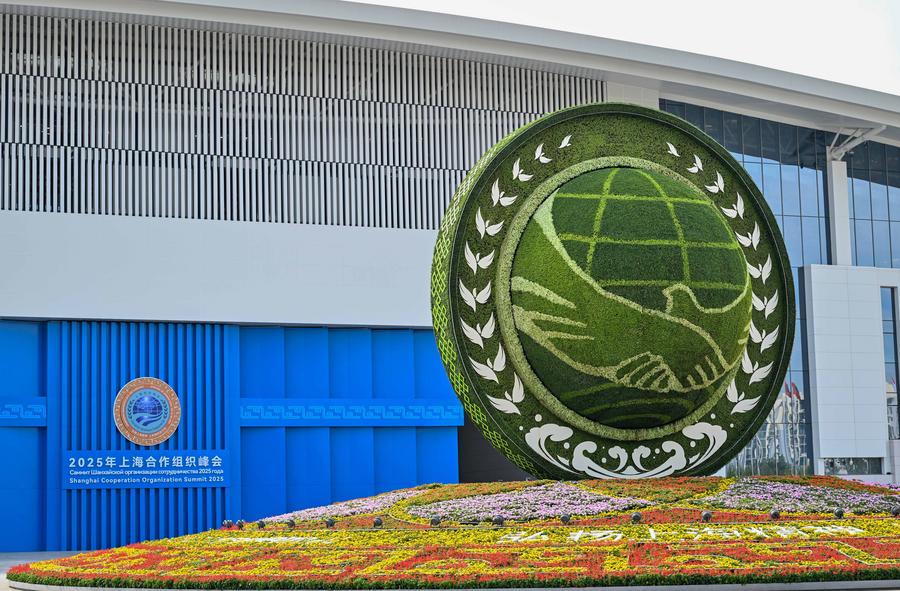
The Shanghai Cooperation Organization has often been described as a Eurasian body, born of the need to manage security, trade and cultural links across a vast landmass. But the speech delivered by President Xi Jinping at the recent SCO Tianjin Summit revealed dimensions of cooperation that extend well beyond geography.
For Africa, there are lessons to absorb, opportunities to explore, and clear plug-ins that could align with the continent's own quest for inclusive development.
Xi's address struck a careful balance between vision and delivery. While it reaffirmed broad values such as solidarity, shared security and openness, it also offered tangible commitments. A grant of 2 billion yuan ($280 million) for SCO member states this year and a further 10 billion yuan in loans over three years through the SCO Interbank Consortium marked a material pledge to back words with resources.
Even more striking was Xi's call for the creation of an SCO Development Bank, an institution that could anchor long-term financing for infrastructure, energy and digital transformation. For Africa, which continues to wrestle with infrastructure deficits and the high cost of capital, this initiative hints at a financing model less constrained by the orthodoxies of traditional lenders.
But perhaps the bigger story lies not in the money alone, but in the institutional imagination of the SCO.
The establishment of the Universal Center for Countering Security Challenges and Threats, alongside the Anti-Drug Center, offers an example of collective responses to transnational risks. For African states that contend with cross-border terrorism, organized crime and the spillover effects of instability, the SCO's collaborative security mechanisms provide a blueprint. While African countries are not yet among formal SCO members, the possibility of partnerships — sharing intelligence, co-developing strategies, and even adapting institutional models — could become part of a new security diplomacy.
Equally important was Xi's emphasis on innovation and green growth. The SCO's achievements in physical connectivity are undeniable, including nearly 14,000 kilometers of cross-border transportation routes and more than 110,000 trips via the China-Europe Railway Express. Yet the pivot to future industries including artificial intelligence, digital economies and renewable energy suggests a recognition that tomorrow's wealth will not be driven by rails and roads alone.
For Africa, whose young population is becoming increasingly entrepreneurial and tech-savvy, the SCO's proposed collaborative platforms offer inspiration. Imagine African startups plugging into SCO-supported incubators, or African universities joining research consortia on AI or green technology. Such exchanges would reinforce Africa's own digital transformation agendas.
The human-centered initiatives stood out for their simplicity and resonance. China plans to implement 100 "small and beautiful" livelihood projects across SCO states, double the number of SCO scholarships, create a PhD program, establish 10 Luban Workshops for vocational skills, and offer 10,000 training opportunities over five years.
These commitments may sound modest against the scale of grand loans or infrastructure projects, but they embody a principle that Africa knows well: Development must be felt in classrooms, workshops and local communities.
The notion of "small and beautiful" aligns closely with the African Union's aspirations for community-driven development, where the texture of progress is measured by the empowerment of ordinary people.
What does this mean for Africa's relationship with the SCO? First, it underscores the need for African nations to view Eurasia not just as a distant theater, but as an emerging pole of global governance with which to engage. Second, it points to practical areas of convergence, such as financing, security cooperation and innovation, where Africa could learn, adapt and partner.
Already, Africa's ties with China within the Forum on China-Africa Cooperation are well established. But the SCO's broader architecture offers an additional avenue, whereby African nations might not only benefit from resources but also contribute perspectives on inclusive growth and multilateralism.
The global order is in flux, and no region can afford to be insular. Africa's integration into global supply chains, digital networks and security dialogues requires a multivector approach. Xi's Tianjin speech highlighted the SCO's ambition to act as a platform that values diversity and inclusiveness. This is precisely the spirit in which Africa should seek engagement — not as a passive recipient, but as a proactive participant in shaping cooperative frameworks that speak to its priorities.
In the end, the SCO's story is one of experimentation. Can a coalition of diverse nations find common cause in building prosperity, ensuring security and empowering people? Africa, with its own regional organizations like the African Union and its long-standing emphasis on pan-Africanism, understands this challenge intimately. The Tianjin summit therefore invites Africa not only to observe, but to partner in a broader community where East, West, North and South meet in common purpose.
Xi's pledges remind us that multilateralism need not be abstract. It can take the form of a scholarship for a student, a workshop for a young artisan, a financing window for an infrastructure project, or a security center that keeps citizens safe. For Africa, the take-home is that such models are adaptable, and the plug-ins are many. What remains is the will to step forward, connect the dots and craft partnerships that advance both continental and global well-being.
The author is executive director of South-South Dialogues, a Nairobi-based communications development think tank. The views do not necessarily reflect those of China Daily.










