Youth breathing new life into Tibetan spirit
Young Tibetans are shaping Xizang's future, reviving traditional culture, improving rural life, and sharing the plateau's heritage with the world.







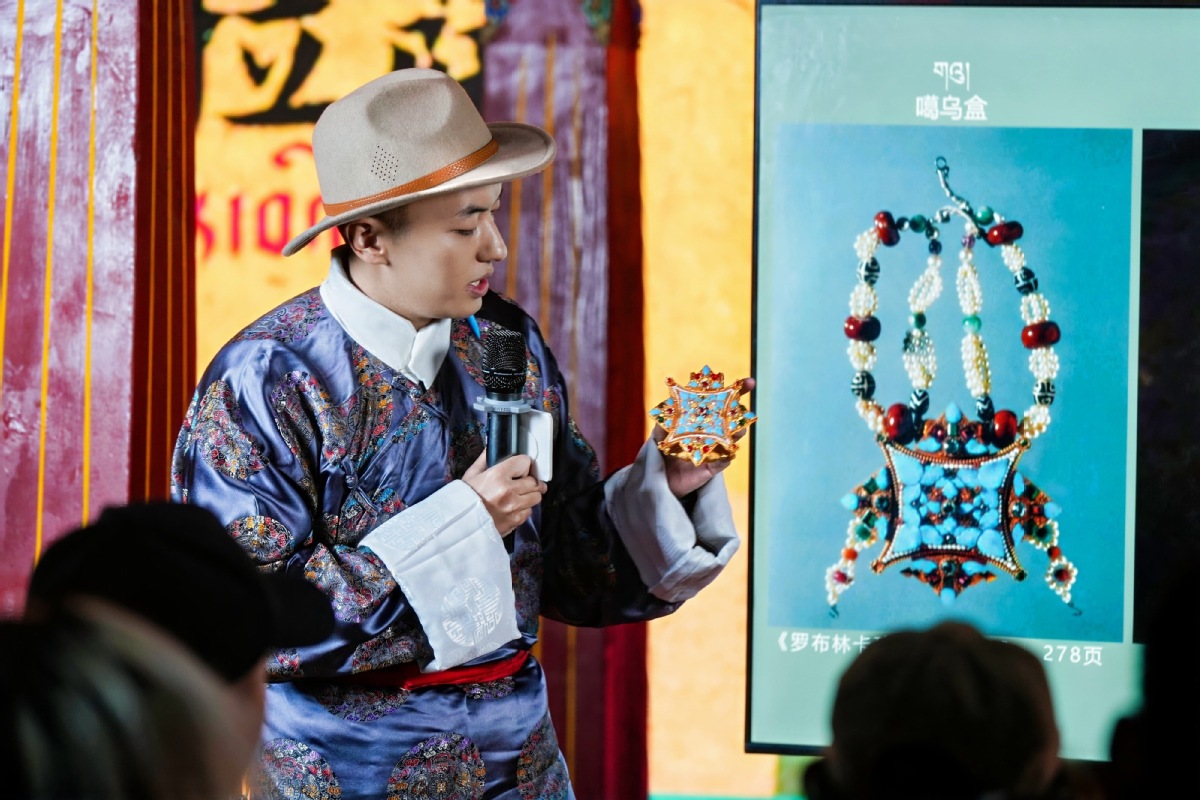
At the 2025 CCTV Spring Festival Gala's Xizang venue, host Zhu Xun and actress Liu Tao stepped onstage in flowing Tibetan robes — stone blue mingled with turquoise, their scorpion-tail waist chains shimmering like gilded light from ancient temples.
Few in the audience knew that the designer behind these garments was just 25 years old. His name is Padruk Tendhar, a young Tibetan who has been reviving endangered classical aesthetics stitch by stitch, letting colors from a thousand years ago bloom once again.
"Most people think of snow mountains and grasslands when they picture Xizang," he said. "But what fascinates me more are its cultural landscapes."
Born in Shigatse, Xizang's second-largest city, Tendhar grew up immersed in the "city culture" of both Shigatse and Lhasa — a refinement distinct from the rugged traditions of rural and pastoral life.
As he watched Lhasa's fashion scene evolve, he noticed that many garments labeled "traditional" had lost their original authenticity. Classical costumes, for example, featured wider waists and emphasized a dignified, elegant presence around the face. By contrast, many modern versions have slimmer waists, reflecting aesthetics that highlight body shape.
"That's one reason I wanted to restore them," he explained.
Tendhar spent most of his childhood in Shigatse, where traditions were preserved more faithfully. This early environment deepened his attachment to these old aesthetics — the fabrics, the silhouettes, and the enduring respect for the past.
After earning a bachelor's degree in heritage and museology at Zhejiang University in Hangzhou, Tendhar continued his graduate studies at Sichuan University in Chengdu, focusing on Tibetan art archaeology.
He later began sharing his work on social media platforms like Xiaohongshu (RedNote), showcasing Xizang's ornate architecture, elegant costumes, dazzling jewelry, and graceful dances for a new generation of viewers.
For Tendhar, Tibetan aesthetics are defined by inclusivity, duality, and decoration — where vibrant colors clash gracefully and fine jewels are paired with raw textures. To him, this is not chaos but "a celebration of life".
"It's bold yet refined, spiritual yet practical. Above all, it is alive," he said.
Tendhar's personal journey is deeply intertwined with the broader cultural revival in Xizang. "When I was a child, Tibetan opera and traditional dress seemed to belong only to the old generation, while my peers preferred K-pop or Japanese anime. My interest in traditional instruments and opera felt like a lonely battle," he recalled.
That changed after the 18th CPC National Congress in 2012, when the government emphasized cultural confidence and the preservation and innovation of heritage. "The transformation was profound — visible in government policy, social atmosphere, and even family values," he said.
Today, Xizang offers a wide range of cultural programs: zhanian qin (a traditional Tibetan stringed instrument) classes, summer camps for Tibetan opera, and free workshops at the Tibet Autonomous Region Mass Art Museum.
Rural pioneer
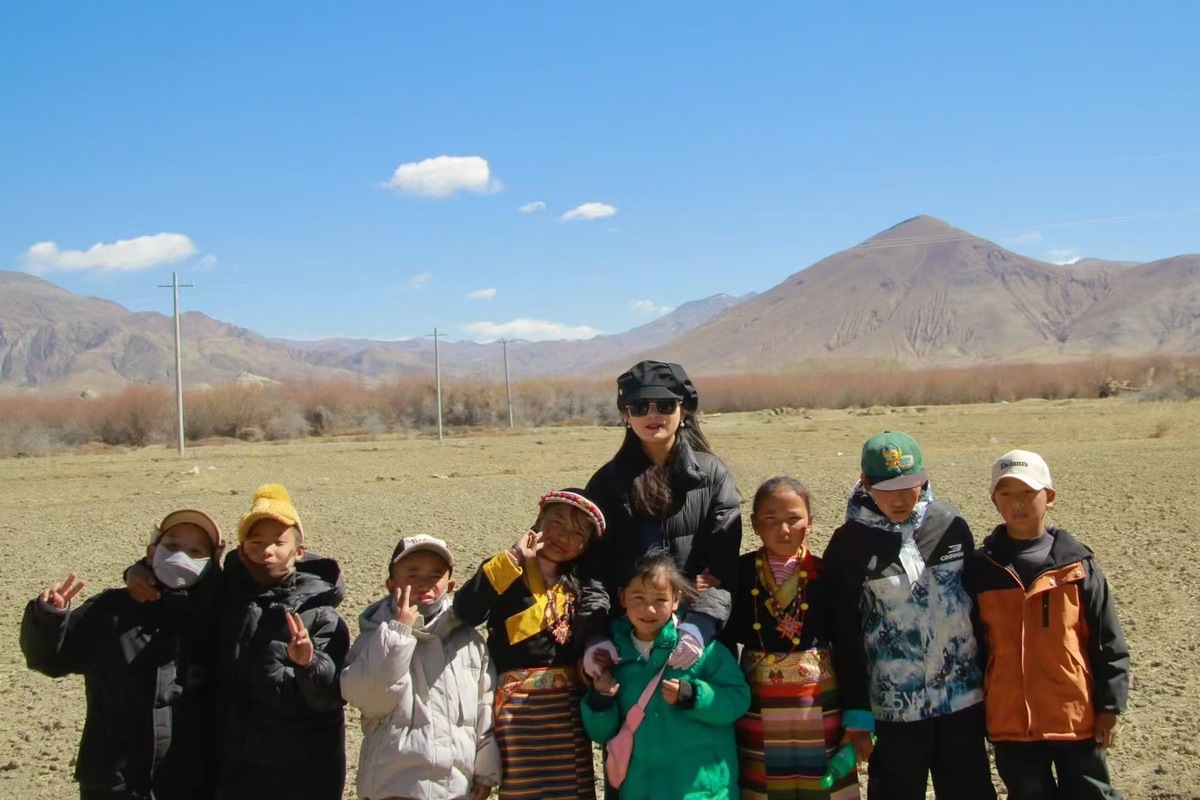
Also in Shigatse, 28-year-old Deng Jiaqiang from Beijing has taken root as the first Party secretary of Zhaxixiong village.
Inspired by a university trip and the villagers' hopes for a better life, she joined the "Go West" program in 2019 and became a civil servant in 2021, dedicating her youth to rural revitalization in Xizang.
Winning the villagers' trust was not easy. Many doubted that Deng, a city girl from the Han ethnic group, would stay for long. The first obstacle was language. Meetings with locals often felt like "international conferences", she said, with every sentence requiring translation.
"I once spent half a day helping a villager with paperwork because we simply couldn't understand each other," Deng recalled.
She began teaching village cadres Mandarin by day and studied Tibetan by night. "Three months later, I could hold a conversation in Tibetan, and our meetings no longer needed a translator," she said proudly.
With the language barrier gone, action spoke louder than words. Deng's philosophy was simple: "Say less, do more." She joined the autumn harvest, organized cultural events, and conducted monthly household visits to identify villagers' most urgent needs.
"When people saw me bending over in the fields with them, they realized I was one of them," she said.
Deng also mobilized resources, securing donations worth over 100,000 yuan ($13,942.26), including solar lamps, warm clothing, and food supplies.
"For the children, I helped connect 22 underprivileged students with sponsors from across the country," she said. "The joy in their eyes when they received scholarships is something I'll never forget."
Deng's proudest achievement is a new road to the kindergarten. The old dirt path caused constant problems — mud on rainy days, dust on sunny ones. "I kept telling myself: this road must be fixed," she said.
Over nearly two months, she coordinated with city, county, and township departments, tracking progress and securing support. Villagers pitched in, and soon a smooth cement road was complete.
Life on the plateau, however, is far from easy. "The wind here likes to test newcomers," Deng laughed.
Her first winter in Zhaxixiong was spent in a damp dormitory with frozen pipes and patchy phone signal. "Sometimes, to make a call, I had to climb onto the roof and shout into the wind," she said.
Yet she and her team carried on, working late nights under dim bulbs, sharing two old computers among four people. "Hardship is real, but so is the sense of purpose," Deng said.
Over time, conditions in the village steadily improved. A new signal tower brought reliable communication, running water and a public shower were installed, and the office received a much-needed renovation.
"It's like flowers blooming on the Qinghai-Tibet Plateau," Deng said. "No matter how harsh the soil, as long as you are willing to take root, something green will grow."
The villagers began to embrace her as one of their own, even giving her a Tibetan name: Kelsang Drolma, meaning "happy fairy".
Once, when Deng fell ill, several mothers came to her with butter tea and Tibetan eggs, nursing her back to health.
"In that moment, I realized I wasn't just a cadre here — I was their daughter, their sister," Deng said.
"Xizang's six decades of change have given us young people fertile ground to grow," she added. "I planted my youth on this plateau, and in that youth live the fragrance of barley, the sweetness of butter tea, and the radiant smiles of the villagers."
Voices from the plateau
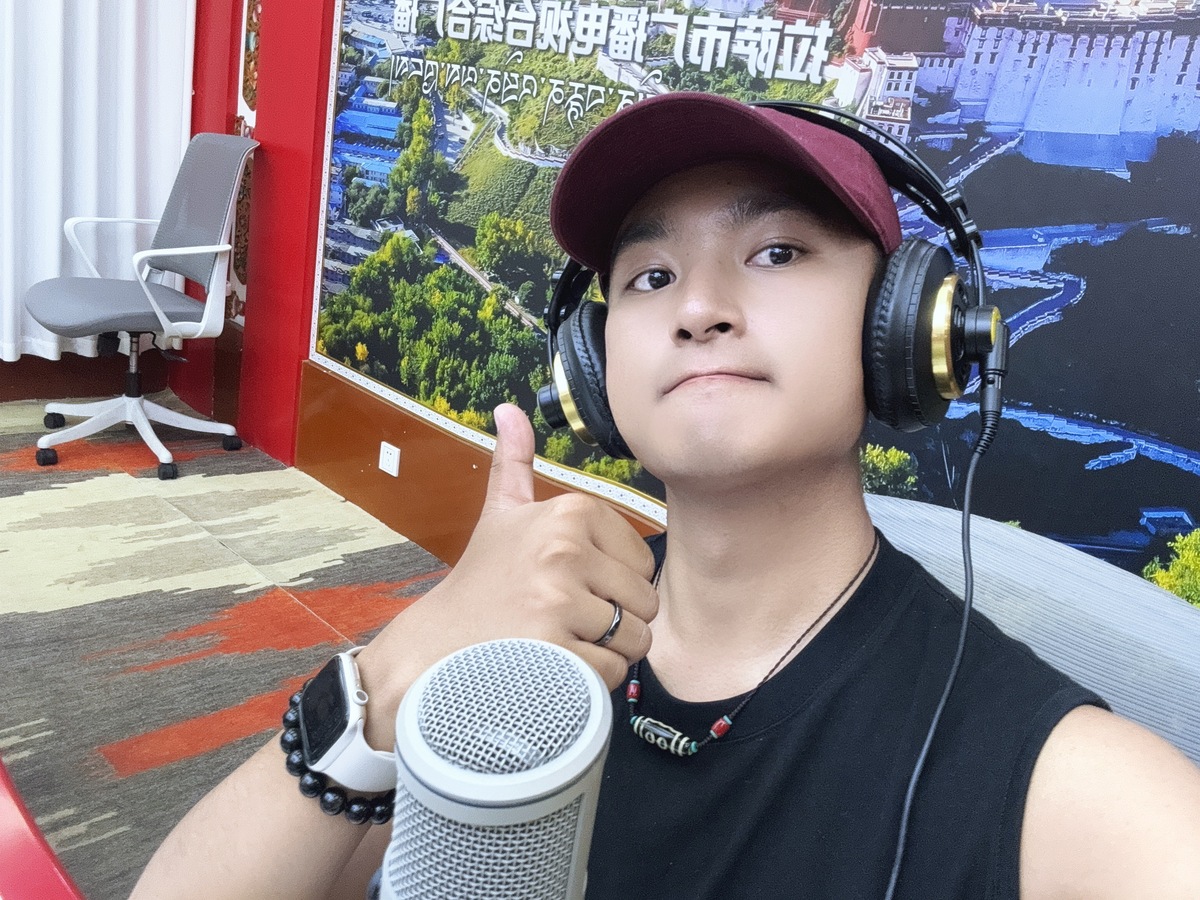
At 26, Cokdre Tenzin Dorjee, a native of Lhasa, is emerging as a compelling voice of cultural expression on the Qinghai-Tibet Plateau.
As a bilingual host at Lhasa Radio and Television Station, he bridges Tibetan and Han cultures, captivating audiences at festivals, cultural exhibitions, and international events.
His journey into traditional arts began at Tibet University, where he studied Tibetan-language broadcasting and hosting and discovered a passion for cultural storytelling.
"When I host events in rural areas, I like to weave Tibetan opera melodies into my scripts," Cokdre said. "The audiences always respond with warmth and enthusiasm."
At university, his interest in Tibetan opera deepened when he joined the troupe at the Xizang Autonomous Region Sports Center. Guided by veteran teachers, he soon mastered nine major opera melodies, three medium-length tunes, and four shorter pieces.
His talent often shone at unexpected moments. During a youth singing competition, when a contestant stumbled, Cokdre improvised a Tibetan opera melody. His soaring voice won thunderous applause. "It wasn't just about saving the show," he recalled. "It was a turning point in my hosting career."
Cokdre's influence extends far beyond domestic stages. In 2021, he took part in an event promoting Xizang to the world, hosted by China's Ministry of Foreign Affairs, where he served as a protocol officer and guide. Speaking in English, he introduced international guests to the richness of Tibetan culture and art. For him, the allure of Tibetan voices lies in their profound cultural roots.
As a proud son of Lhasa and a professional in the art of voice, Cokdre aspires to be a modern-day storyteller.
"I want to be a bridge, sharing the stories of Lhasa, Xizang, and China in ways that resonate with more people," he said.
duaoran@i21st.cn


Today's Top News
- Xi congratulates Tianjin University on 130th founding anniversary
- China targets unified, open natl market
- President's National Day address hailed
- Envoy says China and US should be partners
- Chinese micro-dramas hook audiences overseas too
- Strong progress seen in culture, tourism