Discovering truths about happiness on roof of world







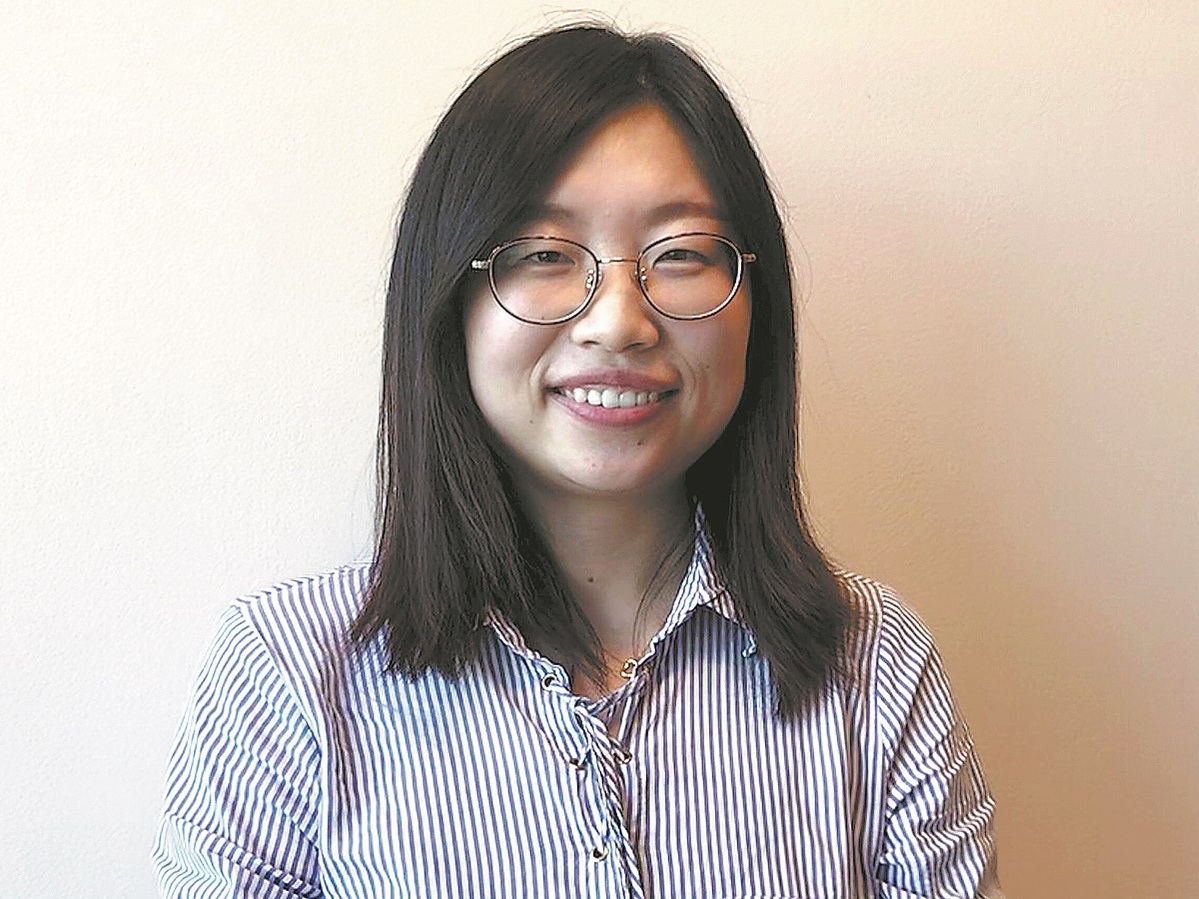
Earlier this week, I arrived in Lhasa to cover the 60th founding anniversary of the Xizang autonomous region. It was my third journey to the plateau, and as always, I was reminded of the same piece of advice: Walk slowly, speak slowly.
But as I interacted more and more with the locals, I discovered that while their steps may be measured, their words are quick, direct and utterly unadorned.
At the Potala Palace square on Thursday morning, after the grand celebration, I spoke briefly with a student who had been waving national flags so enthusiastically that she kept them raised even as we talked.
Seventeen-year-old Tsering Wangmo told me that her favorite part was the float parade, especially the one representing her home prefecture, Nagchu. "The float showcased Nagchu's yak industry while also reflecting the simplicity of its people. It made me feel the breath of home," she said.
Two years ago, Tsering Wangmo left Nagchu to study at Lhasa Middle School. Since preschool, she has benefited from Xizang's "Three Guarantees" policy — covering food, accommodations and school expenses for children of farmers, herders and impoverished urban families — easing the burden on her family, which mainly relies on cordyceps, a medicinal fungus, for a living.
Now a senior preparing for the college entrance exams, she told me her dream is to study at Beijing Normal University.
"And then?" I asked.
"First I have to get admitted," she replied.
Her bluntness startled me, but she was right. As long as one works steadily, the future may be beyond imagination.
Back in 1965, when the Xizang autonomous region was founded, few could have foreseen that in just a few decades it would achieve what elsewhere might take centuries: socioeconomic progress and historic accomplishments across various sectors.
Education, in particular, has transformed lives. Sixty years ago, there were fewer than 100 schools across the region. Today, there are over 3,600, with nearly 1 million students enrolled — more than a quarter of Xizang's entire population. Tsering Wangmo is just one of them, with her path shaped by opportunities unimaginable to her grandparents' generation.
During my stay in Lhasa, I got the chance to visit the home of He Xiuying, a longtime resident. We talked about lingka — the Tibetan custom of spending a day outdoors, in parks, gardens, or by riversides, with friends and family.
"When I was little, there was no lingka. We didn't even have enough to eat — how could we think of lingka?"
Born in 1958, He was only 7 years old when the Xizang autonomous region was established. At the time, annual disposable income was counted in mere hundreds of yuan — only tens of US dollars. Her childhood was stitched together with patchwork clothes and bowls of barley flour mixed with wild vegetables.
Six decades on, everything looks different. Average disposable income has risen more than a hundredfold — to 55,444 yuan ($7,724) for city dwellers and 21,578 yuan for farmers and herders.
For He, lingka is now a part of everyday life, something to enjoy with friends on a whim. When I asked her favorite pastime during lingka, she lowered her gaze, broke into a shy smile, and said, "Drinking beer."
I couldn't help but laugh with her. So ordinary, so unpretentious — and yet it revealed a truth I would hear again and again: Happiness often hides in the most familiar moments.
Her candor reminded me of another woman I met, Lhagdron, from Lhasa's Chushul county. The 62-year-old never had children, and for years depended on her niece's care. That changed in 2020, when her village established an eldercare center called the Haven of Happiness, built with funds from the village's collective economy, pairing assistance program from Jiangsu province and money allocated by the civil affairs authorities.
Now, every morning, she walks there to spend her day with other seniors, enjoying free meals, health checkups and companionship.
"Every night before I fall asleep, I feel happy knowing that tomorrow I can go to the center again," she told me, smiling all the time during our conversation.
Happiness, I realized, is not only freedom from burdens — it is also the simple joy of having tomorrow to look forward to.
Her village, Sanyou, was the first relocation site in Xizang, built in 2016 for families who once lived deep in impoverished mountain valleys. I can't help but wonder: When Lhagdron was still there, could she have ever dreamed of a life like this?
Such moments were far from rare. Time and again, it was this unadorned sincerity that moved me. Here, where feelings are never dressed in polished words, I believe their happiness is true.
This year marks the 60th anniversary of the founding of the Xizang autonomous region. In Lhasa's streets, colorful flags ripple in the mountain winds, their colors as bright and unguarded as the smiles of the people who live beneath them.
When a central delegation led by President Xi Jinping arrived in Lhasa on Wednesday, nearly 1,000 local residents in festive attire welcomed them at the airport with flowers and white hada scarves, singing and dancing in celebration.
It was the second time that 65-year-old Pema had come to the airport to greet the central delegation. Seeing President Xi again, he said, felt warm and familiar, like meeting a family member.
"The people of Xizang have experienced transformative changes," he told me. "Just as one won't lose their way by following the Big Dipper, following the Communist Party of China leads to happiness."


- China launches communication technology test satellite
- Spokesperson warns against aggression toward mainland fisherman
- Lhasa wetland reserve recognized as world's highest altitude wetland
- Chengdu woman sentenced for fatally stabbing neighbor
- Mainland coast guard's patrol in Xiamen-Kinmen waters to safeguard maritime order: spokesperson
- Independent committee starts work as HK moves to liquefy owners' group