Focus now on improving urban living standards








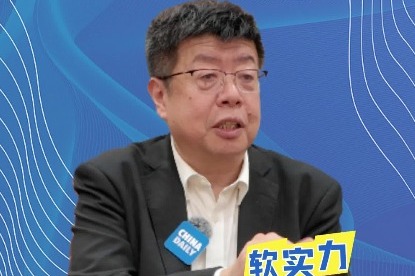
Editor's Note: The recent Central Urban Work Conference held in Beijing proposed the building of networked modern city clusters and metropolitan areas. The goal is to enhance cities' capacity to accommodate population and address urban problems. Yin Zhi, executive vice-dean of the Institute for China Sustainable Urbanization at Tsinghua University, spoke about the proposal to Hong Kong-based newspaper Wen Wei Po and offered some suggestions. Below are excerpts from the interview. The views don't necessarily represent those of China Daily.
The era of large-scale expansion is ending. China is in a transition period in which improving the quality of urban areas and promoting connotative development have become increasingly important. In the past, urban development placed emphasis on planning and construction. But now, greater importance should be on governance, a people-centric approach, efficient growth and the development of innovation-driven businesses. Efforts should be made to build comprehensive and livable cities.
Some regions in China are not yet ready for coordinated development of entire urban agglomerations. It is necessary to first promote coordinated development at a smaller scale in metropolitan areas, and then gradually expand toward larger urban agglomerations.
Large-scale urban agglomerations in the Yangtze River Delta and the Guangdong-Hong Kong-Macao Greater Bay Area have relatively mature systems. In contrast, many cities in the Beijing-Tianjin-Hebei urban agglomeration are still smaller third-tier cities.
Beijing has introduced development plans for some areas which will promote deeper coordination within the Beijing-Tianjin-Hebei urban agglomeration, channel the development momentum of the megacity into more areas, and gradually form an interconnected agglomeration with multiple growth poles.
At present, some megacities in China are experiencing functional spillover. It is therefore necessary to reduce the population of central urban districts and streamline certain functions to prevent severe urban problems. But in doing so, their development momentum should not be unduly suppressed.
Economic growth should be guided toward newly developed cities on the plains, enabling the release of new momentum. Meanwhile, efforts should be made to strengthen the second- and third-tier cities in the Beijing-Tianjin-Hebei urban agglomeration, making the urban system more complete and resilient.
With the decline in population, the era of housing shortages has passed. It is estimated that from now until 2050, the remaining population that will move from rural to urban areas will account for less than 10 percent of the increase seen during the period of rising urbanization. Against this backdrop, prioritizing the improvement and efficiency of existing resources has become the focus of urban development efforts.
The more a city's overall carrying capacity, the higher is its population-carrying efficiency and economic value per unit of resources, and the greater the efficiency of production and wealth accumulation. The key to improving this capacity lies in raising the output per unit of land, reducing per capita resource consumption through efficiency and guaranteeing ecological and food security.
Enhancing the overall carrying capacity makes up for urban shortcomings but requires a significant improvement in the standards of urban infrastructure. Increased investment in infrastructure in turn creates favorable conditions for raising the output per unit of land.
China's population distribution and social structure have already transformed from "rural China" to "urban China". It is now time to move toward "integrated urban-rural China", in which urban and rural areas prosper together.