Protectionist's paradox could revitalize WTO







The US' trade policy is based on a big mistake: the idea that trade deficits are a national "loss" or "burden", and trade is a zero-sum game. This point of view contradicts the postwar consensus among economists that lowering trade barriers is a win-win policy that benefits every country. The main mistake that has led to this policy is the idea that exporting countries pay the extra tariffs, which allowed the US administration to portray a tax increase at home as a punishment for foreign competitors.
However, the truth is that tariffs are taxes or levies which importers pay, and the cost is mostly passed on to the businesses and consumers in the importing country.
Although this adversarial trade stance has hurt the US economy, it has also had an unintended effect. The US administration has unintentionally provided the strongest reason in a generation for the revitalization of multilateralism and the World Trade Organization by highlighting the chaos that would ensue in a world without rules.
The administration's attack can be divided into two parts: it broke WTO rules by imposing tariffs on imports without going through the WTO, and it eliminated the WTO's enforcement mechanism. The trade war began in 2018 with Section 232 tariffs on steel and aluminum, which were implemented to purportedly safeguard national security (a wild card used by the US administration). The situation worsened with the imposition of Section 301 tariffs on Chinese goods. This strategy gained strength when the administration proposed a 10 percent baseline tariff on nearly all imports, using emergency powers to disregard WTO rules.
The most serious attack on the global trade system occurred when the US rendered the WTO's Appellate Body inoperable. The Appellate Body was the "crown jewel" of the WTO's dispute settlement mechanism (DSM). It was a revolutionary, rules-based way to settle disputes between WTO member states, but it was forcibly replaced with a system where any country could block any DSM decision. Starting in 2016, the US has systematically blocked all judicial appointments to the Appellate Body, ultimately stopping its operations in December 2019.
This left a dangerous gap: a country that loses a dispute can now "appeal into the void", making the ruling impossible to be enforced, and pushing global trade back to a time when the trade system was based on power, when laws couldn't be enforced against the strong. The administration rendered inoperable the Appellate Body for strategic reasons. A working WTO would have made its one-sided tariffs illegal and allowed legitimate, multilateral retaliation.
Initially, countries around the world were cautious. But as it became clear to them that the US' attack was part of a larger plan, they began collaborating to stop it. Major US trading partners, such as Japan, Canada and the European Union, began filing cases with the WTO and preparing to impose tariffs on US goods in response.
More importantly, some countries took steps to protect the system itself. Leaders of the EU-Japan Economic Partnership Agreement, one of the world's largest trade deals, made it clear that it intended to counter the US' protectionism.
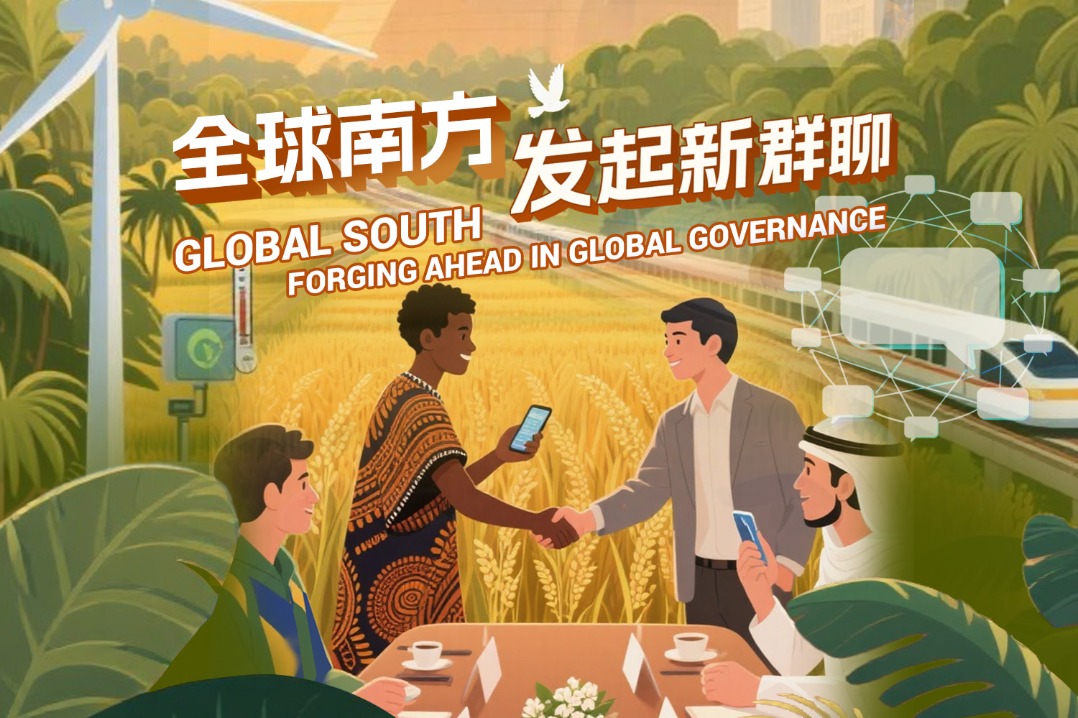
For the Global South, the crisis is existential. The WTO is often the only defense for smaller, developing nations against the arbitrary use of power by economic giants. A world without a working dispute settlement mechanism is a world of bullying bilateralism and no help for developing, smaller countries. The Brazil-US cotton dispute and other landmark cases showed the WTO system could make things fairer, allowing a developing country to successfully challenge a superpower based on the law.
The shock of the US acting alone made the alternative to a rules-based order painfully clear, giving the victim countries a strong reason to support WTO reform. When the US ceased to be the global leader, it left a hole which other countries could fill and revitalize the multilateral system as has been advocated by the Global South countries for decades.
Any revitalization of the WTO must count on China. As the primary target of the US' tariffs, it has skillfully positioned itself as a champion of the multilateral system, filing WTO complaints and issuing white papers that defend the rules-based global trade order.
Economies and groupings such as the EU, Japan and BRICS+ need China's support to resist US unilateralism and restore the DSM. But, incidentally, some of them share the US' analysis of the "problems" with China's economic model, such as on subsidies and State-owned enterprises, pursuing trilateral cooperation to set new WTO rules to curb it.
However, such pushes are part of rhetorical and negotiation strategies as the proponent countries also provide subsidies and have powerful SOEs. This internal contradiction is the central challenge for a coherent and more robust multilateral revival.
The US trade war, based on a flawed view of economics, has made things very clear. It has demonstrated the harshness of a world based on power and, in doing so, laid the groundwork for a strong political foundation for a new, rules-based multilateral order. Since we can't return to the way things were, we need to develop a system that addresses the challenges of the 21st century.
This calls for a coalition of willing countries, likely led by middle powers and Global South countries adhering to the Bandung Spirit, to advocate for a comprehensive reform agenda. It's clear what the priorities are: first, to bring back a working two-tiered dispute resolution system to ensure rules are followed; second, to update the WTO rulebook to reflect current issues, such as government subsidies for businesses, digital trade, and the connection between trade and health and climate goals; and third, to help the Global South achieve faster economic growth to make sure the system works for everyone, not just the rich and powerful countries.
The protectionist's paradox may have given the world the push it needed to rebuild a stronger multilateral order by forcing it to face the chaos of a system based on power.
The author is a professor of International Law, School of Law of Lanzhou University. The views don't necessarily represent those of China Daily.
If you have a specific expertise, or would like to share your thought about our stories, then send us your writings at opinion@chinadaily.com.cn, and comment@chinadaily.com.cn.