Common purpose
The EU and China must ensure their climate collaboration remains robust and productive despite short-term trade frictions and strategic misconceptions








The year 2025 marks a major milestone in European Union-China relations: half a century of diplomatic engagement. Over the past 50 years, the relationship has evolved from cautious mutual recognition into a complex, multifaceted partnership. While shaped at times by strategic rivalry and ideological difference, it has invariably returned to a shared commitment to dialogue, stability and practical cooperation.
The evolved and cherished partnership — and the broader international system in which it operates — is however facing new challenges. The foundation of the post-Cold War global order is eroding. It will be replaced by a multipolar order, which will be fairer to most people, but it is an order of which the basic fundamentals are yet to be developed. New geopolitical tensions are opening up; trade is weaponized and technology — once a symbol of global integration — is viewed through a prism of competition and control. Multilateralism is struggling to hold its ground. Yet it's the only true answer to common challenges.
It is in this fractured landscape that the EU-China joint statement on climate change, agreed in Beijing in July, stands out. It is not merely a diplomatic gesture, but a necessary act of global leadership. At a time when international cooperation is faltering, this statement offers an important affirmation of shared responsibility and common purpose. That the EU and China — two of the world's largest economies and emitters — have chosen to reaffirm their climate commitments sends a clear and timely signal: When some nations are abandoning the climate consensus, climate action remains a domain where collaboration is both possible and essential.
Europe's influence in global climate governance stems from its institutional capacity and normative strength. The EU has consistently been at the forefront of international climate action, introducing innovative regulatory frameworks, rigorous environmental standards and effective carbon pricing systems. The EU Emissions Trading System and the European Green Deal underline the EU's ability to set clear, legally binding targets coupled with transparent accountability mechanisms. Europe is fully committed to continued climate leadership.
China was behind Europe on climate and environment action years ago. But that is not the case anymore. China's green transformation over recent decades represents not merely domestic ambition, but a crucial contribution to achieving global climate objectives. Bolstered by substantial state backing and dynamic market competition, China has significantly reduced the global costs of renewable energy technologies.
From solar panels and wind turbines to electric vehicles and batteries, China's manufacturing strength provides developing countries with affordable opportunities for sustainable prosperity, bypassing traditional fossil-fuel dependency. In Nepal, I recently observed that most new cars sold are electric and the vast majority are made in China. You don't find many solar panels in the developing world that are not produced by Tongwei, LONGi, Trina Solar or other leading Chinese developers. CATL recently announced huge investments in electric battery production in Indonesia and BYD is making an unprecedented investment in an enormous battery storage facility in Saudi Arabia.
However, to maximize the global benefits, China's powerful industrial momentum must be integrated thoughtfully within broader international frameworks.
China's decision announced recently to eliminate tariffs on products from 53 African countries that have diplomatic relations with China is a milestone for a fairer world trade order. A natural division of labor is already apparent between the EU and China. In solar photovoltaics, Chinese companies produce nearly 90 percent of the world's panels, dramatically lowering global prices through fierce competition and relentless innovation. Europe, meanwhile can secure domestic jobs in high-efficiency module design, advanced manufacturing equipment, grid integration and recycling technologies. China also dominates in wind turbine production and the domestic application of wind power, but there are huge opportunities for Europe in offshore engineering, digital innovation and more. European car companies clearly understand that they cannot be globally competitive behind tariff walls. They need to learn from the innovation of Chinese companies, the way China learned from Europe a decade or two ago.
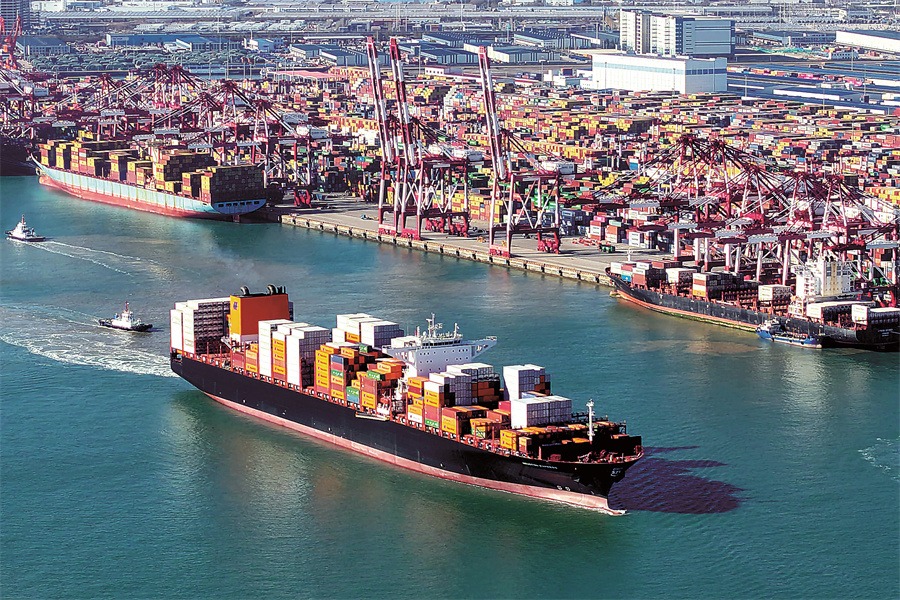
Recent EU proposals for tariffs on Chinese electric vehicles risk overshadowing what should be a historic moment for climate cooperation. While Europe's concerns for its own companies are understandable, protectionist measures will disrupt green supply chains and hinder collective climate goals. Rather than imposing punitive tariffs, the EU and China should focus on constructive dialogues to establish shared technology standards, transparent subsidy rules, and climate-oriented trade frameworks that reward low-carbon innovation.
As we approach the climate talks in Belém, Brazil, in November, the EU and China must shield climate diplomacy from geopolitical tensions, ensuring that collaboration remains robust and productive. Climate change is the common enemy, and its urgency cannot wait for geopolitical rivalries to subside. Green technology should become a space for "competitive collaboration", where both sides strive for leadership yet agree on shared rules, open markets and joint investments in resilience.
The world's green transition cannot happen without China — the world's largest manufacturer and deployer of clean energy technologies. China is home to 60 percent or more of all green technologies — solar, wind, hydro, electric cars and batteries, metros and high-speed rail. China is also the world's largest tree planter and has recently had unprecedented success in fighting air and water pollution.
But China cannot undertake this global mission alone. The EU remains a dedicated climate leader, the source of a lot of best practices and the largest provider of public climate financing. Therefore, true climate progress demands that China and the EU collaborate closely to fundamentally reform international climate finance mechanisms, empowering developing countries to decarbonize quickly and effectively.
True multilateralism involves engaging more nations in climate actions while achieving mutual benefits. The EU and China must jointly advocate fairer allocation mechanisms within institutions such as the World Bank, the International Monetary Fund and the Green Climate Fund, ensuring that the Loss and Damage Fund maintains sustainable financing sources and transparent governance.
Furthermore, high-level commitments must translate into tangible actions. Cai Run, head of the Chinese Mission to the EU, recently highlighted that practical cooperation between Chinese and European enterprises in green sectors — from solar and wind energy projects across Europe to geothermal initiatives between China and Iceland. Thus, the EU and China should expand further into joint financing initiatives in third markets such as Africa, Southeast Asia and Latin America. Combining Europe's financial and regulatory strengths with China's engineering expertise can establish a powerful model for global green investment.
Finally, and perhaps most importantly, China and the EU must safeguard climate diplomacy as a zone of mutual benefits and global common goods. Short-term trade frictions or strategic misunderstandings must not undermine sustained climate cooperation. Climate talks in Belém in November will be a crucial test: Can the two global climate leaders jointly affirm that, even amid competition, collaboration on climate action remains both possible and essential?
As we commemorate 50 years of China-EU diplomatic relations, this anniversary presents more than symbolic value — it offers a critical opportunity to shape a shared sustainable future. The decisions made today will profoundly influence billions of lives, determining whether future generations inherit a world of conflict and scarcity, or a planet defined by green prosperity and peace. To achieve green prosperity, China and Europe must proceed not as rivals but as twin pillars of global climate governance, committed to cooperation, innovation and collective responsibility.
The author is vice-president of the Green Belt and Road Coalition and former executive director of the United Nations Environment Programme. The author contributed this article to China Watch, a think tank powered by China Daily. The views do not necessarily reflect those of China Daily.
Contact the editor at editor@chinawatch.cn.