



Nanjing film aims to counter amnesia, not fuel animosity







Do you enjoy taking photos? Is it the instant gratification of pressing the shutter, the joy of uploading the perfect shot on social media and collecting likes, or the quiet nostalgia of leafing through old prints that draws you in? Whatever the reason, photography has always been a powerful medium for capturing and preserving moments that would otherwise have faded.
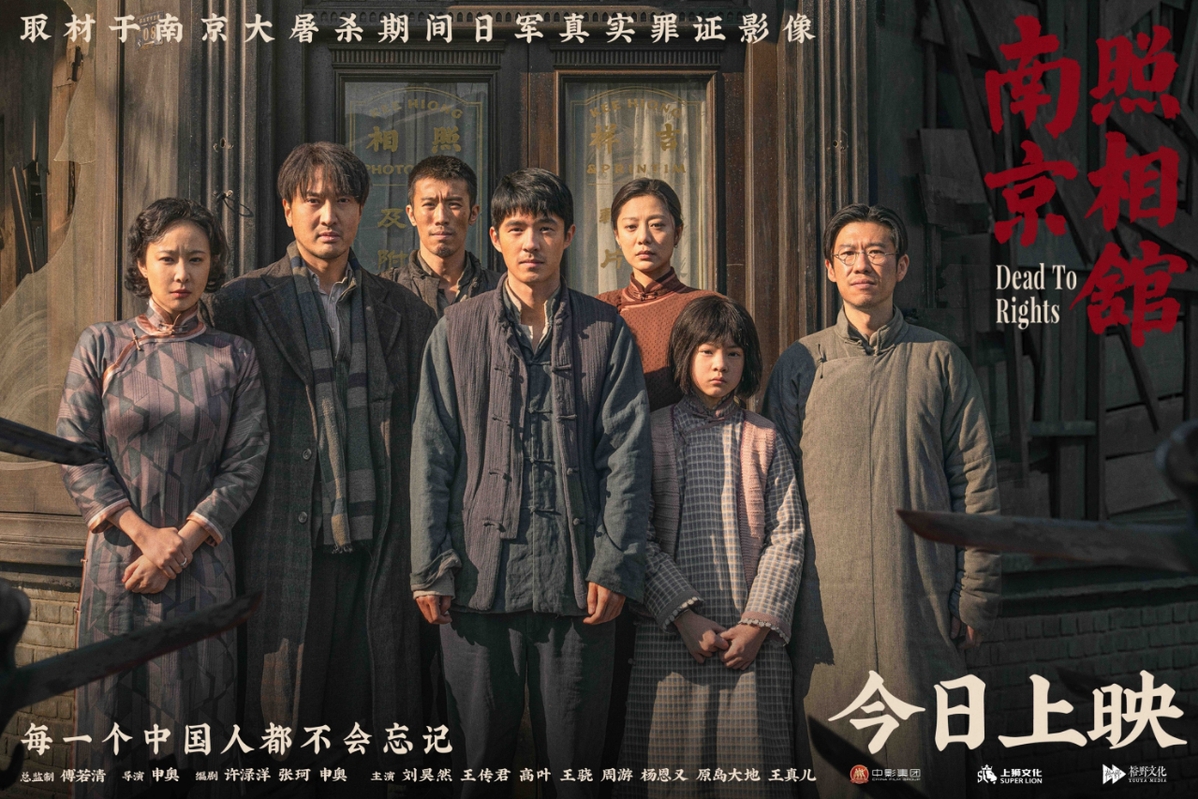
A new Chinese film, Dead to Rights, uses this very medium to bring one of the darkest chapters of the 20th century — after Japanese troops captured Nanjing on Dec 13, 1937 — to life. Over the course of six weeks, Japanese troops slaughtered around 300,000 Chinese civilians and unarmed soldiers in the city, in what is now referred to as the Nanjing Massacre.
The film, fictionalized from real events, shows a group of Chinese civilians sheltering in a photo studio in Nanjing. While there, a Japanese military photographer asks them to develop his film. While carrying out his orders, they realize the negatives hold shocking proof of the widespread atrocities the Japanese troops have committed. Determined to expose the truth, they secretly preserve the negatives and risk everything to smuggle them out, hoping the world will one day see the enormity of what has taken place.
In reality, just one apprentice, called Luo Jin, was at the photo studio in Nanjing in 1938, and he risked his life to secretly duplicate the harrowing images from the film the Japanese military officer brought in. He compiled the photographs in an album, which was later protected by a youth named Wu Xuan and was produced as key evidence in the war crimes trial of Hisao Tani, a Class-B war criminal.
Reports say that many photographs appearing in the film are copies of Luo's duplicates of the original photographs.
Since its Friday release, the film has grossed more than 560 million yuan ($78 million), and it is expected to rake in more than 3.2 billion yuan in total. Some audiences have described the film as "devastating but necessary", with many inside cinema halls being moved to tears by its powerful depiction of wartime suffering and individual bravery. Many of the chilling scenes in the film are conveyed through shadows and reflections.
At a time when political forces in Japan continue to deny or downplay the reality of the Nanjing Massacre, this film serves as a timely reminder that memory, especially when captured in images, can resist distortion. The movie was created not to spread hatred, but to prevent amnesia.
The film is set for release in Australia, New Zealand and the United States and Canada, where audiences are less familiar with China's role in World War II. In many Western narratives of the war, the attention centers almost exclusively on the European theater and the heroics of the Allied powers, especially the United States and the United Kingdom. The suffering the Chinese people went through is often marginalized. Yet, as the film makes painfully clear, China was not only a major victim of aggression but also a crucial force of resistance in the global fight against fascism.
Against this backdrop, the release of Dead to Rights in foreign markets carries important cultural and academic significance. It is not just a film, it is resistance against forgetting. By showcasing this part of World War II from a Chinese perspective, the film invites global audiences to reexamine the war's scope and the immense price paid by humanity.
In a world increasingly shaped by competing versions of the past, films such as this serve a vital role. They make history not only visible, but emotionally palpable. And they remind us that remembrance is not passive, it is a moral act.





