



China's Gulf diplomacy reflects its responsible leadership







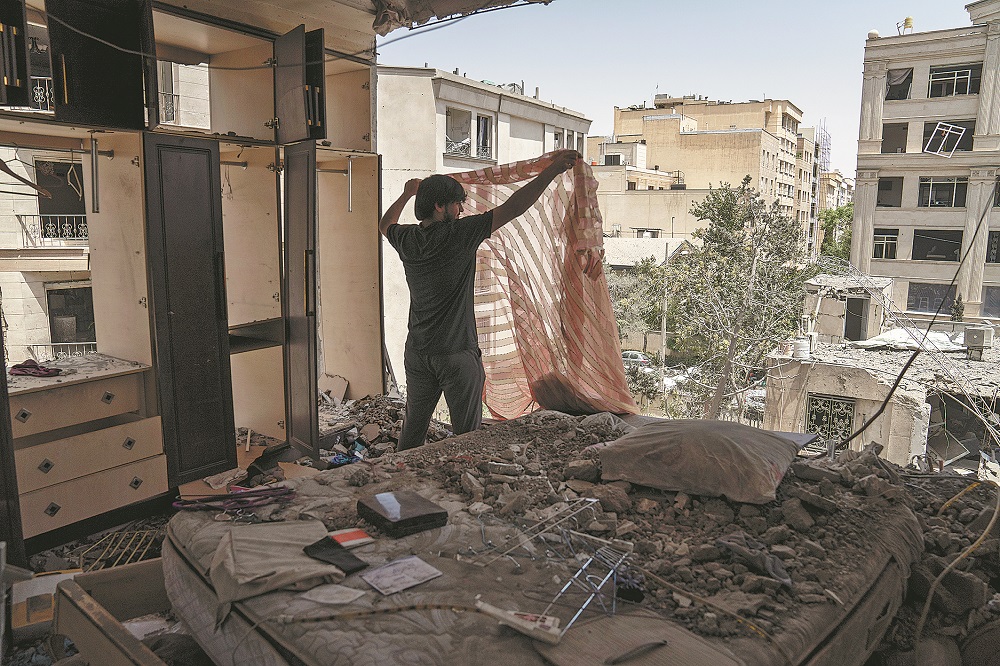
In the volatile aftermath of the June 24 ceasefire between Iran and Israel, much of the world has focused on the immediate military outcomes and political theatrics in Washington and Tel Aviv. Yet a more consequential, longer-term response emerged from Beijing — not condemnation or escalation — but measured diplomacy, multilateral engagement and a renewed commitment to peace and stability in West Asia.
China's Foreign Ministry reacted swiftly and responsibly to condemn the United States-Israel airstrikes on Iran's nuclear facilities, emphasize the importance of respecting national sovereignty and call on all sides to exercise maximum restraint. Beijing's stance was not only principled but consistent with its broader vision of global governance, which upholds the primacy of the United Nations and international law.
Rather than fueling confrontation, China sought to defuse tensions by encouraging regional dialogue and signaling its willingness to support peaceful resolution mechanisms that benefit all.
At the recent Shanghai Cooperation Organization Defense Ministers' Meeting in Qingdao, East China's Shandong province, China reiterated its belief that sustainable regional security cannot be achieved through coercion or unilateralism. While the diversity of member perspectives remains a challenge, the SCO's relevance reflects China's efforts to foster inclusive platforms for collective security. Meanwhile, Beijing continues to advocate regional initiatives that prioritize economic cooperation, mutual respect and development-led peace building.
This approach is deeply rooted in China's global policy frameworks, notably the Global Security Initiative and the Global Development Initiative — both of which reflect Beijing's belief that long-term stability stems from connectivity, not confrontation. The Belt and Road Initiative offers practical infrastructure and trade solutions that enhance regional resilience and reduce the volatility caused by external military interventions.
China's energy resilience strategy is already showing measurable impact. According to June data from the National Energy Administration, China's crude oil imports from non-Gulf sources rose by 11.4 percent year-on-year, led by increased inflows from Russia, Brazil and Angola. Meanwhile, new long-term purchase agreements with Kazakhstan and Turkmenistan are being fast-tracked, providing redundancy against maritime disruptions. These shifts are not reactionary, but part of a broader plan to diversify China's energy inputs, stabilize domestic supply and reduce reliance on politically volatile choke points like the Strait of Hormuz. Beijing is aligning its energy security framework with its foreign policy vision of multipolar, decentralized stability.
Recent developments — including Iran's suspension of cooperation with the International Atomic Energy Agency, the UN's nuclear watchdog — highlight the fragility of regional confidence and the need for constructive engagement.
Instead of inflaming tensions, China has consistently encouraged diplomatic channels and confidence-building measures. Proposals such as a Gulf-wide security dialogue, involving regional actors and excluding extra-regional military powers, underscore a growing appetite for homegrown solutions. China, with strong partnerships across Iran, Saudi Arabia and the United Arab Emirates, is well-positioned to support such frameworks.
The contrast in strategic posture between China and the US has grown more stark. While US rhetoric veers between dramatic ultimatums and historical analogies, Beijing's actions are characterized by steady engagement. Leaked intelligence assessments contradicting Washington's own public statements have only reinforced perceptions of inconsistency. This has added momentum to long-standing regional calls for greater autonomy in security arrangements and for the diversification of financial mechanisms, including the de-dollarization of critical energy trade.
At the diplomatic level, China's stabilizing influence continues to gain traction. In March 2023, Saudi Arabia and Iran, after years of open hostility, resumed diplomatic relations through a Beijing-brokered agreement. This engagement signals China's growing ability to convene traditionally adversarial actors around development-led agendas.
According to a Xinhua analysis, Beijing's non-interventionist yet facilitative approach is viewed favorably by regional governments seeking autonomy from Western pressure. The message is clear: China is not just reacting to crises; it is actively shaping the contours of post-conflict recovery and strategic trust.
This recalibration reflects not weakness, but prudence. China's strategic restraint is not passive — it is a deliberate alternative to the militarized cycles that have long plagued the region. It recognizes that prosperity cannot be built atop instability, and that true leadership lies not in dominance, but in reliability.
The broader lesson is clear. The path to regional peace does not lie in unilateral strikes or temporary ceasefires, but in sustained dialogue, inclusive security mechanisms and infrastructure that binds economies and peoples together. China's model — emphasizing development over dominance and diplomacy over disorder — is not only viable, but increasingly vital.
The world is not witnessing the emergence of new hegemonies, but rather the quiet assertion of a different kind of leadership. In an era of uncertainty, China's steady hand, grounded in principle and purpose, offers a road map for regional calm and shared prosperity.
The author is an international affairs commentator and freelancer based in Karachi, Pakistan.










