



Tariffs deepen global trade uncertainty
US mounting pressure on nations to extract favorable terms, experts say







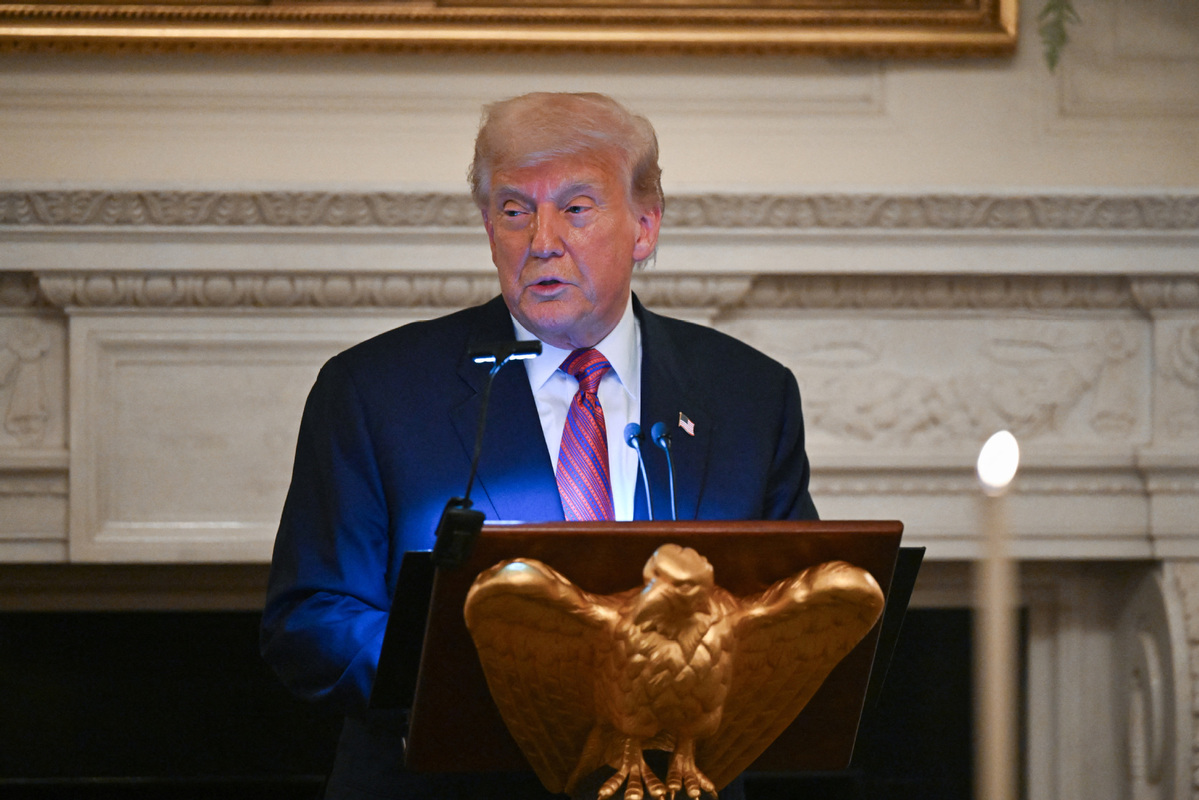
The United States is increasingly wielding tariffs as a tool to reshape global trade and the geopolitical order, prioritizing an "America first" agenda at the expense of international economic interests, experts say.
US President Donald Trump has sent letters to more than 20 trading partners, notifying them of impending tariffs ranging from 20 to 50 percent, effective from Aug 1. He has also signaled plans to impose blanket tariffs on more than 150 smaller trade partners.
The letters warned that any retaliatory measures would trigger equivalent US countermeasures. However, they also hinted at possible adjustments — if the targeted countries open their domestic markets and eliminate trade barriers.
Experts say the administration's aggressive policies reflect dissatisfaction with the limited results of earlier negotiations on "reciprocal tariffs". With few deals secured, Washington is escalating pressure through unilateral action to force other countries back to the negotiating table and extract more favorable trade terms.
"This is classic Trump negotiation tactics — set deadlines, ratchet up pressure and signal higher costs for inaction," said Song Guoyou, deputy director of the Center for American Studies at Fudan University in Shanghai. "Such moves heighten urgency while deepening global trade uncertainty."
The tariff letters have also raised concern about the politicization of trade, citing non-trade-related justifications, such as judicial cases involving former Brazilian president Jair Bolsonaro and the fentanyl issue, as grounds for tariff hikes.
Sun Xihui, an associate research fellow at the National Institute of International Strategy, Chinese Academy of Social Sciences, said politicizing trade amounts to weaponizing economics, which will destabilize international relations. Such actions risk legitimizing tariffs as tools to meddle in other countries' domestic affairs, he said.
Song said Trump views tariffs as a tool to exert personal political power, expand US economic hegemony, and reshape the geopolitical landscape in favor of US interests.
Dan Steinbock, founder of the global consultancy Difference Group, echoed this view.
"What is less understood is the likely long-term effect of the Trump administration's unilateral tariffs, which is to undermine the rise of the Global South. These tariffs build on geopolitical objective — to restore US supremacy by any means possible. Hence, he attacks BRICS," he said, referring to Trump's threat of imposing an additional 10 percent tariff on any country aligning with what he called the "anti-American policies" of the BRICS bloc.
Except for the European Union and a few high-income countries, about three-fourths of Washington's tariff targets are emerging and developing economies — countries that make up the Global South, Steinbock said.
"By imposing unilateral tariffs on imports, the Trump administration will severely disrupt export-led growth, which has fueled global growth for decades, and shatter the development aspirations of emerging and developing economies."
Under the shadow of US tariff policies, the United Nations Conference on Trade and Development has cautioned that escalating trade tensions and persistent uncertainty are pushing the world economy toward recession.
In its Trade and Development Foresights 2025 report released in April, the agency projects global growth to slow to 2.3 percent this year, citing trade policy shocks, financial volatility and deepening uncertainty as key threats.
Established order
Song of Fudan University said the current tariff storm could stifle global trade, hinder economic growth and create financial instability, particularly in vulnerable economies. Washington's protectionist measures, including its withdrawal from international organizations and agreements and threats of sweeping tariffs, are undermining the established multilateral trade order, he added.
"Under multilateral trade principles, especially World Trade Organization rules, there would be established frameworks like reciprocity, most-favored-nation status, and preferential treatment for developing countries.
"But with Trump back in power, all these rules have been tossed aside. The arbitrary imposition of tariffs is purely unilateral."
Facing unpredictable US tariffs, countries are fast-tracking efforts to reduce reliance on US markets. Southeast Asian countries, for example, are deepening economic ties with the EU.
Recently, Indonesia and the EU reached a deal to advance their Comprehensive Economic Partnership Agreement, while Thailand and other countries are striving to reach free trade deals with the bloc.
Sun of the Chinese Academy of Social Sciences said that as the Trump administration continues to escalate its tariff policies, other countries have to reduce their trade volume with the US and seek alternative market options, especially when they are out of tolerance for Washington.
Song said: "Global trade is fundamentally about maximizing efficiency. More trade means better optimization. The US' protectionist tariffs might temporarily shrink trade deficits, but the long-term cost will be a less efficient US economy and higher operational burdens."
yangran1@chinadaily.com.cn










