



Telling a true story of the South China Sea







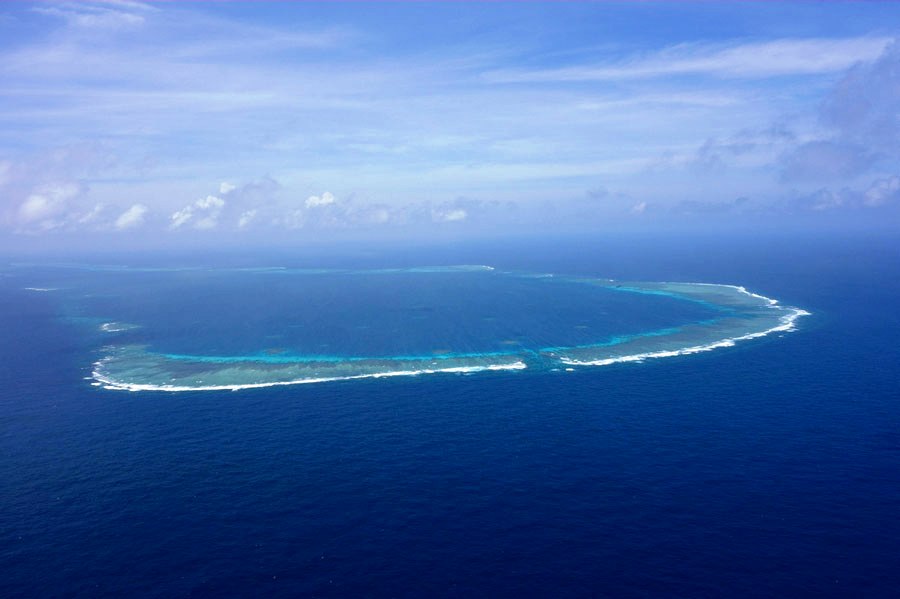
The South China Sea issue has undeniably become one of the current major heated topics attracting global attention. At its core, this issue involves disputes concerning sovereignty over the Nansha (Spratly) Islands and surrounding waters among regional parties.
In ancient times, and even during the more recent era when technology supporting transportation and communication was still limited, the South China Sea served primarily as a strategic hub for the Maritime Silk Road due to its geography, resources, trade, cultural, and scientific exchanges. Nevertheless, it seldom attracted global attention as a geopolitical flashpoint.
Since the emergence of South China Sea disputes in the late 1960s and early 1970s, especially with the advancement of modern communication technologies and the accelerating pace of globalization, international dissemination and discourse regarding the South China Sea have deepened.
With both regional and extra-regional powers fueling its "internationalization," and the widespread adoption of digital media, the South China Sea issue has gradually permeated all levels of international society.
The international dissemination of the South China Sea issue does not mean a naturally evolving process, but it is interpreted through diverse lenses globally, reflecting differing perspectives and interests. On one hand, all parties involved - whether claimants or not - have their own stances. On the other hand, public perception varies, from political elites to ordinary citizens. While differing governmental positions are to be expected, public understanding within the international community (especially non-claimants) has often been shaped by confusing, mixed and even biased information, leading to misconceptions and distortions of the truth about the South China Sea.
Take, for example, an answer provided by Google AI Gemini to the broad question: "How does the international community view the South China Sea issue?" For those unfamiliar with the topic, this may shape their first impression. In the age of AI, this impression is likely to be reinforced through algorithmically targeted content based on big data analysis, solidifying a possibly skewed understanding and deepening preconceptions.
Back to the answer by Gemini. Key points include: First, it claims China has excessive territorial claims and aggressive actions; Second, China's stance is inconsistent with international law; Third, it expresses concerns over potential threats to freedom of navigation
These three points likely reflect the dominant perception in the international community, particularly the English-speaking world. And clearly, they portray China in a negative light. Thus, we may confidently infer that current global perceptions of the issue have largely been shaped by Western discourse.
To test this hypothesis, let's examine the sources cited by Gemini. The references supporting these views include academic papers, books, news commentary originating from academic journals, professional publishers, research institutions, think tanks, and universities. Yet, notably, none of these sources come from China. And these sources consistently portray China as a power engaged in "excessive expansion," "rule-breaking" and "bullying weaker nations" in the South China Sea, even citing Turkish sources with little relevance to the region. Some of these questionable or non-authoritative views, when amplified by big data and AI technologies, significantly influence global opinion.
How should we evaluate such studies on the South China Sea? How should we understand international perceptions of the issue? As a claimant of the dispute, the largest littoral state in the region, and a nation with the most extensive historical and contemporary records on the region, is it reasonable that China cannot contribute credible references to the global narrative?
Some argue that language barriers may hinder the international use and understanding of Chinese historical materials and perspectives. Yet two facts counter this claim: First, there are no barriers for Chinese scholars, especially from the field of natural science, in exchanging their research with the world; second, in recent years, Chinese scholars have published widely in English-language journals and international media. Therefore, language is not the fundamental obstacle, but concepts and attitudes may be the deep-rooted causes.
Bill Hayton, a researcher from Chatham House, questions the reliability of many primary and secondary sources used in studies related to China's stance on the South China Sea over the past century. He believes that some influential works rely on a few credible historical sources, often citing Chinese media without primary documentation and using subjective newspaper articles as factual evidence. He even argues that foundational texts within the international legal community concerning the South China Sea suffer from serious evidentiary flaws.
Hayton's concern is, in essence, legitimate: good historical research, ancient, modern, or contemporary, requires solid source material. But is his own research immune to scrutiny? That's a separate debate. Applying Hayton's standards to the AI-generated answers cited earlier would likely expose them as deeply flawed and misleading.
Therefore, from China's standpoint, the international community must form an objective understanding of the South China Sea and its related disputes. Achieving such "objectivity" rests on three pillars: First, a genuinely neutral perspective free from bias and preconceived notions; Second, freedom from technological manipulation; Third, judgments grounded on diverse sources.
As one of the world's four ancient civilizations, China has over 2,000 years of documented records related to the South China Sea. Any serious study of the region cannot ignore Chinese-language sources. China's vast historical documents, maps, archives, and archaeological evidence all point to the same reality:
For millennia, peace, stability, and development have been the main themes in the South China Sea. Instability in the region only began with the arrival of Western colonial powers in Asia. Infringements on Chinese sovereignty date no further back than the late Qing Dynasty. The modern-day South China Sea disputes, especially over the Nansha (Spratly) Islands, have a history of merely four to five decades.
Thus, we must adopt a "long-term" historical perspective on the history and future of the South China Sea. Temporary tensions or conflicts cannot alter the long-standing trajectory of peace and prosperity in the South China Sea. That, perhaps, is the South China Sea we should truly strive for.
This requires both Chinese and foreign observers to read, recognize, and understand China — and by extension, the South China Sea. On the one hand, Chinese scholars must continue working to internationalize South China Sea-related sources and materials, offering the world more intellectual nourishment. On the other hand, we hope that in the AI era, media technologies will put aside biases and strive to generate trustworthy answers using diverse and rich sources of information.
Let truth speak through source materials. Let history illuminate reality. Let historical sources tell the true story of the South China Sea.
Xu Xiaodong is vice chairman of Huayang Center for Maritime Cooperation and Ocean Governance. The views don't necessarily reflect those of China Daily.
If you have a specific expertise, or would like to share your thought about our stories, then send us your writings at opinion@chinadaily.com.cn, and comment@chinadaily.com.cn.





