In the heart of Beijing, on a stage steeped in decades of dramatic history, a group of young artists, from actors to costume and stage designers, is stepping into the shoes of a legend.
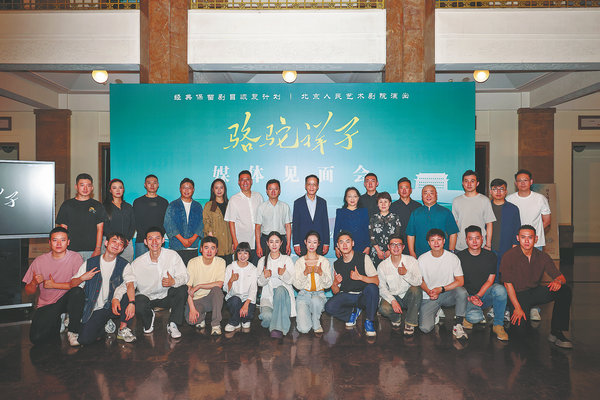
This summer, the Beijing People's Art Theatre, an established institution founded in 1952, announced its plan to restage one of its most iconic productions — Rickshaw Boy.
On July 18, the production will premiere at Capital Theater, the home of Beijing People's Art Theatre.
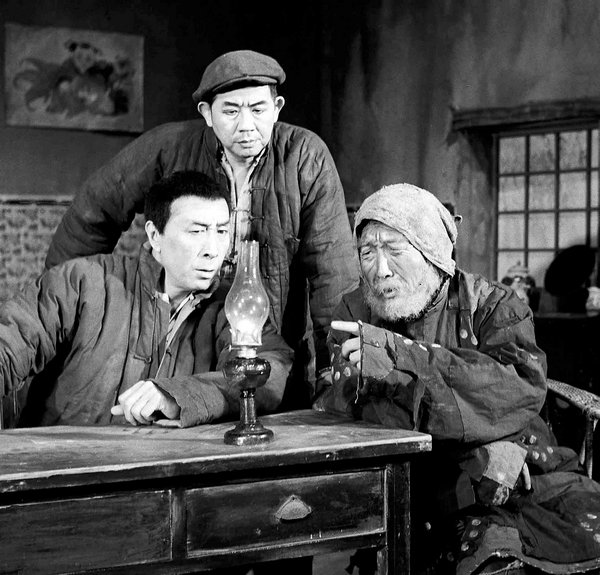
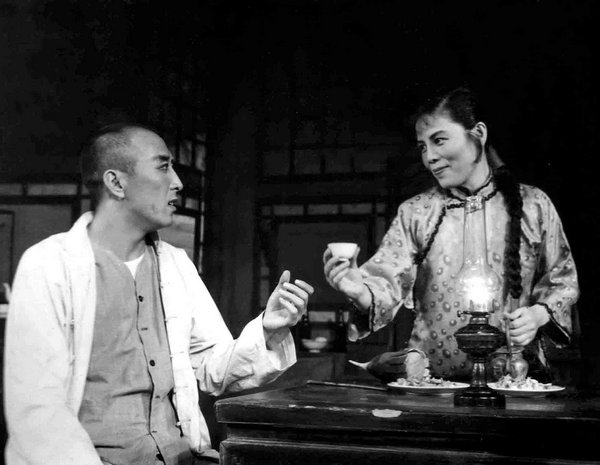
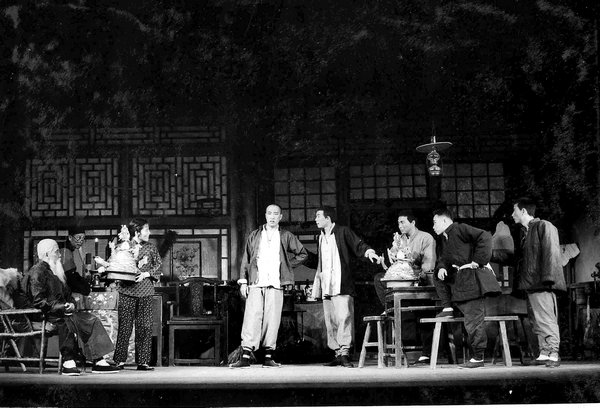
In 1957, the Beijing People's Art Theatre premiered the play, Rickshaw Boy, adapted from the beloved novel of the same name by Lao She (1899-1966). The production, adapted and directed by Mei Qian, brought to life Xiangzi, a rickshaw puller in the 1920s Beijing, who dreams of owning his own cart and living with dignity. But one misfortune after another — betrayals, death, exploitation — slowly crushes him.
The 1957 production is widely regarded as one of the defining works that helped establish the theater's realist style in its formative years. It played a pivotal role in shaping the artistic identity of the Beijing People's Art Theatre and holds a significant place in the history of modern Chinese drama, says Feng Yuanzheng, veteran actor and the president of the theater.
"Now, nearly seven decades later, the theater is returning to its roots. Rickshaw Boy is back — not reimagined or updated, but faithfully restaged, in meticulous detail: the same set design, costumes, script, and even the cadence of Beijing dialect as it was spoken on that 1957 stage," says Feng.
The decision to revive the 1957 version might seem unusual at a time when most classics are reinterpreted through modern lenses. But for Beijing People's Art Theatre, the goal is clear: to preserve a piece of theatrical history and pass it on, not as a relic, but as a living tradition.
At the heart of this revival, however, is one bold change: the cast is composed entirely of young actors from the theater's newest generation.
The young cast trained rigorously for the production. They studied archival footage, attended workshops with theater veterans, and rehearsed under the watchful eyes of directors who themselves were once students of the original creators. Every gesture, every line, every pause was crafted with care — not to mimic, but to understand, says Yan Rui, the codirector of the latest restaged Rickshaw Boy.
Still, questions remain. Can young actors truly embody the weight and weariness of Xiangzi's world? Will audiences accept fresh faces in roles that older generations have mythologized?
"There will be doubt and comparison, which are inevitable," admits Feng. "But that's part of the process."
For the young performers, the challenge is profound. Lao She's Rickshaw Boy isn't just a story about poverty and struggle. It's a story about people who carry dreams in their hands, only to see them crushed by hard circumstances. To portray that is to reach beyond one's own time and feel the pulse of a different era.
Actor Yu Zhen, 50, is the codirector of this revival. He played the role of Xiangzi for the first time in 2007.At the time, he fully immersed himself in the role — shaving his head, wearing cloth shoes every day. He also dove into research, studying recordings and materials from veteran actors like Li Xiang and Ying Ruocheng, who both played Xiangzi in the 1957 version.
"I used to recite the lines every day," he recalls. "This time, I printed all those materials again and shared them with the young actors."
"Xiangzi's heartbreak still resonates, though the time is different," says actor Huang Qiyuan, 24, who now plays Xiangzi. "The character is very classic and appears in school textbooks. It's so well-known, like Hamlet. The new Xiangzi will inevitably be compared to those who came before. That's a lot of pressure."
According to Feng, since its debut, Rickshaw Boy has been performed over 300 times by the Beijing People's Art Theatre up to the year 2021.
Serving as the artistic adviser for the revival, he hopes to give younger performers every possible opportunity to engage with such iconic works.
Recalling his own experience acting in the classic production Peking Man — adapted from the play by Cao Yu (1910-96), a renowned playwright and the theater's first president — at age 24, Feng notes that stepping onto the stage of a classic production carries extraordinary meaning for any actor.
"These young actors may still need time to grow," he says. "But this kind of experience is essential — not only for the development of the Beijing People's Art Theater, but for the growth of our next generation of performers."
In January, the theater announced its latest initiative, the Classic Revival Plan, aimed at reviving and adapting some of its most iconic works. The first production under the initiative, Returning Home on a Snowy Night, premiered this May. Originally written in 1942 by playwright Wu Zuguang (1917-2003), the play was first performed by the theater in the 1950s.
Contact the writer at chennan@chinadaily.com.cn