Smart SCO cities to intelligent urbanization







As cities across the globe face growing pressures from urbanization, climate change and aging infrastructure, many city mayors are turning to smart-city strategies to ensure sustainable urban development. These strategies, centered on digital transformation, promise energy efficiency, enhanced urban mobility, and streamlined public services. However, their true potential lies in technologies to transform governance and deepen citizens' engagement.
In recent years, urban innovation has increasingly focused on data-driven solutions: smart grids, intelligent transport systems, real-time monitoring of pollution and waste, and AI-assisted public service delivery. These advancements can greatly improve operational efficiency. Yet studies show that smart city models in the Western hemisphere often prioritize technological development over meaningful public participation.
Even when strategies claim to be citizen-centric, their implementation tends to skew toward top-down decision-making due to budgetary constraints, rigid bureaucracies, or vendor-driven platforms. The result is a widening gap between the digital promise of smart cities and the lived experience of their residents.
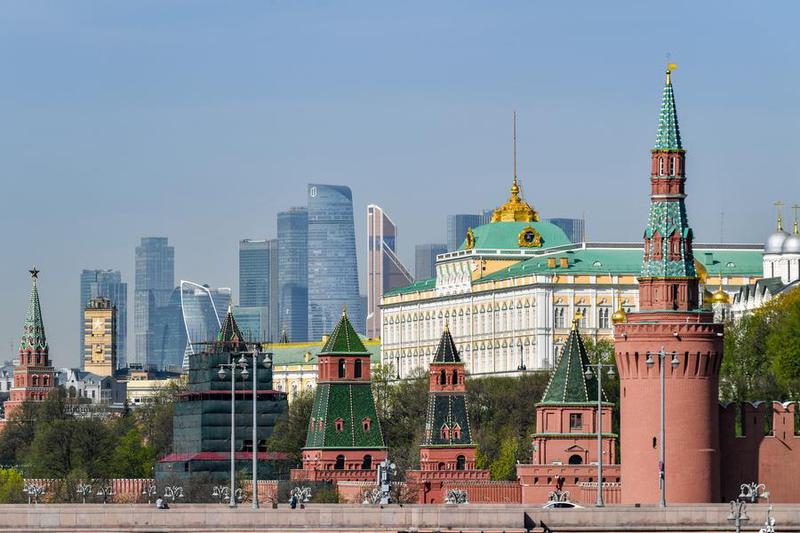
This is where the cities in member states of the Shanghai Cooperation Organization can chart an alternative path. Comprising a diverse set of urban landscapes, developmental trajectories and governance models, cities in SCO member states are uniquely positioned to shape a more holistic approach to urban modernization. A shared agenda for intelligent urban renovation could build on three core principles: trust, context-sensitivity, and city-to-city cooperation.
Take, for example, the Soviet urban legacy. Around 50 percent of buildings in cities of the former Soviet Union republics were built between the 1950s and 1990s. These structures are not only functional assets but also historical architectural artifacts that represent a particular sociopolitical era. As such, they are poised to remain the focus of urban renovation efforts for decades to come. Their sheer scale and structural uniformity demand a different strategy from the targeted interventions often seen in European tactical urbanism. Many SCO cities require systemic, large-scale renovation programs that are affordable, efficient and socially responsive.
This is where China's experience becomes especially instructive. Over the past decade, Chinese cities have launched ambitious urban renovation projects, often underpinned by cutting-edge technologies such as artificial intelligence and big data analytics. These projects do more than upgrade infrastructure; they offer tools for anticipating social needs, mapping demographic trends, and optimizing public resource allocation. Importantly, China's digital governance models provide lessons in how technology can truly support (but not replace) participatory planning and responsive governance.
The methodology behind this new generation of urban renovation is interdisciplinary and relies on solid academic contributions. It combines computational tools with a comprehensive theoretical knowledge, from sociology, human geography and political science to emerging fields such as urban studies and computational linguistics. This integrated perspective allows for a nuanced understanding of how built environments interact with social dynamics, cultural expectations and political contexts.
For SCO member states, this opens up significant opportunities for collaboration. Joint initiatives could include comparative studies of urban renovation models, shared digital infrastructure for urban data, and policy exchanges on citizen-engagement strategies. SCO cities could work together to develop analytical tools for different stakeholders: public authorities, urban developers and civil society actors alike. For regional governments and mayors, such tools could help assess the social impacts of renovation programs and anticipate community needs.
Developers would benefit from insights into real estate market dynamics, neighborhood transformations and long-term value creation. For civil society, greater access to transparent, visualized data would strengthen public oversight, foster community participation, and improve trust in urban governance.
Moreover, these tools and algorithms could eventually be adapted to commercial services in urban analytics, smart real estate platforms, and location intelligence, creating economic value while enhancing public benefit.
The practical implications are profound. A shared framework for intelligent urban renovation can become a new pillar of SCO cooperation. It bridges the gap between strategic ambition and implementation capacity. It addresses not only the hardware of cities, such as roads, buildings and other infrastructure, but also their software: the data, governance mechanisms and human interactions that constitute urban life.
Urban renovation is not just a technical task; it is a cultural and political project. It reflects our values, our priorities and our aspirations. By aligning smart city strategies with inclusive governance and regional solidarity, SCO cities can lead the way in creating not just smarter, but wiser cities — cities that serve people, respect their histories, and embrace the future with confidence.
The author is vice-rector for research, and director of the Center for Eurasian Studies, European University at St. Petersburg. The views don't necessarily reflect those of China Daily.
If you have a specific expertise, or would like to share your thought about our stories, then send us your writings at opinion@chinadaily.com.cn, and comment@chinadaily.com.cn.