Documents dating to Japan's bacteriological war in China released in Guangzhou







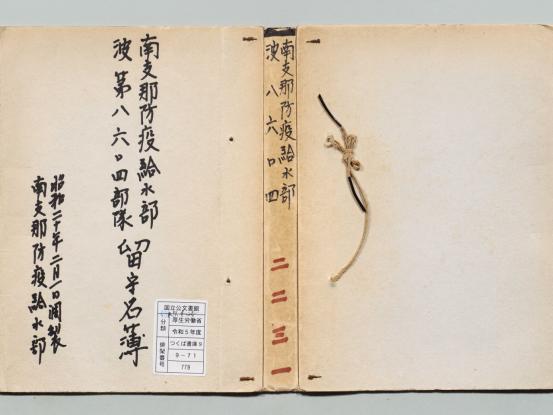
"Apart from being responsible for providing epidemic prevention and water supply for the Japanese army, the unit's actual work involved research in bacteriological warfare," said Tan, also a senior expert in research on the bacteriological warfare conducted by the Japanese army in South China.
The roster helps to clarify basic historical facts such as the composition of personnel, organizational structure and scale of the unit, according to Wu Peijun, a scholar at South China Normal University and a researcher at the history research center of the war of resistance against Japanese aggression in South China.
"The document can help clarify the characteristics of the Japanese bacteriological warfare system and is of great practical significance in fully exposing the atrocities committed by the Japanese army," said Wu.



- China launches communication technology test satellite
- Spokesperson warns against aggression toward mainland fisherman
- Lhasa wetland reserve recognized as world's highest altitude wetland
- Chengdu woman sentenced for fatally stabbing neighbor
- Mainland coast guard's patrol in Xiamen-Kinmen waters to safeguard maritime order: spokesperson
- Independent committee starts work as HK moves to liquefy owners' group