Spotless tree toads could make Shanghai comeback
Conservationists trial-release species disappeared from city two decades ago







Editor's note: As protection of the planet's flora, fauna and resources becomes increasingly important, China Daily is publishing a series of stories to illustrate the country's commitment to safeguarding the natural world.

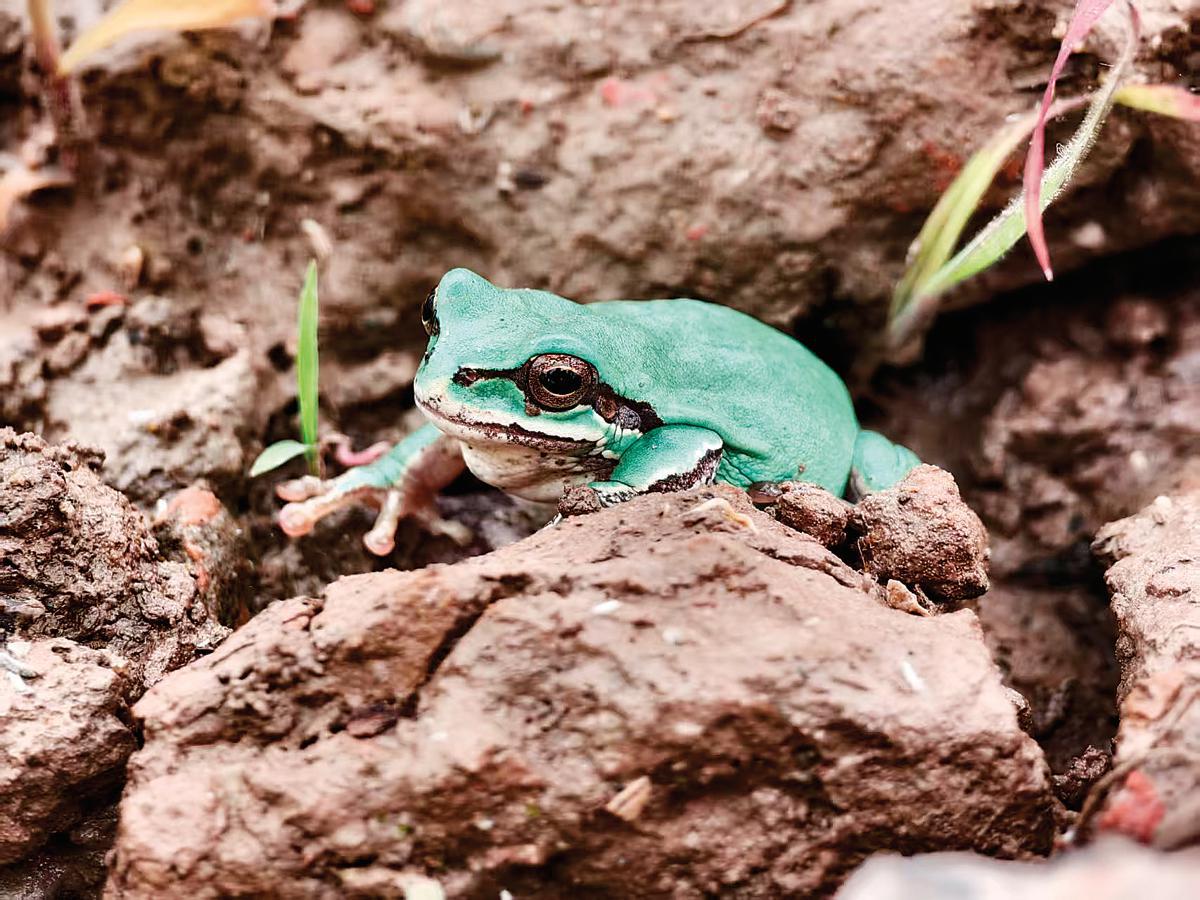
The spotless tree toad, a species endemic to China and once lost to Shanghai for more than two decades, is on the pathway to being reintroduced to the city's lakes, fields and farmland.
These toads, sometimes called the Chinese immaculate treefrog, play a pivotal role in controlling insect populations, nutrient cycling and serving as an indicator of overall ecosystem health.
In late May, 24 adult male and female spotless tree toads, or Hyla immaculata, were introduced into a 300-square-meter experimental plot of farmland in Shanghai's Fengxian district. A week later, conservationist Guo Taoran was thrilled to spot tadpoles in the water.
Guo, founder of Forest City Studio, an organization specializing in ecological restoration, said the tadpoles will be transferred to a lab for artificial rearing to ensure they make it to maturity and reproduce a breeding group for the next generation.
Populations of spotless tree toads have been threatened by habitat loss and have been in decline for the past few decades.
In the summer of 2023, Forest City Studio obtained spotless tree toad tadpoles from Amael Borzee, a professor at Nanjing Forestry University and a specialist in the conservation of amphibians.
With the goal of reintroducing the species to Shanghai, Guo and his team devised a plot of land split into nine different zones to see which zone best suited the living conditions for the toads.
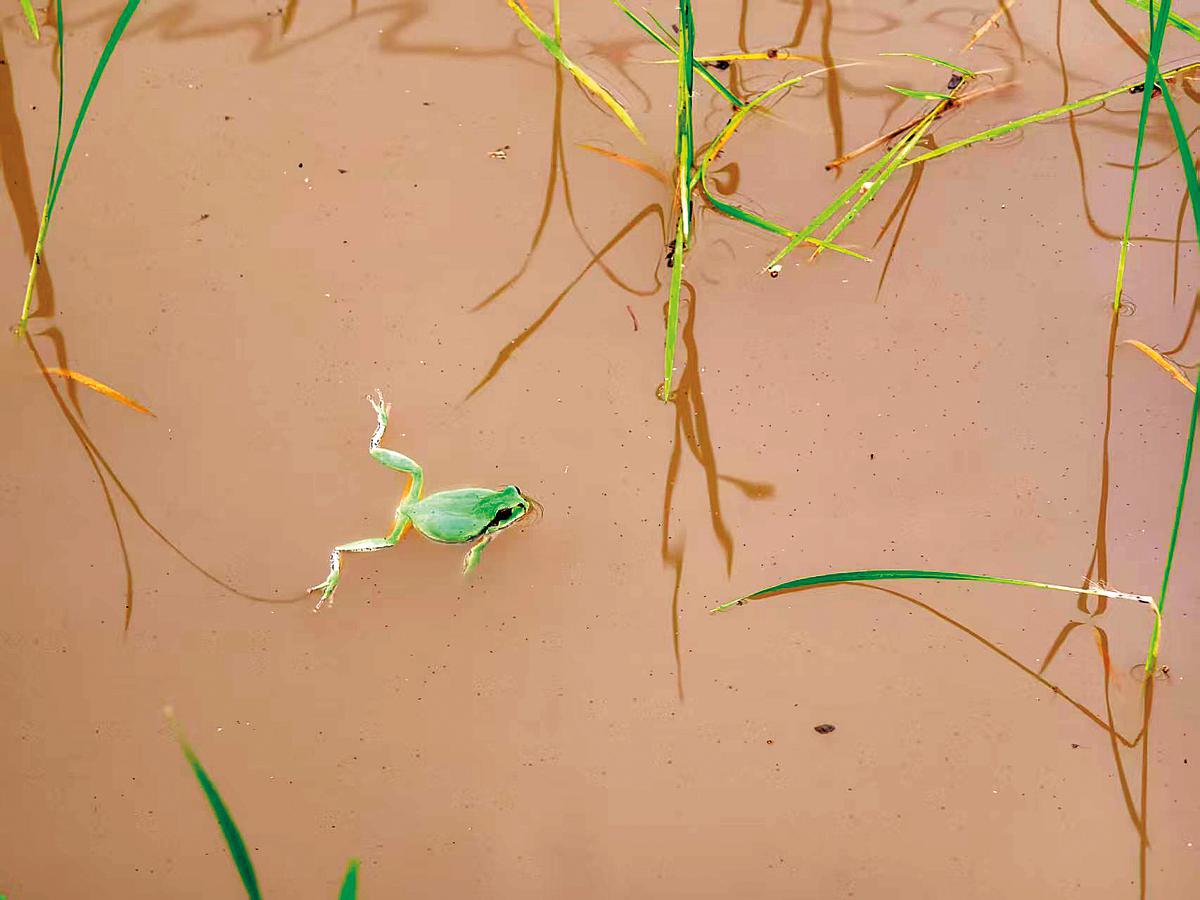
Each zone featured ponds and was either planted with rice seedlings or native plants such as rushes and calamus, while a few were left undisturbed.
The experimental site is part of an overarching initiative, based in a 6.67-hectare area of Beisong village in Fengxian district, featuring plots for rice and vegetable crops, to research which habitats are the most suitable for spotless tree toads.
Guo said that while the research is in its early stages, if they are successful, the benefits could be significant.
"We plan to carry out this research until next year with a goal of reproducing as many as 2,000 young toads. If we hit that goal, we will consider releasing them back into the wild," Guo said.
"The reintroduction of these toads into Shanghai's natural environment could also influence other species in the food chain, ultimately enriching the overall biodiversity," he said.
Guo said the last known wild sighting of a spotless tree toad in Shanghai was around 20 years ago in an orchard in Shanghai's Pudong New Area. The disappearance of a species means the loss of a link in the ecological chain, disrupting the balance of the ecosystem, he said.
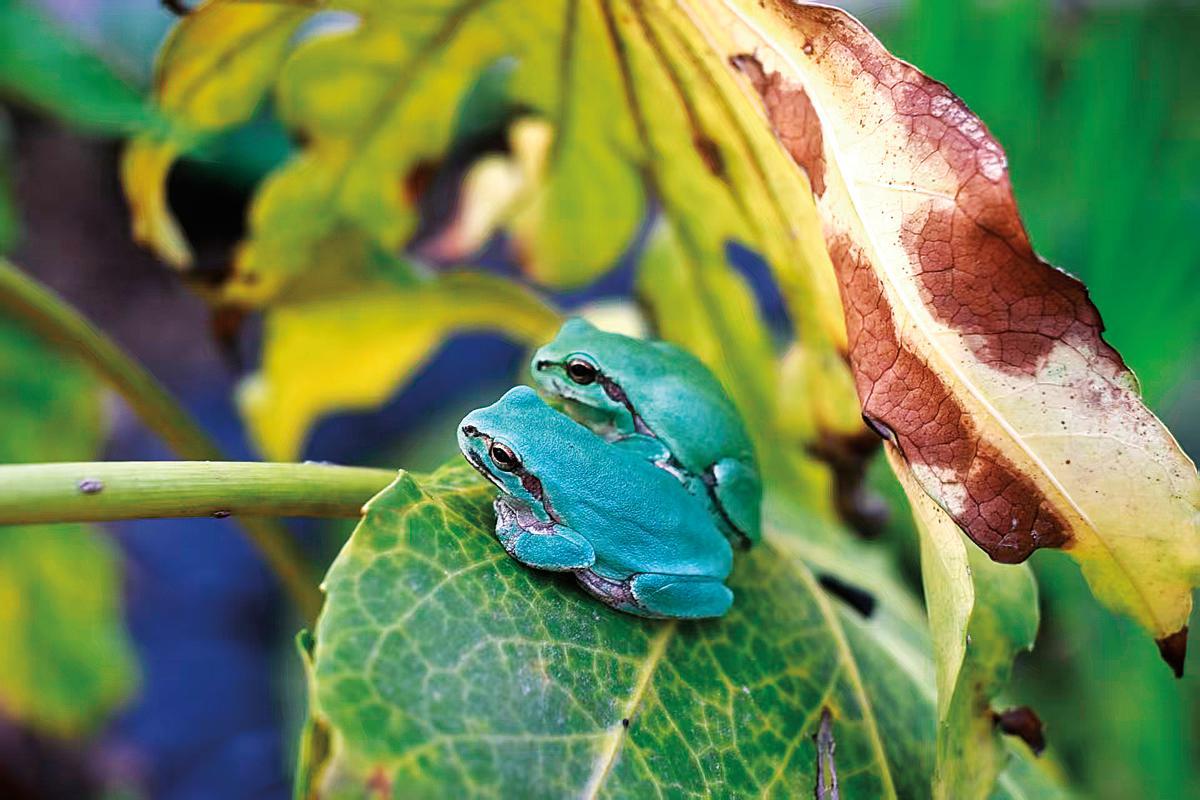
Adult spotless tree toads measure 3 to 4 centimeters and feature a green back and a white belly.
At the research site in Beisong village, the toads can be seen basking in the sun on leaves and tall crops.
Guo said that the process of nurturing the tadpoles through the process of metamorphosis to become young frogs is not an easy one.
"We have to determine suitable food for the tadpoles and ensure the survival rate of young frogs after they go ashore for the first time," he said. "Since young frogs can only prey on smaller insects, we've been breeding small locusts, crickets and fruit flies for their diet."
Frogs have often been described as great explorers of different types of land and vegetation, breeding in rice paddies, foraging among crops such as corn and cotton after maturing, and residing in orchards and forests. During winter, they hibernate in leaf litter or soil, with the tilling of vegetable fields and rice paddies posing a threat to their survival.
The discovery of spotless tree toads dates back to 1888, when German zoologist Oskar Boettger first identified and named them in Shanghai. They are the only frogs to have been identified and named in the city.
The decline in the population of these toads has been attributed to accelerated urbanization, habitat loss and pesticide misuse.
A joint study conducted from 2013 to 2015 by a number of institutions, including East China Normal University and Fudan University, showed that only six species of wild frogs were observed in Shanghai, with no spotless tree toads sighted. A follow-up study beginning last year is still underway.
Borzee, who donated the tadpoles, said the spotless tree toad population in East China has significantly decreased. Despite being categorized as "least concern" by the International Union for Conservation of Nature due to insufficient data, their wild population may have plummeted to "critically endangered" levels of just a few hundred individuals, he said. They have been included in the Shanghai list of key protected wildlife species.
"This situation underscores the impact on biodiversity of changes in agricultural land use practices," said Guo.
In the past, small-scale farmers took care of their own farmland and would grow a variety of crops such as rice, vegetables and bamboo, which could provide all the necessary habitats for these toads, he said.
However, with modern intensive land management practices, where a type of crop spans a vast farmland, spotless tree toads struggle to complete their life cycle and survive, he added.
"If our research ultimately proves that such toads can thrive in ponds, similar restoration projects could be expanded to suburban parks or other green spaces. However, if their survival depends on rice paddies, restoration efforts may face challenges due to modern agricultural management practices," said Guo.
zhouwenting@chinadaily.com.cn






- Vice president of China's PICC under probe
- Fire relief allowance doubled to HK$100,000 for affected families in Hong Kong
- HK may ban smoking at building sites
- Academicians pledge to advance scientific innovation
- New records substantiate truths of war
- Flu activity in China rising, cases likely to peak soon