For years, exhibitions about Confucius have focused on profound culture and grand rituals that exposed the audience to the philosopher's teachings enshrined as sacred texts.
But behind the towering legacy of China's prominent family, how did the Confucius descendants, also known as the Kong family, actually live?
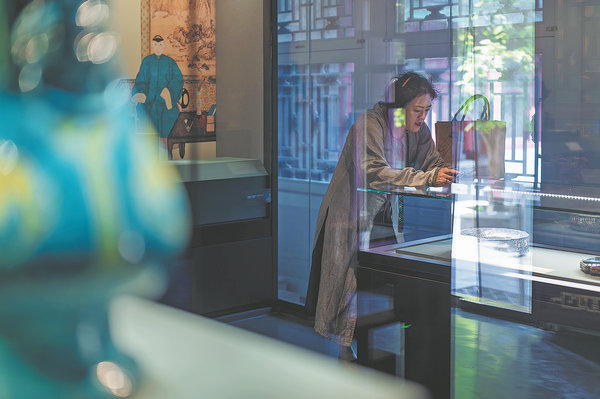
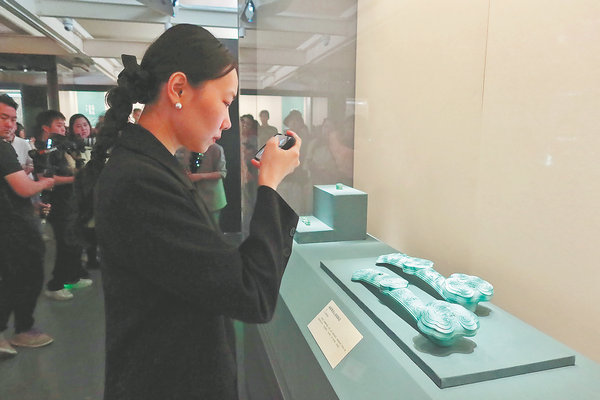
At the Prince Kung's Palace Museum tucked away in the hutong alleys in downtown Beijing, visitors now can get a glimpse into the human side of the family at the ongoing thematic exhibition Ritual Integrity and Poetic Refinement, a collaboration between the museum and the Confucius Museum based in Qufu, East China's Shandong province.
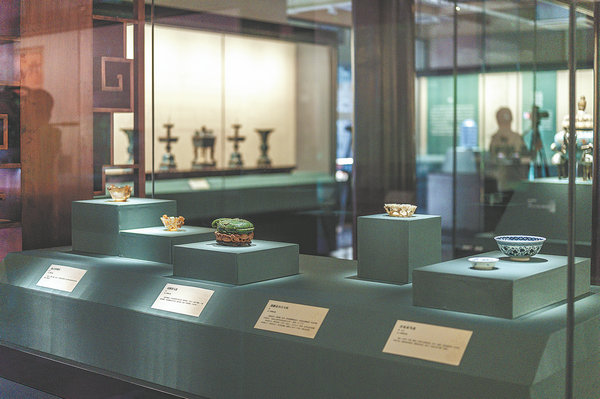
From exquisite tin tableware in the shapes of auspicious animals and plants to drinking-game sticks (lots) bearing playful commands like "Drink if you're fat!" or "Impatient? Finish your cup!", the exhibition, opened on May 20 and running till Aug 10, endeavors to shed light on the mundane life in the official residence of the Kong family.
"Many of these pieces represent our first public display," says Chu Hongxuan, director of collections at the Confucius Museum.
Among them, a food-warming tin vessel stands out — a three-part set (lid, inner pot, and base) designed to keep dishes warm during winter banquets.
"Hot water was poured into the outer layer, while the inner pot held food, ensuring it stayed warm, which was a testament to their attention to culinary details," Chu says.
The vessels' animal-shaped lids, such as fish or ducks, humorously indicated their contents.
"A fish-shaped lid meant it held fish dishes; a duck-shaped one held duck, a playful touch that reveals the art of their daily delight," he adds.
As for the drinking-game sticks, drawn from something like a lottery tube, Chu says they show intimacy among family members and close friends.
"It's proof that the ancients balanced solemnity with humor," he says.
On the note of drinking, a gongdao (fairness) cup embodied Confucian ideals of equity with its hidden mechanism.
"A figurine inside has a hole at its robe's hem," Chu describes.
"Pour wine up to its shoulders, and it stays; overfill it, and the liquid drains completely. This ensures everyone drinks the same — no more, no less. Hence, 'fairness'," he explains.
A set of nested cups adorned with scenes from the celebrated Yuan Dynasty (1271-1368) drama Romance of the Western Chamber also offers an intriguing aspect of the Kong family.
"Despite the family's scholarly reputation, they embraced popular drama. This proves they weren't as rigid as many would have assumed," Chu says.
Those relics are among the highlights of the banquet culture section of the exhibition, which features about 100 artifacts from the official residence of Confucius' direct descendants during the Ming Dynasty (1368-1644) and Qing Dynasty (1644-1911), says Yang Jinquan, deputy director of the Confucius Museum.
As the influence of Confucius grew, his school of thought was officialized in the Northern Song Dynasty (960-1127), and Confucius' descendants were given the title of Duke Yansheng. Confucius' family mansion was supported and renovated by successive emperors of the Ming and Qing dynasties and even became part of the local administration. The residence subsequently served as the family home of Confucius' lineal descendants for over 800 years.
The title was bestowed on the eldest male in each generation of the main line of descent of Confucius in accordance with an imperial tradition dating back to 1055.
Yang considers those artifacts in the banquet culture part a surprising revelation of the family's lighter side.
"Imagine the Duke Yansheng challenging guests to drink if they couldn't quote the classics!" Yang says with a smile. "Even their revelry had layers of meaning."
As China's most enduring aristocratic household, the Confucius family meticulously preserved ritual objects, scholarly implements, and domestic artifacts that embodied their dual identity as both guardians of Confucian tradition and participants in imperial court culture.
"The public often views the Kong family as shrouded in mystery," Yang says.
"But through the exhibition at the Prince Kung's Palace Museum, we're showing how China's most revered scholarly family actually lived their daily lives — how they dined, studied, and entertained while maintaining their sacred duties," Yang says.
In addition to the banquet part, the exhibition presents the other three intimate dimensions — the solemn rites, domesticity and literary pursuits.
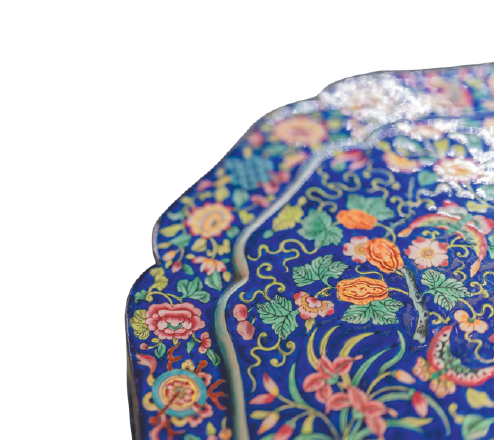
At the rites segment, a pair of pastel porcelain cloud-dragon pattern dou, (a ceremonial vessel featuring high, narrow feet and a rounded body), was ascertained to have been commissioned by the Kong family from the porcelain capital Jingdezhen in Jiangxi province, which indicated the family's attention to rites.
They bore witness to the family's observance of "transmitting poetry and rites through generations", Yang says.
"This wasn't just their family motto," Yang adds, referencing Confucius' famous admonition to his son that without poetry, there are no words, and without rites, no standing.
"The Kong family embodied this ideal completely, making them China's ultimate model of scholarly aristocracy for over 80 generations," he says.
The section revealed the Duke Yansheng's primary responsibility — conducting state-mandated Confucius worship ceremonies, Yang says, emphasizing that these weren't just annual events, but monthly obligations that shaped their entire lives.
As for the home life section, a resplendent Ming Dynasty female blue robe is fitted with a gold-trimmed collar in front, its fabric as sheer as cicada wings.
"Unlike excavated textiles (often faded), the Kong family garments were passed down intact, offering unparalleled insights into Ming dyeing and embroidery," Chu says.
Another highlight, a small delicate perfume powder box acting as a spittoon, was proof of the refined lifestyle of the Kong family.
"The powder was a mix of spices, so they could enjoy the fragrance that calmed their nerves and refreshed their mind when they spat," Chu says.
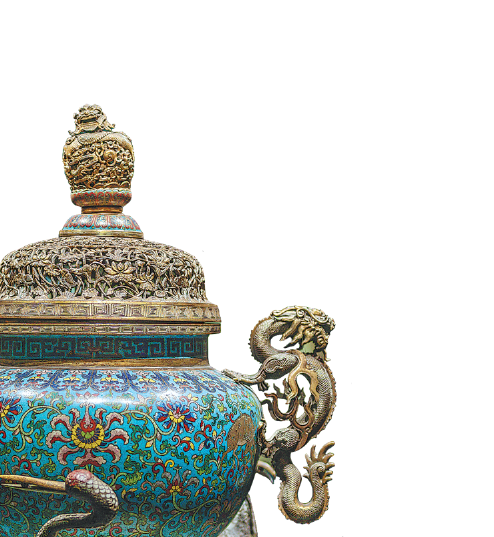
Other must-see exhibits include a gift of a blue-and-white porcelain bowl with gilded clover patterns from the royal family, a Qing Dynasty cloisonne censer with crane motifs, symbolizing longevity, as well as a bamboo-root carving of immortals.
The literary pursuits segment displays rare manuscripts, inkstones, and scholar's ornaments.
All is to demystify the Kong family by showcasing their human side, Chu says.
Chen Xiaowen, deputy director of the Prince Kung's Palace Museum, stresses that the exhibition intends to offer visitors a comprehensive understanding of how China's most revered scholarly family balanced formal obligations with private affairs.
Among the relics on display, more than 10 top-grade cultural relics left the Confucius Museum for the first time, he says.
"They show us what the Kong family ate, how they entertained guests, and how they relaxed in their private moments — aspects of their lives that have rarely been documented," he adds.
Housed within the Prince Kung's Palace Museum, a former Qing Dynasty aristocratic residence, the exhibition creates a dialogue between two iconic historical spaces.
The venue's architecture and history serve to contextualize the artifacts, drawing parallels between elite lifestyles during the Ming and Qing dynasties, according to the organizers.
This exhibition marks the first in the Prince Kung's Palace Museum's new series exploring the art of living through historical artifacts, offering contemporary audiences fresh perspectives on the country's cultural heritage.
Contact the writer at yangfeiyue@chinadaily.com.cn