



Nursing services optional or compulsory? A question







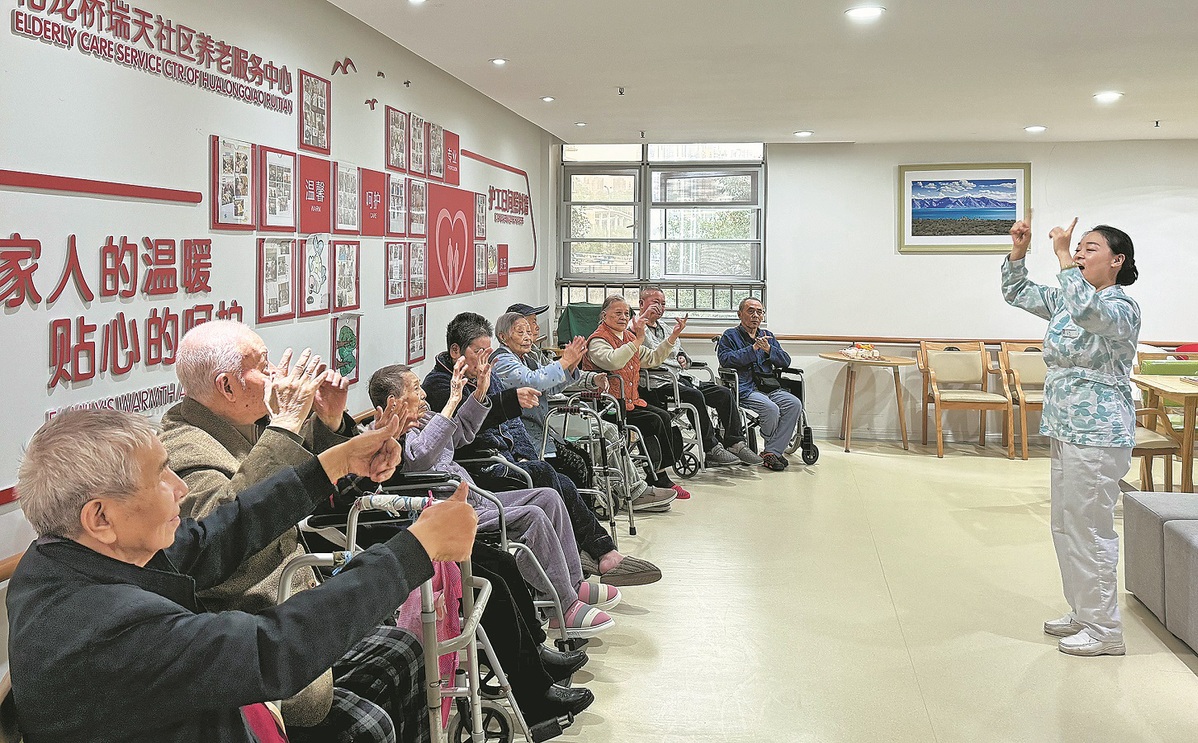
A notice released by the National Health Commission recently has sparked a heated debate among the public. The notice said the government is launching a pilot project that offers hospitalized patients the option of relying on nurses and professional workers rather than family members for round-the-clock care.
Many foreign readers may assume that once hospitalized, a patient is taken care of by the hospital.
But, unfortunately, that is not the case in China. Despite continuous appeals by hospitals and doctors, and complaints by patients and their families, China has never had enough nurses. Statistics show China had 5.85 million registered nurses last year. Sounds like a large number, isn't it? But when we compare this with the nearly 302 million hospitalizations in China in 2023, we realize that it is impossible for nurses to care of all the patients.
The fact that we know many a nurse takes care of 10 to 20 bed-ridden patients, including collecting their blood samples for test, checking patients and measuring their blood pressure or heart beat at regular intervals, and ensuring they take their medicine on time prevents us from urging nurses to do more.
As a result, the burden of taking care of bedridden patients in the hospital falls on the shoulders of their family members. A majority of Chinese people have the experience of pei chuang, or accompanying the patient in hospital day and night — and the fatigue, stress and desperation that comes with it. If no one from the family is able to care for the hospitalized patient, the family members have to spend 200-300 yuan ($27.89-41.83) a day to hire a private caregiver.
The medical authority's new plan is designed to train hundreds of thousands of people as aides to nurses to relieve patients' families from such a duty, and provide more professional caregiving service. In fact, such trials are being conducted in different regions for the past several years and the most popular model is something like this: People receive training for at least 150 hours and pass certain exams to qualify as aides to nurses.
Such aides are hired by hospitals as staff members, and patients or their families have to pay at least 140 yuan a day for such an aide's service. For a one-to-one private caregiver, the fee is 280-420 yuan a day.
Public opinions on the nurse-aide model have so far been mostly positive. Although people still have to pay for the service, they seem ready to accept the model because they know they can pay to get such a service from qualified caregivers who are hospital employees, and where to file a complaint in case there is a dispute.
Some people have suggested that the fees be covered, at least partly, by the government and medical insurance authorities. This is a welcome suggestion. But its feasibility depends on the local governments' revenue and the income and expenditure of the local medical insurance body. Given the financial condition of many local governments, a symbolic financial coverage for such aides is possible, though we should not expect a lot from the local governments and insurance authorities when it comes to financial aid.
Some people are worried whether they would be compelled to pay for the aide service whether or not they are willing or able to attend to a patient. Besides, for people in less-developed areas, a fee of about 200 yuan a day is still a relatively large amount.
What's more, the traditional Chinese virtue of "children's obligation to take care of their parents" prompts many to take care of their parents. So the question is: Will the new arrangement be voluntary or compulsory?
It will take time for the new blueprint to be implemented nationwide because of the different development levels of different regions. The NHC's introduction of the new program at least makes one thing clear: hospitals have the obligation to take care of patients. We will have to wait till the arrangement is finalized to see the outcome.

The author is former deputy editor-in-chief of China Daily.
kangbing@chinadaily.com.cn





