



Extreme heatwaves underscore climate urgency, demand action







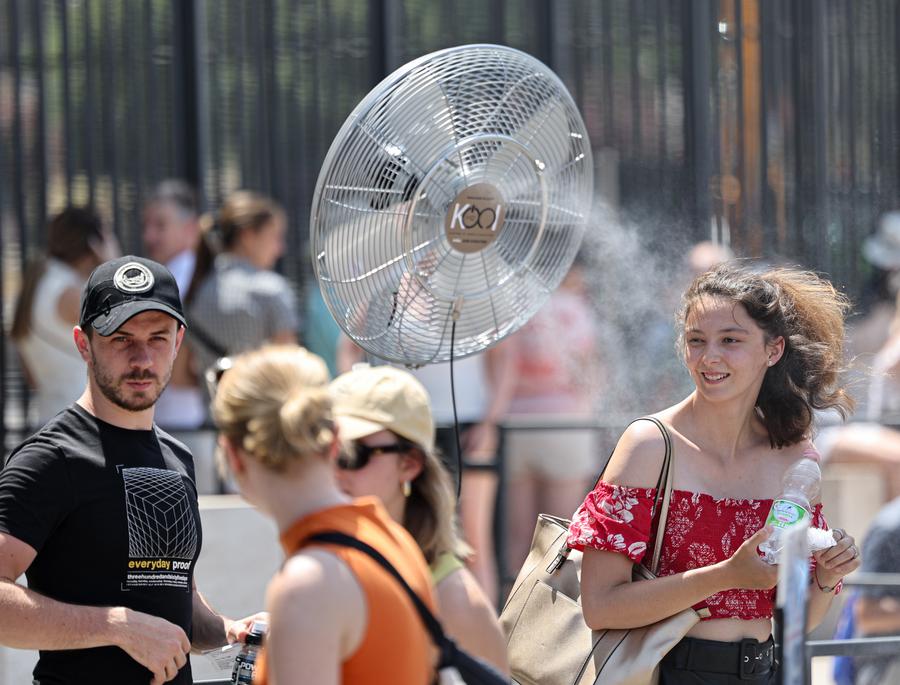
LONDON - Over the past few weeks, heatwaves have hit several regions of the Northern Hemisphere, including parts of North America, Europe, and eastern Asia.
As the Northern Hemisphere endures a summer of unprecedented heat, experts warn that these extreme events are not isolated anomalies, but stark evidence of accelerating climate change.
From Europe to North America and Asia, the impacts are straining societies, economies, and ecosystems, prompting urgent calls for both immediate adaptation and long-term mitigation.
"These are separate events, not a single heatwave event sweeping across the Northern Hemisphere," said Julien Nicolas, senior scientist at the Copernicus Climate Change Service. "Affected regions are often separated by areas with colder-than-average conditions."
Despite their geographic separation, these events share a common underlying cause -- human-induced climate change. Scientists have widely agreed that the persistent rise in greenhouse gas emissions since the Industrial Revolution is the primary driver of this year's intense heatwaves.
The still-unbroken trend of rising temperatures due to anthropogenic greenhouse gases has led to record-high sea surface temperatures, further warming the lower atmosphere, Andreas Walter, spokesperson for the German Meteorological Service, has told Xinhua.
Heatwaves are often triggered and sustained by stationary high-pressure systems, sometimes referred to as "heat domes". These systems trap hot air near the surface and block the formation of cooling clouds and precipitation, leading to prolonged periods of extreme heat, Nicolas explained.
In the United Kingdom, a persistent high-pressure zone has led to parched soils and rising surface temperatures, intensifying the heatwave's impact.
Another contributing factor is the transition from El Nino to La Nina, which can weaken the West African monsoon and shift hot tropical air northward into Europe. This process supports the persistence of high-pressure systems and prolongs heat and drought conditions.
In the United States, heatwaves are the deadliest form of extreme weather. The current wave is particularly concerning, as it marks the first of the season yet brings temperatures more typical of midsummer, not June. Affecting around 150 million people from Wisconsin to Washington DC, this event bears all the hallmarks of human-induced climate change.
Simultaneously, Europe is experiencing similarly searing temperatures, also intensified by global warming. In Slovenia, average temperatures there have risen by about two degrees Celsius since 1961, doubling the global average and making heatwaves both more frequent and more severe.
Aemet, Spain's national weather agency, has issued a special warning, forecasting highs of up to 42 degrees Celsius in the country's southern regions in the coming days. In neighbouring Portugal, around two-thirds of the country will be placed under high alert on Sunday due to extreme temperatures and the risk of wildfires. Lisbon could see highs of 42 degrees Celsius.
In Italy, where cities such as Naples and Palermo are bracing for 39 degrees Celsius heat, the regions of Sicily and Liguria have introduced bans on outdoor work during the hottest parts of the day.
According to the World Meteorological Organization, Asia is warming at nearly twice the global average. This rapid warming has fueled a series of record-breaking and unusually early heatwaves in 2025.
Earlier this month, India's capital, New Delhi-home to over 30 million people, is facing a historic heatwave, prompting the India Meteorological Department to issue a red alert. Temperatures in several areas are soaring 41-45 degrees Celsius, surpassing long-term averages by three to four degrees.
Meanwhile, in Pakistan's Punjab region, temperatures have reached 50 degrees Celsius, a level considered "close to the survival threshold".
"Through its influence on extreme heat, human-induced climate change puts a massive burden on societies, leading to thousands of premature deaths and severe strain on infrastructure and ecosystems," said Fredi Otto, lead scientist at the World Weather Attribution project. "It also causes significant agricultural losses and reductions in productivity."
Moreover, their impact on public health and vital sectors continues to escalate. According to a real-time analysis in 2025 by the London School of Hygiene & Tropical Medicine and Imperial College London, an estimated 570 people in England and Wales may have died due to high temperatures between June 19 and June 22.
Health authorities have issued warnings as temperatures near 39 degrees Celsius in countries such as Bosnia and Herzegovina and Serbia, with some regions experiencing their driest June on record. Hospitals are reporting rising cases of heatstroke, dehydration, and cardiovascular issues. Public officials are urging residents to stay hydrated, limit outdoor activities, and care for vulnerable neighbors.
The agricultural sector is also under acute stress. In many parts of Europe, prolonged drought and extreme heat have left soils dangerously dry, threatening major crops such as corn and sunflower and reducing grain yields, including barley. Forests are also vulnerable to wildfires and pest outbreaks, exacerbated by warmer winters.
HungaroMet's June 2025 agrometeorological report highlights extreme drought across large areas of Hungary. In central and southeastern regions of the country, rainfall since March has been 40-100 mm below average. Topsoil moisture is below 20 percent in most areas, with corn and sunflower leaves curling, and even early-harvested barley is suffering.
Infrastructure systems are also being tested. Roads and railways are buckling under heat stress, power grids face surging electricity demand, and many regions are grappling with water shortages.
The economic toll is growing. The World Bank warns that, if current trends continue, extreme heat could reduce annual GDP in European and Central Asian cities by up to 2.5 percent by 2050.
Governments and communities are intensifying efforts to protect public health and adapt to a rapidly warming climate. In the UK, amber weather alerts have been issued alongside widespread public messaging on heat safety.
Local councils are proactively checking on vulnerable residents and opening cooling centers. Across Europe, similar measures are underway, Slovenia has activated emergency protocols, extended pool hours, and disseminated health guidance through multiple channels.
Experts stress that while short-term responses are crucial, long-term adaptation is even more essential. "Cities, in particular, must implement measures to mitigate the impact of heatwaves, such as increasing urban greenery and providing shaded areas," said Andreas Walter.
Urban greening, reflective surfaces, and climate-conscious architecture are increasingly promoted as key strategies to combat the urban heat island effect.
At the policy level, some countries are making progress. Slovenia, for example, is incorporating climate adaptation into national planning, with a focus on infrastructure, water resource management, and disaster risk reduction. Still, experts caution that adaptation alone is not enough.
"Reducing greenhouse gas emissions remains essential to limit the worsening extremes of weather for future generations, but there is also an urgent need to improve our preparedness for more severe hot, dry but also wet weather extremes as the climate continues to warm," said Richard Allan.










