


Remembering history's turning point
Museum built to honor the 1927 uprising keeps alive the spirit of the revolutionaries, Wang Ru reports in Liuyang, Hunan.







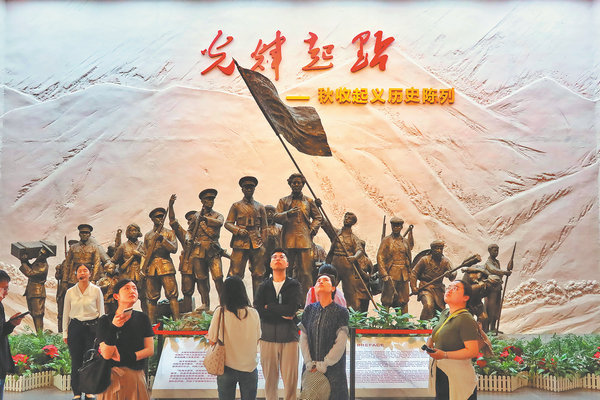
A small town in the mountainous area at the border of Hunan and Jiangxi provinces is a place that witnessed a turning point in the history of the Communist Party of China more than nine decades ago. Today, people still mark the significant event and strive to share the revolutionary spirit.
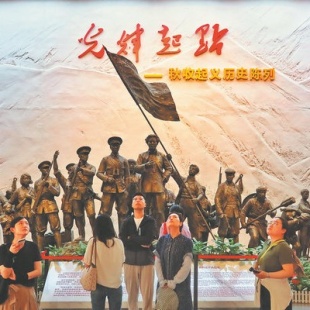
The Autumn Harvest Uprising Memorial Garden in Wenjiashi town, Liuyang, in Hunan is a complex built in memory of the event. Covering about 6.99 hectares, it includes the site of military gathering of the Autumn Harvest Uprising and a memorial museum, which has been listed as a top-tier museum in China.
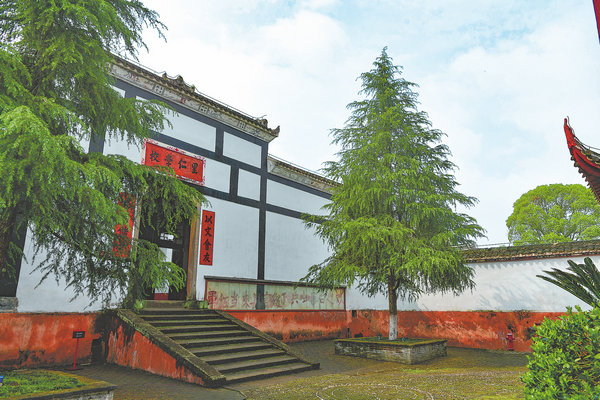
According to Gan Wu, an official with the museum, the site was originally a local school called Wenhua Academy built in the Qing Dynasty (1644-1911) and later renamed Liren School.
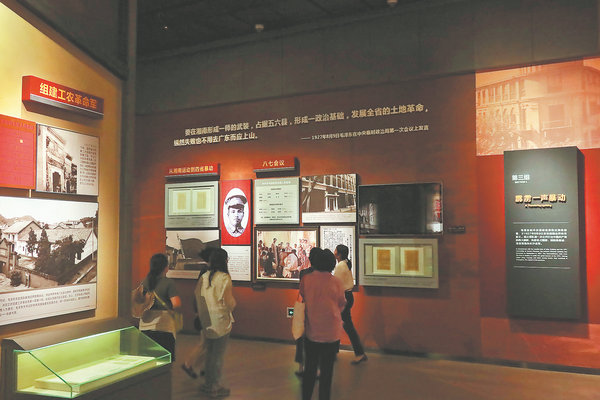
Following setbacks in the earlier stages of the CPC's revolution, Chairman Mao Zedong, then a special delegate of the CPC leadership, led the Autumn Harvest Uprising troops to join forces at Wenjiashi on Sept 19, 1927. At a meeting in Liren School, they decided to give up the original plans of seizing big cities like Changsha, the provincial city of Hunan, and instead marched toward rural areas where the enemy was weak, so that the CPC troops could establish revolutionary bases in the countryside to regroup the forces.
Since then, an influential new strategy of encircling the cities from rural areas was formed, which later became a major revolutionary path in China.
Xie Ourunyi, deputy director of the cultural relics protection department of the museum, says the museum has taken a series of measures to protect the site and the cultural relics. They carried out comprehensive restoration of the site in 2017 and a number of projects, including fire and termite control and lightning prevention in recent years, improving the environment of the site and museum.
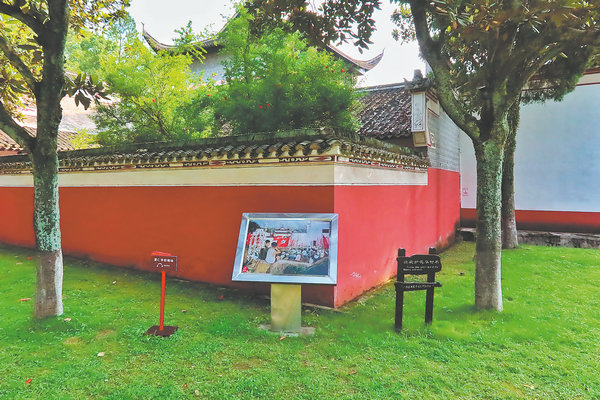
As Liuyang is an important area producing fireworks and firecrackers in China, staff members patrol the site every day for fear that sparks from the fireworks in the sky might fall on the historical buildings, many of which are wooden structures, especially during the Chinese New Year, says Xie.
The museum has installed a system to control the temperature and humidity in the storage areas where its cultural relics are kept — including iron artifacts, paper materials like letters, newspapers, paintings, and grain coupons, limestone relics such as Red Army slogans on walls, and ceramic pieces. It has also conducted experiments to determine the ideal conditions for each type of artifact and created customized environments accordingly.
They also bought special boxes to protect fragile cultural relics from weather changes as much as possible.
Xie highlights an ongoing project of restoring Red Army slogans on the walls. She says since the slogans were exposed outside for decades, some are broken with unclear characters. But as those are important historical witnesses, they have peeled them off the walls for restoration and better preservation. Now, they have collected 66 such slogans from Liuyang and neighboring places and are restoring 33 of them.
Gan says they have worked to promote the Red story and the spirit contained in the event.
"Many of the cultural relics on display are reflections of spirits like seeking truths from facts, being faithful in beliefs, being courageous to try new paths and shoulder responsibilities," he says.
For example, he highlights a long iron gun soldiers used in the Autumn Harvest Uprising. The gun was initially made by local villagers at the end of the Qing Dynasty to protect their shops. In 1927, it was found on the mountains by soldiers who took part in the uprising and used it in battles.
"Although it was an old, crudely made weapon, soldiers added steel balls and iron nails to its gun barrel to make it more effective. It also shows how bravely they fought at that time," says Gan.
The museum has developed more than 30 classes based on the historical events to promote them in schools, communities, enterprises and rural areas, organizing people to sing revolutionary songs in chorus and perform the historical stories. Linking several other sites related to the uprising in Liuyang, the museum has also developed a travel route, recording more than 200,000 footfalls in the past three years.
Now, the memorial complex has become an important place for carrying out revolutionary education in Hunan, receiving more than 1 million visits on average each year, says Gan.